-
Use Cases
-
Resources
-
Pricing
The Tower of London is a historic fortress and castle on the north bank of the River Thames in central England. Founded by William the Conqueror after the Norman conquest of 1066, it has served as a royal palace, prison, armory, treasury, menagerie, and the home of the Crown Jewels. It remains one of Britain's most iconic landmarks and a UNESCO World Heritage Site. More Less
1078
% complete
Following the Norman conquest of England, William the Conqueror ordered the construction of the White Tower, a massive stone keep intended to dominate the city of London and subdue its Saxon population. Built from Caen stone imported from Normandy, it became the centerpiece of what would grow into the Tower of London.
Image source: White Tower (Tower of London)
1097
% complete
The White Tower was completed around 1097 under William II, known as William Rufus. Standing approximately 90 feet high, the fortress served as a royal residence, a symbol of Norman power, and the most imposing building in London at the time.
1190 - 1199
% complete
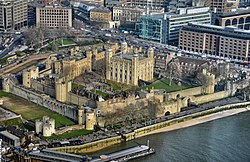
During the reign of Richard I, chancellor William Longchamp expanded the fortress by building an enclosure wall around the White Tower, creating the inner ward. This was part of Richard's efforts to fortify the Tower while he was away on crusade.
Image source: Tower of London
1215
% complete
During the First Barons' War, rebel forces besieged the Tower while it was held by King John's men. The siege demonstrated the Tower's strategic importance in controlling London, though the fortress held out until the conflict's resolution.
Image source: First Barons' War
1238 - 1272
% complete
King Henry III undertook major expansion of the Tower, adding a curtain wall to create the outer ward, constructing new towers including the Wakefield Tower, and whitewashing the keep. He also enhanced its role as a royal palace with luxurious chambers and a menagerie.
Image source: Henry III of England
1275 - 1285
% complete
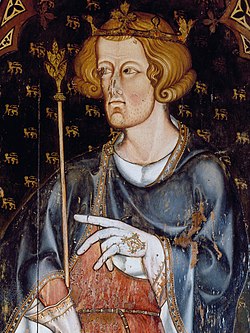
Edward I carried out the most extensive building program in the Tower's history, spending over £21,000. He added a second curtain wall with towers such as Beauchamp Tower, dug the St Thomas' Tower water gate later called Traitors' Gate, and filled the moat.
Image source: Edward I of England
Sep 1666
% complete
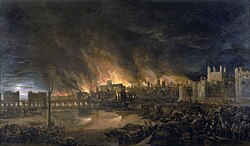
The Great Fire of London destroyed much of the medieval city but stopped just short of the Tower of London. Garrison commander Lord Lucas ordered buildings pulled down around the Tower to create firebreaks, protecting the ancient fortress from the flames.
Image source: Great Fire of London
1204
% complete
King John is recorded as keeping lions at the Tower around 1204, beginning the royal menagerie that would house exotic animals for over 600 years. The collection grew under successive monarchs and became one of London's earliest tourist attractions before moving to London Zoo in the 1830s.
Image source: Menagerie
May 21, 1471
% complete
Deposed king Henry VI died in the Tower of London on the night Edward IV reclaimed the throne after the Battle of Tewkesbury. Contemporary accounts suggest he may have been murdered, though official explanations blamed melancholy or natural causes.
Image source: Henry VI of England
1483
% complete
Twelve-year-old Edward V and his brother Richard of Shrewsbury were lodged in the Tower by their uncle Richard III and were never seen alive again. Their disappearance remains one of history's greatest mysteries and fueled centuries of speculation about their murder.
Image source: Princes in the Tower
May 19, 1536
% complete
Anne Boleyn, the second wife of Henry VIII, was executed by a French swordsman on Tower Green after being convicted of adultery, incest, and treason on dubious charges. Her death marked one of the most infamous episodes in Tudor history.
Image source: Anne Boleyn
Feb 13, 1542
% complete
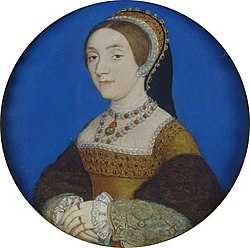
Henry VIII's fifth wife, Catherine Howard, was beheaded on Tower Green after being convicted of treason for her pre-marital affairs. She was buried near her cousin Anne Boleyn in the Chapel of St Peter ad Vincula.
Image source: Catherine Howard
1553 - Feb 12, 1554
% complete
Lady Jane Grey, the 'Nine Days Queen', was imprisoned in the Tower after Mary I took the throne. She was convicted of high treason and executed in February 1554, becoming one of the Tower's most tragic royal prisoners.
Image source: Lady Jane Grey
Mar 18, 1554 - May 19, 1554
% complete
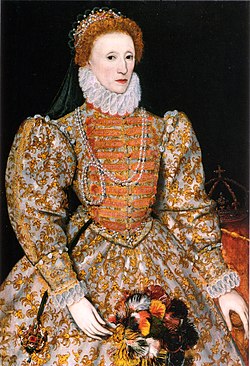
Princess Elizabeth was confined in the Tower of London for two months, suspected of involvement in Wyatt's Rebellion against her sister Mary I. She entered through Traitors' Gate but was released after evidence against her failed to convince Mary.
Image source: Elizabeth I
Nov 1605
% complete
After the Gunpowder Plot was foiled, Guy Fawkes and his fellow conspirators were interrogated and imprisoned in the Tower. Fawkes was tortured, reportedly on the rack, and signed a confession revealing the plot against James I and Parliament.
Image source: Guy Fawkes
Oct 29, 1618
% complete
Sir Walter Raleigh spent 13 years imprisoned in the Tower, during which he wrote 'The History of the World'. After a disastrous expedition to find El Dorado in Guiana, he was executed at Westminster, having been returned to the Tower beforehand.
Image source: Walter Raleigh
1747
% complete
Simon Fraser, 11th Lord Lovat, a Jacobite leader convicted of treason after the 1745 rebellion, became the last person beheaded on Tower Green in 1747. His execution drew a huge crowd, one section of which collapsed, causing deaths.
Image source: Simon Fraser, 11th Lord Lovat
1279
% complete
The Royal Mint was formally established within the Tower of London in 1279. Coins for the English realm were struck there for centuries, making the Tower a vital center of the kingdom's economy until the Mint moved out in 1812.
Image source: Royal Mint
1830
% complete
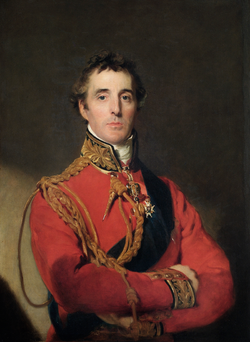
As Constable of the Tower, the Duke of Wellington ordered the moat drained in 1830, converting the stagnant waterway into dry ground. This modernization reflected changing military needs and improved sanitation around the fortress.
Image source: Arthur Wellesley, 1st Duke of Wellington
1832 - 1835
% complete
The Tower's famous menagerie, home to lions, bears, and other exotic animals for centuries, was gradually relocated to the newly founded Zoological Gardens in Regent's Park between 1832 and 1835, ending the tradition of animals kept at the fortress.
Nov 1914 - 1916
% complete
During World War I, eleven German spies were captured in Britain and shot by firing squad in the Tower's rifle range, marking the return of executions to the fortress after more than a century.
Oct 5, 1915
% complete
During World War I, a Zeppelin bombing raid on London damaged buildings within the Tower of London. The incident showed that even the ancient fortress was not immune to the aerial warfare of the twentieth century.
May 1941
% complete
Deputy Führer Rudolf Hess, who flew to Scotland on a solo peace mission in May 1941, was briefly detained at the Tower of London, becoming one of its final high-profile prisoners before transfer elsewhere.
Image source: Rudolf Hess
Aug 15, 1941
% complete
Josef Jakobs, a German spy parachuted into England, was captured and shot by firing squad at the Tower on August 15, 1941. He was the last person ever executed at the Tower of London.
Image source: Josef Jakobs
1952
% complete
Notorious East End gangsters Ronnie and Reggie Kray became among the last prisoners held in the Tower when they were detained there in 1952 for failing to report for national service, shortly before the Tower ceased functioning as a prison.
Image source: Kray twins
1988
% complete
The Tower of London was inscribed as a UNESCO World Heritage Site in recognition of its outstanding universal value as a medieval fortress-palace, its role in English history, and its architectural significance spanning nearly a thousand years.
May 9, 1671
% complete
Irish-born adventurer Colonel Thomas Blood attempted to steal the Crown Jewels from the Martin Tower by disguising himself as a clergyman. He nearly succeeded but was captured; remarkably, King Charles II pardoned him and even granted him land.
Image source: Thomas Blood
1841 - 1842
% complete
A new Jewel House was constructed within the Waterloo Barracks area to house the Crown Jewels, which had first been put on public display in the seventeenth century. The purpose-built structure improved security for the nation's most precious regalia.
Image source: Jewel House
1880
% complete
By the late nineteenth century, the legend that if the ravens left the Tower the monarchy would fall was well established. Official raven masters were appointed to care for the birds, cementing the tradition that continues today with seven resident ravens.
Image source: Ravens of the Tower of London
1994
% complete
A £10 million renovation transformed the display of the Crown Jewels, creating a modern exhibition with moving walkways allowing millions of annual visitors to view the regalia up close. The revamped Jewel House greatly boosted the Tower's popularity as a heritage attraction.
Image source: Crown Jewels of the United Kingdom
Or browse the full history timeline directory, with more than 2,000 topics.
This Tower of London timeline was generated with the help of AI, using information found on the internet.
We work hard to keep these timelines accurate, but mistakes do get through. If you spot one, email us at [email protected] and we'll fix it for future visitors.
Generate yours with AI or build it from scratch, for free.
Export your timeline, add your own events, edit or remove AI-generated events, and much more
No credit card required.
Cancel anytime.
Cancel anytime.
You can create an unlimited number of timelines with up to 10 events on each one, customize how they look, export them to PDF, PNG, PowerPoint, CSV, and Excel, and share them with a link. Paid plans raise the event limit and add features like spreadsheet imports and collaborators.
Yes. You can cancel your subscription from your account page at any time, and you will not be charged again. Your subscription stays active for the rest of the period you already paid for.
Yes. We will email you a reminder before the annual renewal, and we will also email you a receipt.
Yes. You can email us within 15 days of any payment, and we will issue you a full refund.
Check out our pricing docs or send us an email anytime: [email protected].