-
Use Cases
-
Resources
-
Pricing
Jul 6, 1946
% complete
George Walker Bush was born on July 6, 1946, in New Haven, Connecticut, the eldest son of George H. W. Bush and Barbara Bush. His family later moved to Texas, where he grew up largely in Midland and Houston.
Image source: George W. Bush
1968
% complete
Bush earned a bachelor's degree in history from Yale University in 1968, where he was a member of Skull and Bones and played rugby. He then served as a pilot in the Texas Air National Guard during the Vietnam War era.
1975
% complete
In 1975, Bush became one of the few presidents to hold an MBA, graduating from Harvard Business School before returning to Texas to enter the oil business.
Image source: Harvard Business School
1977
% complete
Bush founded his own oil exploration company, Arbusto Energy, in Midland, Texas, beginning a business career in the oil industry that included later ventures such as Harken Energy.
Nov 5, 1977
% complete
Bush married Laura Welch, a schoolteacher and librarian, in November 1977 after a whirlwind three-month courtship. They had twin daughters, Barbara and Jenna, born in 1981.
Image source: Laura Bush
Jul 28, 1986
% complete
After celebrating his 40th birthday with heavy drinking, Bush decided to quit alcohol entirely, a decision he credited with transforming his life and preparing him for public service.
1989
% complete
Bush led an investment group that purchased the Texas Rangers baseball team in 1989, serving as managing partner until 1998. The team's new ballpark helped raise his public profile in Texas.
Image source: Texas Rangers (baseball)
Nov 8, 1994
% complete
Bush defeated incumbent Ann Richards to become governor of Texas in November 1994. He was reelected in 1998 with nearly 61 percent of the vote, building a reputation for bipartisan cooperation.
Image source: 1994 Texas gubernatorial election
Nov 7, 2000 - Dec 13, 2000
% complete
The 2000 election between Bush and Vice President Al Gore came down to Florida, where recounts and legal battles over ballot disputes delayed the result for weeks. The Supreme Court's ruling in Bush v. Gore effectively ended the contest, and Gore conceded on December 13, making Bush the winner despite losing the popular vote.
Image source: 2000 United States presidential election
Jan 20, 2001
% complete
Bush was inaugurated as the 43rd president on January 20, 2001, promising a 'humble' foreign policy and compassionate conservatism. His early agenda included tax cuts and education reform.
Image source: First inauguration of George W. Bush
Jun 7, 2001
% complete
Bush signed the Economic Growth and Tax Relief Reconciliation Act, delivering $1.35 trillion in tax cuts over a decade, fulfilling a central campaign promise of his presidency.
Image source: Economic Growth and Tax Relief Reconciliation Act of 2001
Jan 8, 2002
% complete
Bush signed the bipartisan No Child Left Behind Act, a major education reform law that expanded standardized testing and accountability requirements for American schools.
Nov 2, 2004
% complete
Bush won reelection against Senator John Kerry with about 51 percent of the popular vote, becoming the first president since 1988 to win a majority of the popular vote. His campaign emphasized national security and moral values.
Image source: 2004 United States presidential election
Jul 19, 2005 - Jan 31, 2006
% complete
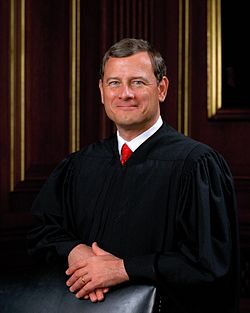
Bush appointed two conservative justices to the Supreme Court: John Roberts as Chief Justice in 2005 and Samuel Alito as Associate Justice in 2006, shaping the Court's direction for decades.
Image source: John Roberts
Aug 29, 2005
% complete
Hurricane Katrina devastated New Orleans and the Gulf Coast, killing more than 1,800 people. The federal government's slow and disorganized response severely damaged Bush's approval ratings and reputation for competence.
Image source: Hurricane Katrina
Sep 15, 2008
% complete
The collapse of Lehman Brothers triggered a global financial crisis in the final months of Bush's presidency. His administration responded with emergency interventions including the $700 billion Troubled Asset Relief Program (TARP).
Image source: 2007–2008 financial crisis
Oct 3, 2008
% complete
Bush signed the $700 billion bailout bill authorizing the Treasury Department to purchase troubled assets and inject capital into banks, an unprecedented intervention to prevent economic collapse.
Image source: Emergency Economic Stabilization Act of 2008
Dec 14, 2008
% complete
During a farewell visit to Iraq, journalist Muntadhar al-Zaidi threw both of his shoes at Bush during a press conference, shouting insults. Bush ducked and was unharmed; the incident became a global sensation symbolizing anti-war sentiment.
Image source: George W. Bush shoe-throwing incident
Jan 15, 2009 - Jan 20, 2009
% complete
Bush delivered a televised farewell address warning of ongoing threats and defending his record, then left office on January 20, 2009, handing power to Barack Obama amid two wars and an economic crisis.
Sep 11, 2001
% complete
Al-Qaeda terrorists hijacked four airliners, destroying the World Trade Center towers, damaging the Pentagon, and killing nearly 3,000 people. Bush's response defined the rest of his presidency and launched the global War on Terror.
Image source: September 11 attacks
Oct 7, 2001
% complete
Following the Taliban's refusal to hand over Osama bin Laden, the United States launched Operation Enduring Freedom, toppling the Taliban regime in Afghanistan within months and beginning America's longest war.
Image source: United States invasion of Afghanistan
Oct 26, 2001
% complete
Bush signed the USA PATRIOT Act just six weeks after September 11, dramatically expanding government surveillance powers and law enforcement authority in the name of counterterrorism.
Jan 29, 2002
% complete
In his State of the Union address, Bush named Iran, Iraq, and North Korea an 'axis of evil,' signaling an aggressive stance toward states accused of sponsoring terrorism and pursuing weapons of mass destruction.
Image source: Axis of evil
Mar 20, 2003
% complete
Citing intelligence claims about weapons of mass destruction, Bush ordered the invasion of Iraq with coalition forces. Baghdad fell within weeks and Saddam Hussein's regime collapsed, though no stockpiles of WMDs were ever found.
Image source: 2003 invasion of Iraq
May 1, 2003
% complete
Bush declared major combat operations in Iraq over beneath a 'Mission Accomplished' banner aboard the aircraft carrier USS Abraham Lincoln. The speech became controversial as the Iraqi insurgency intensified in subsequent years.
Image source: Mission Accomplished speech
Dec 13, 2003
% complete
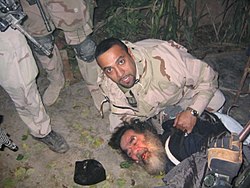
American forces captured Saddam Hussein hiding near Tikrit in Operation Red Dawn. The former dictator was later tried by an Iraqi court and executed in December 2006.
Image source: Capture of Saddam Hussein
Jan 10, 2007
% complete
Facing escalating violence in Iraq, Bush announced a troop surge of more than 20,000 additional soldiers. The strategy, championed by General David Petraeus, is widely credited with reducing violence by 2008.
Image source: Iraq War troop surge of 2007
Nov 9, 2010
% complete
Bush released his bestselling memoir Decision Points, offering personal accounts of key decisions including September 11, the Iraq War, and Hurricane Katrina. It sold over two million copies.
Image source: Decision Points
Apr 25, 2013
% complete
The George W. Bush Presidential Library and Museum opened on the Southern Methodist University campus in Dallas, housing presidential archives and hosting the Bush Institute's policy work.
Image source: George W. Bush Presidential Center
Feb 28, 2017
% complete
Bush published Portraits of Courage, a collection of his paintings of military veterans, showcasing a post-presidential passion for art that began after leaving office and raised funds for veteran causes.
Image source: Portraits of Courage
Dec 5, 2018
% complete
Bush delivered an emotional eulogy for his father, former President George H. W. Bush, at the National Cathedral, movingly describing him as 'the best father a son or daughter could have.'
Image source: Death and state funeral of George H. W. Bush
Or browse the full history timeline directory, with more than 2,000 topics.
This George W. Bush timeline was generated with the help of AI, using information found on the internet.
We work hard to keep these timelines accurate, but mistakes do get through. If you spot one, email us at [email protected] and we'll fix it for future visitors.
Generate yours with AI or build it from scratch, for free.
Export your timeline, add your own events, edit or remove AI-generated events, and much more
No credit card required.
Cancel anytime.
Cancel anytime.
You can create an unlimited number of timelines with up to 10 events on each one, customize how they look, export them to PDF, PNG, PowerPoint, CSV, and Excel, and share them with a link. Paid plans raise the event limit and add features like spreadsheet imports and collaborators.
Yes. You can cancel your subscription from your account page at any time, and you will not be charged again. Your subscription stays active for the rest of the period you already paid for.
Yes. We will email you a reminder before the annual renewal, and we will also email you a receipt.
Yes. You can email us within 15 days of any payment, and we will issue you a full refund.
Check out our pricing docs or send us an email anytime: [email protected].