-
Use Cases
-
Resources
-
Pricing
George VI (Albert Frederick Arthur George) was King of the United Kingdom and the Dominions of the British Commonwealth from 1936 until his death in 1952. Thrust onto the throne after the abdication of his brother Edward VIII, he led Britain through World War II, becoming a symbol of national resilience. He was the father of Queen Elizabeth II. More Less
Dec 14, 1895
% complete
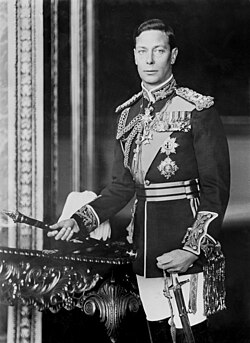
Albert Frederick Arthur George was born at 3:05 am on 14 December 1895 at York Cottage on the Sandringham Estate in Norfolk, during the reign of his great-grandmother Queen Victoria.
Image source: George VI
Feb 17, 1896
% complete
The prince was baptised "Albert Frederick Arthur George" at St Mary Magdalene Church, Sandringham. Queen Victoria was mollified by the proposal to name the baby Albert, born on the anniversary of her husband's death, calling it a day 'rather more dear to me'.
Jan 22, 1901
% complete
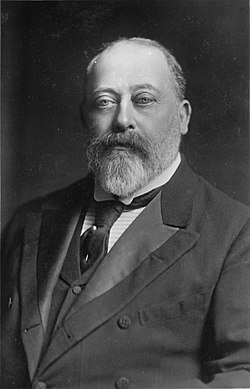
Queen Victoria died on 22 January 1901, and Albert's grandfather, the Prince of Wales, succeeded her as King Edward VII, beginning a new era for the royal family.
Image source: Edward VII
1909
% complete
Beginning in 1909, Albert attended the Royal Naval College, Osborne, as a naval cadet. In 1911, he came bottom of the class in the final examination but progressed to the Royal Naval College, Dartmouth.
Image source: Royal Naval College, Osborne
May 6, 1910
% complete
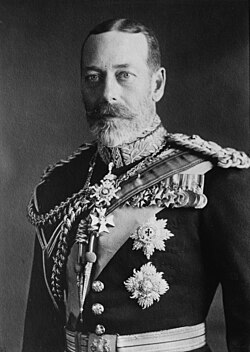
When his grandfather Edward VII died in 1910, Albert's father ascended the throne as King George V, placing Albert second in line to the throne behind his elder brother Edward.
Image source: George V
Jan 1913 - Jun 30, 1913
% complete
Albert spent the first six months of 1913 on the training ship HMS Cumberland in the West Indies and on the east coast of Canada, gaining experience as a young naval officer.
Image source: HMS Cumberland (1902)
Sep 15, 1913
% complete
Albert was rated as a midshipman aboard HMS Collingwood on 15 September 1913, serving in the Royal Navy in the years leading up to the First World War.
Image source: HMS Collingwood (1908)
May 31, 1916 - Jun 1, 1916
% complete
Albert served as a turret officer aboard Collingwood in the Battle of Jutland, the greatest naval battle of the war, and was mentioned in dispatches for his actions during the engagement.
Image source: Battle of Jutland
Nov 1917
% complete
Albert did not see further combat after Jutland, largely because of ill health caused by a duodenal ulcer, for which he underwent an operation in November 1917.
Feb 1918 - Aug 1918
% complete
In February 1918, Albert was appointed Officer in Charge of Boys at the Royal Naval Air Service's training establishment at Cranwell. He served there until August 1918, then joined the RAF's Cadet Brigade staff at St Leonards-on-Sea and Shorncliffe.
Image source: RAF Cranwell
Jul 31, 1919
% complete
The prince qualified as an RAF pilot on 31 July 1919 and was promoted to squadron leader the following day, marking his transition into the newly formed Royal Air Force.
Image source: Royal Air Force
Oct 1919 - 1920
% complete
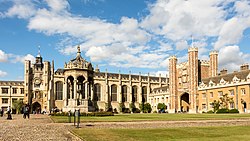
In October 1919, Albert attended Trinity College, Cambridge, where he studied history, economics and civics for a year under the historian R. B. Haldane-era tutors.
Image source: Trinity College, Cambridge
Jun 4, 1920
% complete
On 4 June 1920, King George V created his son Duke of York, Earl of Inverness and Baron Killarney. This came after the King had ended Albert's infatuation with Lady Loughborough in April 1920 with the promise of the dukedom.
Image source: Duke of York
1921 - 1939
% complete
The Duke of York ran a series of annual summer camps for boys between 1921 and 1939 that brought together boys from different social backgrounds, reflecting his interest in social welfare.
Oct 31, 1925 - 1952
% complete
After a difficult closing speech at the British Empire Exhibition at Wembley on 31 October 1925, which was an ordeal for both him and his listeners, Albert began seeing Lionel Logue, an Australian-born speech therapist, who helped him manage his stammer.
Image source: Lionel Logue
1926
% complete
In 1926, the Duke of York played in the Men's Doubles at Wimbledon with Louis Greig, losing in the first round. He remains the only member of the royal family to have competed at the Championships.
May 9, 1927
% complete
With his delivery improved through speech therapy, Albert opened the new Parliament House in Canberra, Australia, in 1927 during a tour of the empire with his wife.
Image source: Parliament House, Canberra
1921 - 1922
% complete
Lady Elizabeth Bowes-Lyon rejected Albert's proposal twice, in 1921 and 1922, reportedly because she was reluctant to make the sacrifices necessary to become a member of the royal family. She eventually accepted his third proposal.
Image source: Queen Elizabeth The Queen Mother
Apr 26, 1923
% complete
Albert and Elizabeth were married on 26 April 1923 at Westminster Abbey. Their marriage proved happy and stable, and they went on to have two daughters, Elizabeth and Margaret.
Image source: Wedding of Prince Albert and Lady Elizabeth Bowes-Lyon
Dec 1924 - Apr 1925
% complete
From December 1924 to April 1925, Albert and Elizabeth toured Kenya, Uganda, and the Sudan, travelling via the Suez Canal and Aden on their journey through Africa.
Apr 21, 1926
% complete
Albert and Elizabeth had two children. Their first daughter, Elizabeth — called "Lilibet" by the family — was born in 1926 and later became Queen Elizabeth II.
Image source: Elizabeth II
Aug 21, 1930
% complete
Albert and Elizabeth's second daughter, Margaret, was born in 1930. The family of four lived relatively privately while Albert was Duke of York.
Image source: Princess Margaret, Countess of Snowdon
Jan 20, 1936
% complete
King George V died on 20 January 1936 and Edward ascended the throne as King Edward VIII. The late King had severe reservations about Edward, saying "After I am dead, the boy will ruin himself in twelve months."
Dec 11, 1936
% complete
Less than a year into his reign, on 11 December 1936, Edward VIII abdicated to marry Wallis Simpson, a twice-divorced American socialite. In the words of MP George Hardie, the crisis did "more for republicanism than fifty years of propaganda."
Image source: Abdication of Edward VIII
Dec 11, 1936
% complete
Upon his brother's abdication, Albert became King George VI on 11 December 1936, reigning over the United Kingdom and the Dominions of the British Commonwealth, and becoming Emperor of India until 1947.
May 12, 1937
% complete
George VI's coronation took place on 12 May 1937, the date previously intended for Edward VIII's coronation, in a ceremony at Westminster Abbey alongside Queen Elizabeth.
Image source: Coronation of George VI and Elizabeth
Sep 30, 1938
% complete
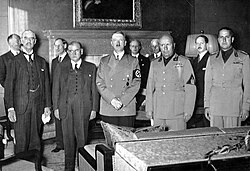
When the King and Queen greeted Neville Chamberlain on his return from negotiating the Munich Agreement in 1938, they invited him onto the balcony of Buckingham Palace. Historian John Grigg called this "the most unconstitutional act by a British sovereign in the present century."
Image source: Munich Agreement
May 17, 1939 - Jun 15, 1939
% complete
In May and June 1939, the King and Queen toured Canada and the United States — the first visit of a reigning British monarch to North America. They visited the 1939 New York World's Fair and stayed with President Franklin D. Roosevelt.
Image source: 1939 royal tour of Canada
Sep 3, 1939
% complete
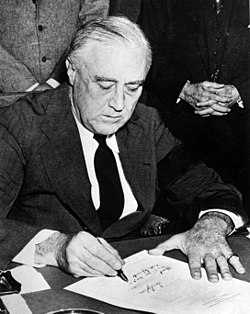
Following the German invasion of Poland, the British Empire and most Commonwealth countries — but not Ireland — declared war on Nazi Germany in September 1939. War with Italy and Japan followed in 1940 and 1941 respectively.
Image source: Declaration of war by the United States
Dec 1939
% complete
The King visited military forces abroad in France in December 1939, beginning a wartime pattern of morale-boosting visits to troops overseas throughout the conflict.
May 10, 1940
% complete
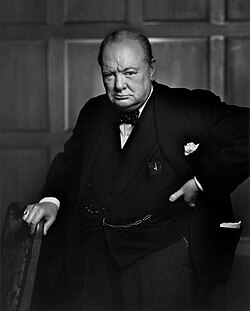
In 1940, Winston Churchill replaced Neville Chamberlain as prime minister, though personally the King would have preferred to appoint Lord Halifax. The two men developed a close working relationship.
Image source: Winston Churchill
Sep 1940 - 1945
% complete
Every Tuesday for four and a half years from September 1940, the King and Churchill met privately for lunch to discuss the war in secret and with frankness, forging a strong partnership during the war.
Sep 7, 1940
% complete
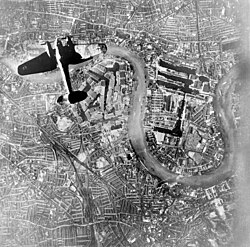
The first night of the Blitz on London, on 7 September 1940, killed about one thousand civilians, mostly in the East End. The royal family famously chose to remain in London during the bombing.
Image source: The Blitz
Aug 25, 1942
% complete
In August 1942, the King's brother, the Duke of Kent, was killed on active service, a personal tragedy for the royal family during the war years.
Image source: Prince George, Duke of Kent
Apr 15, 1943
% complete
The King bestowed the George Cross on the entire "island fortress of Malta" in 1943, honouring its heroic resistance during intense Axis bombing campaigns in the Second World War.
Image source: George Cross
Jun 1943
% complete
The King visited military forces abroad in North Africa and Malta in June 1943, continuing his wartime tours to raise morale among British and Allied troops.
Jun 1944
% complete
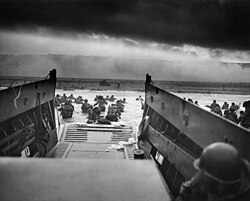
The King visited Normandy in June 1944, shortly after the D-Day landings, and later toured southern Italy in July 1944 and the Low Countries in October 1944 to support the troops.
Image source: Normandy landings
May 8, 1945
% complete
Britain and its allies were victorious in 1945. During the Victory in Europe Day celebrations, crowds shouted "We want the King!" in front of Buckingham Palace, and the royal family appeared on the balcony to cheering throngs.
Image source: Victory in Europe Day
Jan 1946
% complete
In January 1946, George VI addressed the United Nations at its first assembly, held in London, reaffirming "our faith in the equal rights of men and women and of nations great and small."
Image source: United Nations General Assembly
Aug 1947
% complete
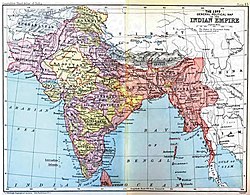
During Clement Attlee's ministry, British India became the two independent Dominions of India and Pakistan in August 1947. Burma left in January 1948, Palestine in May 1948, and Ireland in 1949.
Image source: Indian independence movement
Jun 1948
% complete
The King relinquished the title of Emperor of India in June 1948 and instead adopted the new title of Head of the Commonwealth, marking the end of the British monarchy's imperial role in India.
Image source: Emperor of India
Apr 28, 1949 - Apr 30, 1949
% complete
In late April 1949, Commonwealth leaders issued the London Declaration, which laid the foundation of the modern Commonwealth and recognised the King as Head of the Commonwealth, allowing republics to remain members.
Image source: London Declaration
Jan 26, 1950
% complete
In January 1950, George VI ceased to be King of India when it became a republic, though it remained within the Commonwealth as recognised by the London Declaration.
Image source: Republic Day (India)
Mar 1949
% complete
A planned tour of Australia and New Zealand was postponed after the King developed an arterial blockage in his right leg, which threatened loss of the limb and was treated with a right lumbar sympathectomy in March 1949.
May 3, 1951
% complete
George VI was well enough to open the Festival of Britain in May 1951, but on 4 June it was announced that he would need immediate and complete rest for the next four weeks, despite the arrival of Haakon VII of Norway for an official visit.
Image source: Festival of Britain
Sep 23, 1951
% complete
On 23 September 1951, the King's left lung was removed in a surgical operation performed by Clement Price Thomas after a malignant tumour was found. His health declined significantly thereafter.
Image source: Clement Price Thomas
Oct 1951 - Nov 1951
% complete
In October 1951, Princess Elizabeth and Philip undertook a month-long tour of Canada; the trip had been delayed for a week because of the King's illness, as Elizabeth increasingly assumed royal duties.
Image source: Wedding of Princess Margaret and Antony Armstrong-Jones
Dec 25, 1951
% complete
The King's Christmas broadcast of 1951 was recorded in sections and then edited together, as his declining health made delivering the address live impossible.
Image source: Royal Christmas message
Jan 31, 1952
% complete
On 31 January 1952, against the advice of those close to him, the King travelled to London Airport to see Elizabeth and Philip depart for their tour of Australia via Kenya. It was the last time he saw his daughter.
Feb 6, 1952
% complete
George VI died on 6 February 1952 at Sandringham, aged 56. His daughter Elizabeth succeeded him as Queen Elizabeth II while she was in Kenya, ending his reign that began in December 1936.
Feb 15, 1952
% complete
The King was interred initially in the Royal Vault of St George's Chapel, Windsor, and was transferred to the King George VI Memorial Chapel inside St George's on 26 March 1969.
Image source: St George's Chapel, Windsor Castle
1960
% complete
He was posthumously awarded the Order of Liberation by the French government in 1960, one of only two people — the other being Churchill in 1958 — to receive the medal after 1946.
Image source: Order of Liberation
2002
% complete
Fifty years after his death, the remains of his widow, Queen Elizabeth the Queen Mother, and the ashes of his younger daughter, Princess Margaret — both of whom died that year — were interred in the chapel alongside him.
2011
% complete
Colin Firth won the Academy Award for Best Actor for his performance as George VI in the 2010 film The King's Speech, which dramatised the King's struggle with his stammer and relationship with Lionel Logue.
Image source: The King's Speech
Or browse the full history timeline directory, with more than 2,000 topics.
This George VI timeline was generated with the help of AI, using information found on the internet.
We work hard to keep these timelines accurate, but mistakes do get through. If you spot one, email us at [email protected] and we'll fix it for future visitors.
Generate yours with AI or build it from scratch, for free.
Export your timeline, add your own events, edit or remove AI-generated events, and much more
No credit card required.
Cancel anytime.
Cancel anytime.
You can create an unlimited number of timelines with up to 10 events on each one, customize how they look, export them to PDF, PNG, PowerPoint, CSV, and Excel, and share them with a link. Paid plans raise the event limit and add features like spreadsheet imports and collaborators.
Yes. You can cancel your subscription from your account page at any time, and you will not be charged again. Your subscription stays active for the rest of the period you already paid for.
Yes. We will email you a reminder before the annual renewal, and we will also email you a receipt.
Yes. You can email us within 15 days of any payment, and we will issue you a full refund.
Check out our pricing docs or send us an email anytime: [email protected].