-
Use Cases
-
Resources
-
Pricing
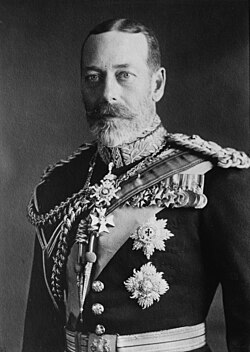
King George V (1865–1936) reigned as King of the United Kingdom and the British Dominions, and Emperor of India, from 1910 until his death in 1936. His reign spanned World War I, major political changes including the rise of the Labour Party, the Irish War of Independence, and the transformation of the British Empire into the Commonwealth. He renamed the royal house from Saxe-Coburg-Gotha to Windsor during WWI and introduced the annual Royal Christmas Broadcast in 1932. More Less
Jun 3, 1865
% complete
George Frederick Ernest Albert was born at 1:18 am on 3 June 1865 at Marlborough House, London. He was the second son of Albert Edward, Prince of Wales, and was third in line to the British throne at birth.
Image source: George V
1871
% complete
John Neale Dalton was appointed as tutor to George and his elder brother Albert Victor in 1871, providing the princes with a strict education in preparation for their future roles.
Sep 1877
% complete
Believing the navy to be 'the very best possible training for any boy', George's father sent both brothers to join the cadet training ship HMS Britannia at Dartmouth, Devon, when George was 12 years old.
1879 - 1882
% complete
For three years from 1879, George and his brother served on HMS Bacchante, accompanied by their tutor Dalton, touring parts of the British Empire and beyond.
1881
% complete
During a visit to Japan in 1881, George had a local artist tattoo a blue and red dragon on his arm and was received by Emperor Meiji. He and his brother presented Empress Haruko with two wallabies from Australia.
1882
% complete
At Jerusalem in 1882, George and Albert Victor attended a Sephardic Passover dinner and got tattoos of the Jerusalem Cross to commemorate their visit, twenty years after their father had obtained the same tattoo.
1891 - 1892
% complete
George's last active service in the Royal Navy was in command of HMS Melampus in 1891–1892, ending a naval career begun in 1877.
Nov 1891
% complete
In November 1891, George's brother Albert Victor became engaged to their second cousin once removed, Princess Victoria Mary of Teck, known as 'May' within the family.
Jan 14, 1892
% complete
On 14 January 1892, six weeks after the formal engagement, Albert Victor died of pneumonia during an influenza pandemic, leaving George second in line to the throne and likely to succeed after his father.
May 24, 1892
% complete
Queen Victoria created George Duke of York, Earl of Inverness, and Baron Killarney on 24 May 1892, and he received lessons in constitutional history from J. R. Tanner.
Image source: Duke of York
1893
% complete
In 1893, George's sister married Ferdinand, Crown Prince of Romania, strengthening dynastic ties between the British and Romanian royal families.
Image source: Marie of Romania
Jul 6, 1893
% complete
George married Princess Victoria Mary of Teck, his late brother's former fiancée, on 6 July 1893 at the Chapel Royal in St James's Palace, London.
Oct 1894
% complete
In October 1894, George's maternal uncle-by-marriage, Alexander III of Russia, died, making Nicholas II Tsar and further intertwining European royal relations.
Image source: Alexander III of Russia
1901
% complete
The 1901 imperial tour, designed by Colonial Secretary Joseph Chamberlain with Prime Minister Lord Salisbury's support, rewarded the Dominions for their participation in the South African War of 1899–1902.
Jan 22, 1901
% complete
On the death of Queen Victoria on 22 January 1901, George's father ascended the throne as King Edward VII. Later that year, the Duke and Duchess toured the British Empire.
Nov 9, 1901
% complete
On 9 November 1901, George was created Prince of Wales and Earl of Chester following his father's accession as King Edward VII.
Image source: Prince of Wales
Nov 1905 - Mar 1906
% complete
From November 1905 to March 1906, George and May toured British India, where he was disgusted by racial discrimination and campaigned for greater involvement of Indians in the government of the country.
1910
% complete
After an anti-Catholic lie about George first surfaced in print in 1893 resurfaced, the Accession Declaration Act 1910 shortened the declaration and removed the most offensive phrases.
Image source: Accession Declaration Act 1910
May 6, 1910
% complete
On 6 May 1910, Edward VII died, and George became King of the United Kingdom and the British Dominions, and Emperor of India.
1911
% complete
Following constitutional crises, two general elections in 1910, and a breakdown of reform talks in November 1910, the Parliament Act 1911 permanently removed the power of the House of Lords to veto bills and established the supremacy of the elected House of Commons.
Image source: Parliament Act 1911
Jun 22, 1911
% complete
The coronation took place at Westminster Abbey on 22 June 1911 and was celebrated by the Festival of Empire in London.
Image source: Coronation of George V and Mary
Dec 12, 1911
% complete
Later in 1911, the King and Queen travelled to India for the Delhi Durbar, where they were presented on 12 December 1911 to an assembled audience of Indian dignitaries and princes as Emperor and Empress of India.
Image source: Delhi Durbar
Dec 18, 1913
% complete
On 18 December 1913, George was part of a shooting party that shot over a thousand pheasants in six hours — about one bird every 20 seconds — while visiting the home of Lord Burnham.
Jul 1914
% complete
Desperate to avoid civil war in Ireland between Unionists and Nationalists, George called a meeting of all parties at Buckingham Palace in July 1914 in an attempt to negotiate a settlement.
Aug 4, 1914
% complete
On 4 August 1914, George wrote in his diary, 'I held a council at 10:45 to declare war with Germany... Please to God it may soon be over.' From 1914 to 1918, Britain and its allies were at war with the Central Powers led by the German Empire.
Oct 28, 1915
% complete
George was seriously injured on 28 October 1915 when thrown by his horse at a troop review in France; the injury, along with heavy smoking, began a lasting toll on his health.
1917 - 1918
% complete
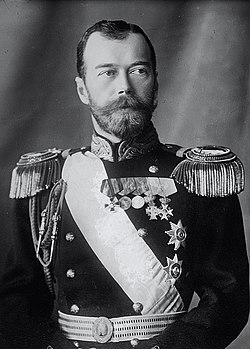
When his cousin Tsar Nicholas II was overthrown in the Russian Revolution of 1917, fears of revolution in Britain led George to think hosting the Romanovs would be inappropriate. Nicholas and his family remained in Russia, where they were killed by the Bolsheviks in 1918.
Image source: Nicholas II of Russia
Jul 17, 1917
% complete
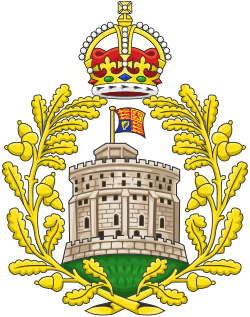
On 17 July 1917, George appeased British nationalist feelings by issuing a royal proclamation changing the name of the royal house from Saxe-Coburg and Gotha to Windsor, making him the first monarch of the House of Windsor.
Image source: House of Windsor
Dec 11, 1917
% complete
In letters patent gazetted on 11 December 1917, the King restricted the style 'Royal Highness' and princely titles to the children of the Sovereign, the children of sons of the Sovereign, and the eldest living son of the eldest son of a Prince of Wales.
1919
% complete
Relatives who fought on the German side, such as Ernest Augustus, Crown Prince of Hanover, and Charles Edward, Duke of Saxe-Coburg and Gotha, had their British peerages suspended by a 1919 Order in Council under the Titles Deprivation Act 1917. That year Strutt also escorted former Emperor Charles I of Austria to safety in Switzerland.
Jun 22, 1921
% complete
At the opening session of the Parliament of Northern Ireland on 22 June 1921, the King appealed for conciliation in a speech partly drafted by General Jan Smuts and approved by Lloyd George. By the end of 1922, Ireland was partitioned and the Irish Free State established.
Image source: Parliament of Northern Ireland
1922
% complete
In 1922, a Royal Navy ship was sent to Greece to rescue George's cousins Prince and Princess Andrew during the turmoil following the Greco-Turkish War.
May 1922
% complete
In May 1922, George toured Belgium and northern France, visiting First World War cemeteries and memorials built by the Imperial War Graves Commission. This tour, plus a short visit to Italy in 1923, were the only times he left the UK on official business after the war.
1924
% complete
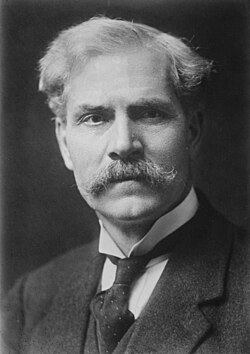
Amid frequent changes in government between 1922 and 1929, George appointed Ramsay MacDonald as the first Labour Prime Minister in 1924, in the absence of a clear majority for any one of the three major parties.
Image source: Ramsay MacDonald
1926
% complete
In 1926, George hosted an Imperial Conference in London at which the Balfour Declaration accepted the growth of the British Dominions into self-governing 'autonomous Communities within the British Empire, equal in status, in no way subordinate one to another'.
Image source: 1926 Imperial Conference
1931
% complete
The Statute of Westminster 1931 formalised the Dominions' legislative independence, recognised them as separate states within the Commonwealth, and required agreement of all Dominion parliaments for any change to succession. Amid financial crisis, George encouraged a National Government led by MacDonald and Baldwin and volunteered to cut the civil list.
1932
% complete
In 1932, George agreed to deliver a Royal Christmas speech on the radio, an event that became annual thereafter and brought the monarchy closer to the public through mass media.
Image source: Royal Christmas message
1934
% complete
In 1934, George bluntly told German ambassador Leopold von Hoesch that Germany was now the peril of the world and there would be war within ten years if it continued its present course; he warned ambassador Eric Phipps in Berlin to be suspicious of the Nazis.
1925
% complete
In 1925, on the instruction of his doctors, George reluctantly took a recuperative private cruise in the Mediterranean — his third trip abroad since the war and his last.
Nov 1928
% complete
In November 1928, George fell seriously ill with septicaemia, which localised between the base of his right lung and diaphragm as an empyema requiring drainage. A suggested rest abroad in 1929 was rejected 'in rather strong language'.
1935
% complete
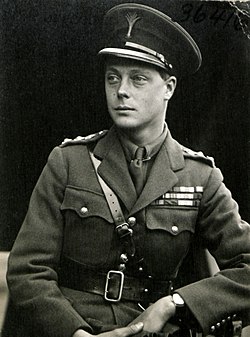
In 1935, George said of his son Edward, 'After I am dead, the boy will ruin himself within 12 months', and prayed that Bertie (Albert) and Lilibet would come between Edward and the throne.
Image source: Edward VIII
Dec 1935
% complete
The death of his favourite sister, Victoria, in December 1935 depressed George deeply in the final weeks of his life.
Image source: Queen Victoria
Jan 15, 1936
% complete
On the evening of 15 January 1936, George took to his bedroom at Sandringham House complaining of a cold; he remained in the room until his death. His physicians issued the bulletin 'The King's life is moving peacefully towards its close.'
Jan 20, 1936
% complete
George died on 20 January 1936 and was succeeded by his eldest son, Edward VIII. His last words, a mumbled 'God damn you!', were addressed to his nurse Catherine Black — revealed only when Lord Dawson's diary was published in 1986.
Image source: Death and state funeral of George V
Jan 22, 1936
% complete
George's will was read at a private family meeting at Sandringham on 22 January 1936. When Edward VIII queried why no provision was made for him, solicitor Sir Bernard Halsey-Bircham explained the late king had assumed his son would have built a fortune from Duchy of Cornwall revenues.
Or browse the full history timeline directory, with more than 2,000 topics.
This George V timeline was generated with the help of AI, using information found on the internet.
We work hard to keep these timelines accurate, but mistakes do get through. If you spot one, email us at [email protected] and we'll fix it for future visitors.
Generate yours with AI or build it from scratch, for free.
Export your timeline, add your own events, edit or remove AI-generated events, and much more
No credit card required.
Cancel anytime.
Cancel anytime.
You can create an unlimited number of timelines with up to 10 events on each one, customize how they look, export them to PDF, PNG, PowerPoint, CSV, and Excel, and share them with a link. Paid plans raise the event limit and add features like spreadsheet imports and collaborators.
Yes. You can cancel your subscription from your account page at any time, and you will not be charged again. Your subscription stays active for the rest of the period you already paid for.
Yes. We will email you a reminder before the annual renewal, and we will also email you a receipt.
Yes. You can email us within 15 days of any payment, and we will issue you a full refund.
Check out our pricing docs or send us an email anytime: [email protected].