-
Resources
-
Pricing
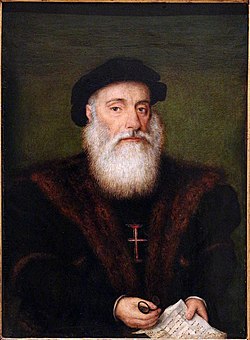
Henry the Navigator (1394–1460) was a Portuguese prince and patron of maritime exploration. He supported voyages along the West African coast, promoted advances in navigation and cartography, and helped establish Portugal as a leading Atlantic power. More Less
Build a timeline like this one in minutes, for free. Start Yours →
Part of our collection of empire timelines.
Mar 4, 1394
Prince Henry the Navigator was born on 4 March 1394. He became a Portuguese prince and a central figure in the early development of the Portuguese Empire, often being credited as one of the principal initiators of the Age of Discovery.
Image source: Prince Henry the Navigator
1415
Henry supported his father, John I of Portugal, in the conquest of Ceuta, a Muslim port on the North African coast across the Strait of Gibraltar from the Iberian Peninsula. The conquest became an important starting point for subsequent Portuguese exploration.
Image source: Portuguese conquest of Ceuta
1415 - 1418
The expeditions to Ceuta in 1415 and 1418 allowed Henry to collect information about lands farther south. Much of this intelligence came from Muslim prisoners and helped inform Portuguese ambitions in Africa.
1416
Peter returned in 1426 with a world map from Venice. Following this success, he undertook a grand tour across Europe, and his travels helped stimulate the exploratory efforts of his brother Henry.
1419
In 1419, Henry's father appointed him governor of the province of the Algarve. The position strengthened Henry's influence over Portugal's southern maritime interests and its Atlantic ventures.
1420 - 1460
Henry held the administration of the Order of Christ for the remainder of his life. The order provided an important source of funds for his ambitious plans, including persistent Portuguese attempts to conquer the Canary Islands.
Image source: Military Order of Christ
May 25, 1420
On 25 May 1420, Henry became administrator of the Order of Christ, the Portuguese successor to the Knights Templar. The order was headquartered at Tomar in central Portugal.
Apr 22, 1427
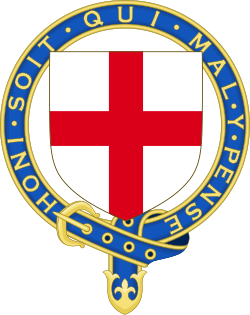
Peter traveled to England, where he was elected a Knight of the Garter on 22 April 1427. He returned to Portugal the following year, bringing further international experience to the royal family.
Image source: Order of the Garter
1431
In 1431, Henry donated houses for the Estudo Geral, where grammar, logic, rhetoric, arithmetic, music, and astronomy were taught. The institution would later become the University of Lisbon.
1433
When John I died in 1433, Henry's eldest brother, Edward of Portugal, became king. Henry continued to exercise influence during the new reign.
1437
Henry was the main organizer of the disastrous Portuguese expedition against Tangier in 1437. The campaign ended with his younger brother Ferdinand being held hostage to guarantee Portuguese promises in the peace agreement.
Oct 12, 1458
After Pope Calixtus III called for a crusade following the Ottoman capture of Constantinople, the Portuguese king initially pledged an army. After Calixtus died on 6 August 1458, Afonso was persuaded by Ceuta's governor, Sancho de Noronha, to seize Ksar es-Seghir instead; Portuguese forces set sail for Alcácer-Ceguer on 12 October 1458.
Nov 13, 1460
Henry died on 13 November 1460 in Vila do Bispo in the Algarve. Regarded as a patron of Portuguese discoveries, he was initially buried in the Church of Saint Mary of Lagos and later moved to the Monastery of Batalha, where his tomb bears his motto, “Talant de bien faire.”
1410 - 1412
As early as 1410 or 1412, Henry commissioned captains to explore the coasts beyond Cape Non. European charts and geographical beliefs regarded Cape Non, together with Cape Bojador, as a limit of the known world.
1415
The first Portuguese explorations associated with Henry followed not long after the capture of Ceuta in 1415. These voyages began the sustained effort to investigate the Atlantic and the African coast beyond areas familiar to European sailors.
1424
By 1424, Cape Bojador was the most southerly point known to Europeans on Africa's western coast. Superstitious seafarers believed that sea monsters and the edge of the world lay beyond the cape.
Image source: Cape Bojador
1434
In 1434, Gil Eanes, commander of one of Henry's expeditions, became the first known European to pass Cape Bojador. His achievement overcame a major psychological and navigational barrier to further exploration down the African coast.
Image source: Gil Eanes
1441
In 1441, Nuno Tristão and Antão Gonçalves reached Cape Blanco. Their voyage extended Portuguese knowledge of the northwest African coast beyond earlier exploration points.
1443
The Portuguese sighted the Bay of Arguin in 1443. The bay became an important location in the continuing Portuguese exploration and commercial activity along the African coast.
1444
In 1444, Dinis Dias reached the Senegal River and rounded the peninsula of Cap-Vert. His voyage pushed Portuguese exploration farther south along the Atlantic coast of Africa.
1444 - 1446
From 1444 to 1446, as many as forty vessels sailed from Lagos on Henry's behalf. During the same period, the first private mercantile expeditions began, broadening participation in Portuguese Atlantic commerce.
1452
By 1452, the influx of gold from Portuguese activity in Africa permitted the minting of Portugal's first gold cruzado coins. The currency reflected the growing economic consequences of overseas expansion.
Mar 22, 1455
On his first voyage, begun on 22 March 1455, Alvise Cadamosto visited the Madeira Islands and the Canary Islands. His expedition formed part of the maritime exploration conducted under Henry's patronage.
1456
On his second voyage in 1456, Alvise Cadamosto became the first European to reach the Cape Verde Islands. His reports added to European knowledge of the Atlantic islands and the West African coast.
Image source: Alvise Cadamosto
1462
By 1462, Portuguese explorers had investigated the African coast as far south as present-day Sierra Leone. This achievement represented the geographical reach of the exploratory movement Henry had helped initiate.
Image source: Portuguese maritime exploration
1498
In 1498, Vasco da Gama became the first European sailor to reach India by sea. His voyage realized a major objective of the Portuguese maritime expansion whose early foundations were associated with Henry.
Image source: Vasco da Gama
1418
In 1418, João Gonçalves Zarco and Tristão Vaz Teixeira were blown off course by a storm while making the westward volta do mar return route to Portugal. Their voyage led to the Portuguese discovery of Madeira.
Image source: Madeira
1420
In 1420, settlers moved to Madeira after its discovery by Portuguese navigators. The settlement marked an early stage in the colonization of Atlantic islands connected with Henry's broader program.
Image source: Madeira
1427
A chart by Gabriel de Vallseca of Mallorca has been interpreted as indicating that Diogo de Silves first discovered the Azores in 1427. The reported discovery opened a new field for Portuguese Atlantic exploration and settlement.
1431
In 1431, Gonçalo Velho was dispatched with orders to determine the location of islands first identified by Diogo de Silves. The mission formed part of Portugal's continuing effort to chart and occupy the Atlantic archipelago.
1439 - 1448
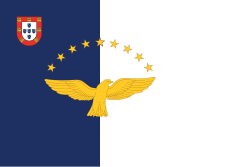
Henry promoted the colonization of the Azores during the regency of his brother Peter, which lasted from 1439 to 1448. The effort extended Portuguese settlement and administration farther into the Atlantic.
Image source: Azores
1700 - 1799
The myth of a “Sagres school” allegedly founded by Prince Henry was created in the 18th century. Samuel Purchas and Abbé Prévost were among the figures who helped establish this later account.
1800 - 1899
No one used the nickname “Henry the Navigator” during Prince Henry's lifetime or in the following three centuries. The term was coined by the German historians Heinrich Schaefer and Gustave de Veer.
1800 - 1899
In nineteenth-century Portugal, an idealized image of Henry as a pioneer of exploration and science reached its height. This interpretation helped transform him into a national symbol of Portuguese discovery.
1868
British author Henry Major helped popularize the name “Henry the Navigator” by using it in the title of his 1868 biography of the prince.
1895
Raymond Beazley further popularized the title “Henry the Navigator” in his 1895 biography. The work reinforced the enduring English-language image of Henry as the initiator of Portuguese exploration.
1994
In 1994, the Prince Henry Society and the Portuguese government gifted Prince Henry the Navigator Park in New Bedford, Massachusetts. The park commemorates Henry's historical association with Portuguese maritime heritage.
1996 - 2002
From 1996 until Portugal adopted the euro in 2002, Henry was depicted on the obverse of the largest-denomination Portuguese escudo note, valued at 10,000 escudos.
Build a timeline like this one in minutes, for free. Start Yours →
Or browse the full history timeline directory, with more than 2,500 topics.
This Henry the Navigator timeline was generated with the help of AI, using information found on the internet.
We work hard to keep these timelines accurate, but mistakes do get through. If you spot one, email us at [email protected] and we'll fix it for future visitors.
Generate yours with AI or build it from scratch, for free.
Export your timeline, add your own events, edit or remove AI-generated events, and much more
No credit card required.
15-day money-back guarantee.
You can create an unlimited number of timelines with up to 10 events on each one, customize how they look, export them to PDF, PNG, PowerPoint, CSV, and Excel, and share them with a link. Timelines made with Timeline Maker AI keep every event the generator created, and you can add up to 5 events of your own. Paid plans remove the event limit, add spreadsheet imports and hide Preceden's branding, and the higher-priced plan also adds collaborators, a custom logo and a custom domain.
Yes. You can cancel your subscription from your account page at any time, and you will not be charged again. Your subscription stays active for the rest of the period you already paid for.
Yes. We email you a reminder 15 days before your annual renewal, and we email you a receipt after every payment.
Yes. You can email us within 15 days of any payment, and we will issue you a full refund.
Check out our pricing docs or send us an email anytime: [email protected].