-
Use Cases
-
Resources
-
Pricing
The History of Arctic Exploration traces humanity's quest to navigate, map, and understand the polar north. From early Norse seafarers and the search for the Northwest Passage to heroic expeditions like Franklin's doomed voyage, Nansen's Fram drift, Peary's contested North Pole claim, and modern scientific research stations, this timeline highlights the courage, tragedy, and discovery that defined centuries of polar exploration. More Less
900 - 999
% complete
In the 10th century, the Norseman Gunnbjörn Ulfsson got lost in a storm and ended up within sight of the Greenland coast, becoming one of the first Europeans recorded to have glimpsed Greenland.
Image source: Gunnbjörn Ulfsson
1450
% complete
While the Norse settlements in Greenland flourished initially, they eventually petered out until about 1450, ending centuries of Norse presence in the Arctic.
Image source: Norse colonization of North America
1533
% complete
The Pechenga Monastery on the north of the Kola Peninsula was founded by Russian monks in 1533; from their base at Kola, the Pomors explored the Barents Region, Spitsbergen, and Novaya Zemlya, all within the Arctic Circle.
Image source: Pechenga Monastery
1883
% complete
Austro-Hungarian ethnologist Karl Penka discussed the idea of an Arctic origin of Indo-European culture in his Origins of the Aryans (1883), an idea Warren later referenced in his 1963 paper 'The Hyperborean Origin of the Indo-European Culture.'
1903
% complete
Indian independence activist Bal Gangadhar Tilak resurrected William Warren's theory in his The Arctic Home in the Vedas (1903), dedicated to philologist Max Müller, arguing the Arctic origin of Indo-European culture.
Image source: The Arctic Home in the Vedas
1000 - 1099
% complete
Russian settlers and traders on the coasts of the White Sea, known as the Pomors, had been exploring parts of the northeast passage as early as the 11th century.
Image source: Pomors
1525
% complete
The idea to explore this region was initially economic, and was first put forward by Russian diplomat Dmitry Gerasimov in 1525.
Image source: Dmitry Gerasimov
1553
% complete
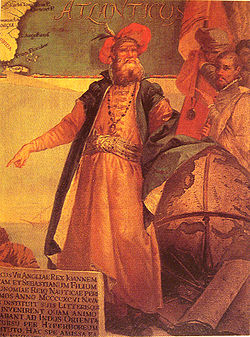
In the mid-16th century, John Cabot's son Sebastian helped organize an expedition to find a northeast passage, led by Sir Hugh Willoughby and Richard Chancellor.
Image source: Hugh Willoughby
1596
% complete
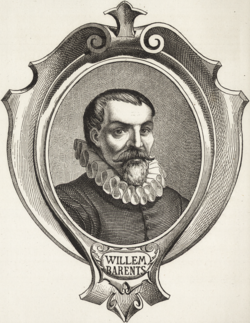
Most notable is the 1596 expedition led by Dutch navigator Willem Barentsz who discovered Spitsbergen and Bear Island.
Image source: Willem Barentsz
1600
% complete
Pomors founded the settlement of Mangazeya east of the Yamal Peninsula in the early 16th century, establishing a key trading outpost for Arctic commerce.
Image source: Mangazeya
1600 - 1699
% complete
By the 17th century the Pomors established a continuous sea route from Arkhangelsk as far east as the mouth of Yenisey.
1619
% complete
Fearing English and Dutch penetration into Siberia, Russia closed the Mangazeya seaway in 1619.
1620
% complete
Pomor activity in Northern Asia declined and the bulk of exploration in the 17th century was carried out by Siberian Cossacks, sailing from one river mouth to another in their Arctic-worthy kochs.
Image source: Koch (boat)
1648
% complete
In 1648 the most famous of these expeditions, led by Fedot Alekseev and Semyon Dezhnev, sailed east from the mouth of Kolyma to the Pacific and doubled the Chukchi Peninsula, proving there was no land connection between Asia and North America.
Image source: Semyon Dezhnev
1648
% complete
In 1648 the Cossack Semyon Dezhnyov opened the now famous Bering Strait between America and Asia.
Image source: Bering Strait
1728
% complete
Eighty years after Dezhnev, in 1728, another Russian explorer, Danish-born Vitus Bering aboard Sviatoy Gavriil made a similar voyage in reverse, starting in Kamchatka and going north to the passage that now bears his name, the Bering Strait.
Image source: Vitus Bering
1878
% complete
It was not until 1878 that Finnish-Swedish explorer Adolf Erik Nordenskiöld made the first complete passage of the North East Passage from west to east, in the Vega expedition.
Image source: Adolf Erik Nordenskiöld
1409
% complete
A seminal event in Arctic exploration occurred in 1409, when Ptolemy's Geographia was translated into Latin, thereby introducing the concepts of latitude and longitude into Western Europe.
Image source: Geography (Ptolemy)
1497
% complete
John Cabot's initial failure in 1497 to find a Northwest Passage across the Atlantic led the British to seek an alternative route to the east.
Image source: John Cabot
1558
% complete
One widely disputed claim is that two brothers from Venice, Niccolo and Antonio Zeno, allegedly made a map of their journeys to the northern regions, which was published by their descendants in 1558.
Image source: Voyage of the Zeno brothers
1564
% complete
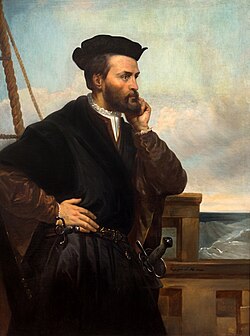
Interest re-kindled in 1564 after Jacques Cartier's discovery of the mouth of the Saint Lawrence River.
Image source: Jacques Cartier
1576 - 1578
% complete
From 1576 to 1578, Martin Frobisher took three trips to what is now the Canadian Arctic in order to find the passage.
Image source: Martin Frobisher
Jul 1583
% complete
In July 1583, Sir Humphrey Gilbert, who had written a treatise on the discovery of the passage and was a backer of Frobisher's, claimed the territory of Newfoundland for the English crown.
Image source: Humphrey Gilbert
1585
% complete
In 1585, under the employ of Elizabeth I, the English explorer John Davis entered Cumberland Sound, Baffin Island.
Image source: John Davis (explorer)
1587
% complete
Though England's efforts were interrupted in 1587 because of the Anglo-Spanish War, Davis's favorable reports on the region and its people would inspire explorers in the coming century.
Image source: Anglo-Spanish War (1585–1604)
1609
% complete
In 1609, while in the service of the Dutch East India Company, the English explorer Henry Hudson sailed up what is now called the Hudson River in search of the Passage; he reached present-day Albany, New York, before giving up.
Image source: Henry Hudson
1800 - 1850
% complete
In the first half of the 19th century, parts of the Northwest Passage were explored separately by a number of different expeditions, including those by John Ross, William Edward Parry, James Clark Ross; and overland expeditions led by John Franklin, George Back, Peter Warren Dease, Thomas Simpson, and John Rae.
Image source: Northwest Passage
1851
% complete
Sir Robert McClure was credited with the discovery of the Northwest Passage by sea in 1851 when he looked across M'Clure Strait from Banks Island and viewed Melville Island.
Image source: Robert McClure
1851
% complete
The only usable route, linking the entrances of Lancaster Sound and Dolphin and Union Strait, was first used by John Rae in 1851.
Image source: John Rae (explorer)
1906
% complete
The Northwest Passage was not completely conquered by sea until 1906, when the Norwegian explorer Roald Amundsen completed a three-year voyage in the converted 47-ton herring boat Gjøa.
Image source: Roald Amundsen
1827
% complete
British naval officer William Edward Parry set out with the intention of reaching the North Pole in 1827 but did not succeed, one of several early failed polar expeditions.
Image source: Edward Parry (Royal Navy officer, born 1790)
1871
% complete
The tragic American Polaris expedition under Charles Francis Hall set out with the intention of reaching the North Pole in 1871 but did not succeed.
Image source: Polaris expedition
1879
% complete
The ill-fated Jeannette expedition commanded by US Navy Lieutenant Commander George W. De Long set out in 1879 with the intention of reaching the North Pole but did not succeed.
Image source: Jeannette expedition
1895
% complete
The Norwegian Fram expedition of Fridtjof Nansen in 1895 attempted to reach the North Pole but did not succeed, though it achieved a record farthest north.
Image source: Nansen's Fram expedition
1908
% complete
American Frederick Cook claimed to have reached the North Pole in 1908, but this has not been widely accepted.
Image source: Frederick Cook
Apr 6, 1909
% complete
On April 6, 1909, Robert Peary claimed to be the first person in recorded history to reach the North Pole, although whether he actually reached the Pole is disputed.
Image source: Robert Peary
May 9, 1926
% complete
On May 9, 1926, Americans Richard E. Byrd and Floyd Bennett claimed to have flown over the North Pole by airplane, though this claim remains contested.
Image source: Richard E. Byrd
May 12, 1926
% complete
The crew of the airship Norge, including Roald Amundsen and American sponsor Lincoln Ellsworth, flew over the Pole on May 12, 1926.
Image source: Norge (airship)
May 24, 1928
% complete
Norge was designed and piloted by Italian Umberto Nobile, who overflew the Pole a second time on May 24, 1928.
Image source: Umberto Nobile
1948
% complete
The first people to have without doubt walked on the North Pole were the Soviet party of 1948 under the command of Aleksandr Kuznetsov, who landed their aircraft nearby and walked to the pole.
Image source: Aleksandr Kuznetsov (explorer)
May 3, 1952
% complete
Joseph O. Fletcher and Lieutenant William Pershing Benedict landed a plane at the Pole on May 3, 1952, accompanied by scientist Albert P. Crary.
Aug 3, 1958
% complete
On August 3, 1958, the American submarine USS Nautilus reached the North Pole without surfacing, completing the first under-ice transit of the polar sea.
Image source: USS Nautilus (SSN-571)
Mar 17, 1959
% complete
On March 17, 1959, the USS Skate surfaced on the North Pole and dispersed the ashes of explorer Sir Hubert Wilkins.
Image source: USS Skate (SSN-578)
Apr 19, 1968
% complete
On April 19, 1968, Ralph Plaisted reached the North Pole via snowmobile, the first surface traveler known with certainty to have done so.
Image source: Ralph Plaisted
1969
% complete
In 1969 Wally Herbert, on foot and by dog sled, became the first man to reach the North Pole on muscle power alone, on the 60th anniversary of Robert Peary's famous but disputed expedition.
Image source: Wally Herbert
1995
% complete
The first persons to reach the North Pole on foot (or skis) and return with no outside help, no dogs, airplanes, or re-supplies were Richard Weber (Canada) and Misha Malakhov (Russia) in 1995.
May 2, 2007
% complete
On May 2, 2007, BBC's Top Gear reached the 1996 position of the magnetic north pole (78°35.7′N 104°11.9′W) in a modified Toyota Hilux.
Aug 2, 2007
% complete
On August 2, 2007, during Arktika 2007, Russian crewed submersibles were the first to descend to the seabed below the North Pole.
Image source: Arktika 2007
Apr 26, 2009
% complete
On April 26, 2009, Vassily Elagin, Afanassi Makovnev, Vladimir Obikhod, Sergey Larin, Alexey Ushakov, Alexey Shkrabkin and Nikolay Nikulshin, after 38 days and over 2,000 km starting from Sredniy Island, Severnaya Zemlya, drove two Russian-built cars, Yemelya-1 and Yemelya-2, to the North Pole.
Or browse the full history timeline directory, with more than 2,000 topics.
This History of Arctic Exploration timeline was generated with the help of AI, using information found on the internet.
We work hard to keep these timelines accurate, but mistakes do get through. If you spot one, email us at [email protected] and we'll fix it for future visitors.
Generate yours with AI or build it from scratch, for free.
Export your timeline, add your own events, edit or remove AI-generated events, and much more
No credit card required.
Cancel anytime.
Cancel anytime.
You can create an unlimited number of timelines with up to 10 events on each one, customize how they look, export them to PDF, PNG, PowerPoint, CSV, and Excel, and share them with a link. Paid plans raise the event limit and add features like spreadsheet imports and collaborators.
Yes. You can cancel your subscription from your account page at any time, and you will not be charged again. Your subscription stays active for the rest of the period you already paid for.
Yes. We will email you a reminder before the annual renewal, and we will also email you a receipt.
Yes. You can email us within 15 days of any payment, and we will issue you a full refund.
Check out our pricing docs or send us an email anytime: [email protected].