-
Use Cases
-
Resources
-
Pricing
Auctions have been used for millennia to sell goods, property, and services to the highest bidder. From ancient Roman slave and war-booty sales under the spear, through medieval candle auctions and 18th-century London auction houses like Sotheby's and Christie's, auctions evolved into a major commercial institution. The 20th century brought standardized practices, government asset sales, and art market booms, while the internet age—pioneered by eBay in 1995—transformed auctions into a global, always-online phenomenon. More Less
Jan 1, 600 - Dec 31, 699
% complete
In China, the personal belongings of deceased Buddhist monks were sold at auction as early as the seventh century AD. Despite this early practice, auctions never became widespread in Asia, remaining largely confined to this religious context for centuries.
Image source: Auction
Jan 1, 1595
% complete
According to the Oxford English Dictionary, the first mention of the word "auction" appeared in 1595, marking the entry of the term derived from Latin 'auctio' (an increase) into the English language as the practice began re-establishing itself in Europe.
Jan 1, 1600 - Dec 31, 1799
% complete
In some parts of England during the 17th and 18th centuries, auctions by candle began to be used for the sale of goods and leaseholds. In this format, bidding ended when a candle flame extinguished, ensuring no bidder knew exactly when the sale would conclude.
Image source: Candle auction
Jan 1, 1641
% complete
This type of candle auction was first mentioned in 1641 in the records of the House of Lords, providing one of the earliest documented instances of this distinctive English auction format being used for official business.
Jan 1, 1660
% complete
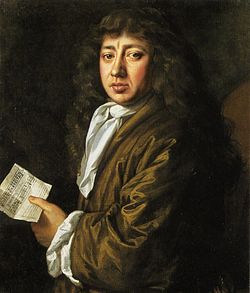
The practice rapidly became popular, and Samuel Pepys' diary recorded two occasions in 1660 when the Admiralty sold surplus ships 'by an inch of candle'. These entries offer a vivid firsthand account of candle auctions in everyday commercial life.
Image source: Samuel Pepys
Jan 1, 1660 - Dec 31, 1699
% complete
In the late 17th century, the London Gazette began reporting on the auctioning of artwork in the coffeehouses and taverns of London, reflecting how these social venues became the centers of the emerging art market.
Image source: The London Gazette
Jan 1, 1799
% complete
By the end of the 18th century, auctions of art works were commonly held in taverns and coffeehouses throughout Britain. These informal venues served as the primary marketplace for art before dedicated auction houses fully took over the trade.
Jan 1, 1674
% complete
The first known auction house in the world, Stockholms Auktionsverk (Stockholm Auction House), was founded by Baron Claes Rålamb in 1674. It remains in operation today, making it the oldest continuously running auction house on earth.
Jan 1, 1681
% complete
Göteborgs Auktionsverk was founded in Gothenburg, Sweden in 1681, just seven years after Stockholm's pioneering house. It is one of the early Swedish auction houses that are still in operation today.
Image source: Göteborgs Auktionsverk
Jan 1, 1707
% complete
The Dorotheum was founded in Vienna in 1707 and grew to become one of Central Europe's most prominent auction houses, dealing in art, antiques, jewelry, and other valuables. It continues to operate as a major player in the international auction market.
Image source: Dorotheum
Jan 1, 1731
% complete
Uppsala auktionskammare was established in Sweden in 1731, further cementing Sweden's role as an early center of organized auction activity alongside its neighbors in Stockholm and Gothenburg.
Image source: Uppsala Auktionskammare
Mar 11, 1744
% complete
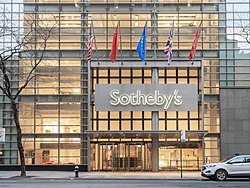
Sotheby's was founded in London on March 11, 1744, when Samuel Baker presided over the disposal of 'several hundred scarce and valuable' books from the library of an acquaintance. Today it is the world's second-largest auction house.
Image source: Sotheby's
Jan 1, 1759
% complete
Although James Christie did not formally found his auction house until 1766, newspaper advertisements of Christie's sales dating from 1759 have been discovered, indicating his activity as an auctioneer years before establishing his famous firm.
Image source: Christie's
Jan 1, 1766
% complete
Christie's, now the world's largest auction house, was founded by James Christie in London in 1766 and published its first auction catalog that same year. It would go on to dominate the global art market for centuries.
Jan 1, 1788
% complete
Mallams was founded in 1788 in Oxfordshire, England, becoming one of the country's regional auction houses specializing in fine art, antiques, and collectibles. It remains in operation today.
Jan 1, 1793
% complete
Bonhams was founded in London in 1793 and has grown into one of the world's largest auction houses, particularly renowned for sales of fine art, motor cars, jewelry, and collectors' items.
Image source: Bonhams
Jan 1, 1796
% complete
Phillips de Pury & Company was founded in 1796 in London. Over its long history it became known for contemporary art sales and stands among the historic auction houses still operating today, now known simply as Phillips.
Jan 1, 1805
% complete
Freeman's was established in Philadelphia in 1805, making it the oldest auction house in the United States. It built a reputation for American furniture, art, and decorative objects over more than two centuries of operation.
Jan 1, 1826
% complete
Lyon & Turnbull was founded in Edinburgh in 1826, becoming Scotland's oldest auction house. It specializes in fine art, antiques, and rare items, and continues to hold major auctions across the United Kingdom.
Image source: Lyon & Turnbull
Jan 1, 1859
% complete
The Great Slave Auction took place in 1859 in Savannah, Georgia, and is recorded as the second largest single sale of enslaved people in U.S. history. Over 400 men, women, and children were sold from the estate of Pierce Butler, making it one of the darkest chapters in the history of auctions.
Image source: Great Slave Auction
Jan 1, 1875 - Dec 31, 1899
% complete
Tobacco auctioneers in the southern United States in the late 19th century developed a distinctive rapid-fire chant that mixed traditions of 17th century England with chants of slaves from Africa, creating the iconic American auctioneer style.
Jan 1, 2001
% complete
Property auctions have been the subject of increased controversy during the twenty-first century as house prices sky-rocketed, raising concerns about transparency, vendor bidding, and affordability in residential real estate markets around the world.
Jan 1, 2008
% complete
In 2008, the US National Auctioneers Association reported that the gross revenue of the auction industry for that year was approximately $268.4 billion, with the fastest growing sectors being agricultural, machinery, equipment, and residential real estate auctions.
Jan 1, 1979
% complete
This form of a bidding ring was used as a central plot device in the opening episode of the 1979 British television series The House of Caradus, titled 'For Love or Money', uncovered by Helena Caradus on her return from Paris.
Image source: Auction
Jan 1, 1999 - Dec 31, 2002
% complete
Between 1999 and 2002, the British government auctioned off their gold reserves through a series of transparent public auctions, raising approximately $3.5 billion. The program, dubbed the 'Brown Bottom', became controversial as gold prices subsequently rose sharply.
Image source: 1999–2002 sale of British gold reserves
Feb 20, 2008
% complete
The Indian Premier League started annual public auctioning of cricket players in 2008 as entertainment for mass consumption, turning player acquisition into a televised spectacle watched by millions of fans worldwide.
Image source: Indian Premier League
Jan 1, 2012
% complete
Following the IPL's model, the Bangladesh Premier League began conducting cricket player auctions starting in 2012, extending the practice of auction-based team building across South Asian cricket leagues.
Image source: Bangladesh Premier League
Jan 1, 2012
% complete
Rael Levitt's company Auction Alliance became the focus of controversy over vendor bidding practices, where sellers or their agents bid on their own properties to inflate prices. The scandal led to the company's downfall in 2012.
Nov 15, 2017
% complete
Leonardo da Vinci's Salvator Mundi sold at Christie's New York in November 2017 for $450.3 million, becoming the most expensive item ever sold at an auction and shattering all previous records for artworks at auction.
Image source: Salvator Mundi (painting)
Jan 1, 2018
% complete
In 2018, the yearly revenues of the two biggest auction houses totaled $9 billion: Christie's earned $5 billion while Sotheby's brought in $4 billion, demonstrating the enormous scale of the high-end art and collectibles market.
Oct 1, 2019
% complete
In October 2019, Russia conducted a landmark auction of its crab fishing quotas, raising €2 billion. It was the largest auction of natural resource rights in Russian history and demonstrated the growing use of auctions for allocating natural resources.
Jan 1, 2020
% complete
As reported in 2020, ISIS conducted slave auctions to sell up to 7,000 Yazidi women, representing one of the most horrific abuses of auction mechanisms in modern history and part of the broader genocide against the Yazidi people.
Image source: Yazidi genocide
Oct 12, 2020
% complete
Paul Milgrom and Robert Wilson were awarded the 2020 Nobel Memorial Prize in Economic Sciences for improvements to auction theory and the introduction of new auction types, including formats used to allocate radio spectrum to telecom operators.
Or browse the full history timeline directory, with more than 2,000 topics.
This History of Auctions timeline was generated with the help of AI, using information found on the internet.
We work hard to keep these timelines accurate, but mistakes do get through. If you spot one, email us at [email protected] and we'll fix it for future visitors.
Generate yours with AI or build it from scratch, for free.
Export your timeline, add your own events, edit or remove AI-generated events, and much more
No credit card required.
Cancel anytime.
Cancel anytime.
You can create an unlimited number of timelines with up to 10 events on each one, customize how they look, export them to PDF, PNG, PowerPoint, CSV, and Excel, and share them with a link. Paid plans raise the event limit and add features like spreadsheet imports and collaborators.
Yes. You can cancel your subscription from your account page at any time, and you will not be charged again. Your subscription stays active for the rest of the period you already paid for.
Yes. We will email you a reminder before the annual renewal, and we will also email you a receipt.
Yes. You can email us within 15 days of any payment, and we will issue you a full refund.
Check out our pricing docs or send us an email anytime: [email protected].