
-
Use Cases
-
Resources
-
Pricing
The Cambrian Explosion was a rapid diversification of life that occurred approximately 541 to 520 million years ago, during which most major animal groups (phyla) first appeared in the fossil record. This event marks a pivotal moment in Earth's history, when complex multicellular organisms with hard shells, exoskeletons, and sophisticated body plans evolved, including early arthropods like trilobites. Famous fossil sites such as the Burgess Shale in Canada and Chengjiang in China provide exceptional evidence of this dramatic evolutionary radiation. More Less
1698
The first discovered Cambrian fossils were trilobites, described by Edward Lhuyd, the curator of the Oxford Museum, in 1698. At the time, their evolutionary importance was not understood.
Image source: Cambrian explosion

1784 - 1856
Although their evolutionary importance was not known, on the basis of their old age William Buckland realized that a dramatic step-change in the fossil record had occurred around the base of what we now call the Cambrian.
1835
Nineteenth-century geologists such as Adam Sedgwick and Roderick Murchison used fossils for dating rock strata, specifically for establishing the Cambrian and Silurian periods.
1859
By 1859, leading geologists including Roderick Murchison were convinced that what was then called the lowest Silurian stratum showed the origin of life on Earth, though others, including Charles Lyell, differed.
2004
In 2004, the start of the Cambrian was dated to 542 million years ago, providing a firm chronological anchor for the beginning of the explosive diversification of animal life.
Image source: Cambrian

2012
In 2012, the date of the start of the Cambrian was revised from 542 Ma to 541 million years ago based on improved radiometric dating methods.
2022
In 2022, the start of the Cambrian was changed again, this time to 538.8 million years ago, further refining the timeline of the explosive appearance of animal phyla.
1859
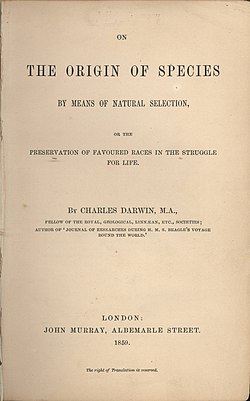
Charles Darwin in his 1859 book On the Origin of Species discussed the then inexplicable lack of earlier fossils as one of the main difficulties for his theory of descent with slow modification through natural selection.
Image source: On the Origin of Species
1989
Stephen Jay Gould's popular 1989 account of this work, Wonderful Life, brought the matter into the public eye and raised questions about what the Cambrian explosion represented.
Image source: Wonderful Life (book)

1996
Budd (1996) regarded tardigrades as also being a stem group relative to the arthropods, illustrating that stem groups are relative concepts: tardigrades form a crown group in their own right while sitting on the arthropod stem lineage.
Image source: Crown group

This Cambrian Explosion timeline was generated with the help of AI, using information found on the internet.
We work hard to keep these timelines accurate, but mistakes do get through. If you spot one, email us at [email protected] and we'll fix it for future visitors.
Generate yours with AI or build it from scratch, for free.


