
-
Use Cases
-
Resources
-
Pricing
Insects are among the most successful and diverse groups of animals on Earth, with a fossil record stretching back roughly 400 million years. Their evolutionary history includes the development of flight, metamorphosis, symbiotic relationships with flowering plants, and remarkable resilience through multiple mass extinction events. More Less
3600 BC
Sericulture, the cultivation of silkworms (Bombyx mori) for silk production, began in Neolithic China. Legend credits Empress Leizu with discovering silk, and the secret remained closely guarded for millennia, fueling trade along the Silk Road.
Image source: Sericulture

3100 BC
Ancient Egyptians associated the dung-rolling scarab beetle with the sun god Khepri and the cycle of rebirth. Scarab amulets and seals became widespread symbols of protection and regeneration throughout Egyptian history.
Image source: Scarab (artifact)

350 BC
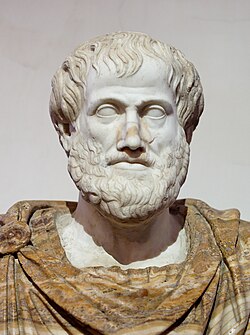
Aristotle's Historia Animalium provided one of the earliest systematic treatments of insects, which he called 'entoma' meaning 'notched.' He distinguished insects by their characteristics and laid groundwork for later entomological study.
Image source: Aristotle
77 AD
Pliny the Elder's encyclopedic Natural History included extensive accounts of insects, mixing accurate observation with folklore. His work influenced European understanding of insects for over a thousand years.
Image source: Natural History (Pliny)

1669 AD
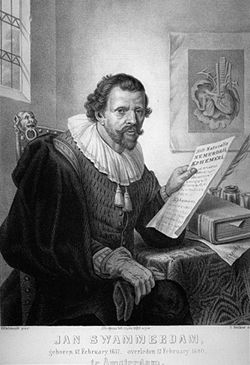
Dutch naturalist Jan Swammerdam used microscopy to study insect development and anatomy. His work demonstrated that insects undergo preformed growth rather than spontaneous generation, advancing the science of entomology significantly.
Image source: Jan Swammerdam
1705 AD
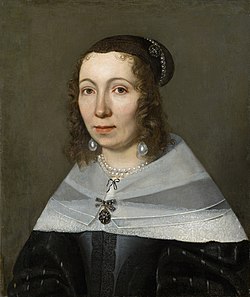
Maria Sibylla Merian's lavishly illustrated work documented insect metamorphosis and plant-insect interactions in Suriname. Her detailed observations of caterpillars, pupae, and adults advanced both entomology and ecological science.
Image source: Maria Sibylla Merian
1758 AD
Linnaeus's Systema Naturae introduced consistent two-part scientific names for species, including insects. This standardized classification system enabled entomologists worldwide to communicate unambiguously about insect diversity.
Image source: Carl Linnaeus

1859 AD
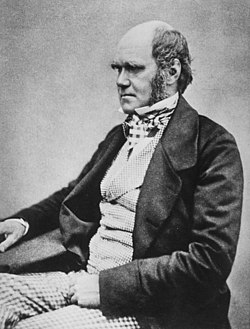
Darwin's On the Origin of Species used insect examples extensively, and his later work on orchids and pollination revealed intricate co-evolution between flowers and insects. His predictions about hawkmoth pollinators were confirmed decades later.
Image source: Charles Darwin
1910 AD
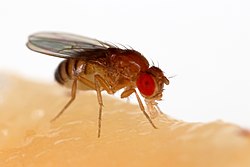
Thomas Hunt Morgan began using fruit flies for genetic research at Columbia University, establishing Drosophila as a premier model organism. Discoveries about chromosomes, mutation, and development made with this tiny insect earned multiple Nobel Prizes.
Image source: Drosophila melanogaster
1940 AD
Scientists identified ecdysone and juvenile hormone as key regulators of molting and metamorphosis in insects. These discoveries revolutionized developmental biology and led to targeted pest-control strategies using hormone analogs.
Image source: Ecdysone

This Evolution of Insects timeline was generated with the help of AI, using information found on the internet.
We work hard to keep these timelines accurate, but mistakes do get through. If you spot one, email us at [email protected] and we'll fix it for future visitors.
Generate yours with AI or build it from scratch, for free.


