-
Use Cases
-
Resources
-
Pricing
The evolution of elephants traces the development of Proboscidea, an order of mammals that originated around 55 million years ago in Africa. Early ancestors like Moeritherium were small, semi-aquatic animals that gradually evolved larger bodies, elongated trunks, and tusks. Over time, diverse lineages emerged, including mammoths and mastodons during the Ice Age, before most species went extinct, leaving only African bush elephants, African forest elephants, and Asian elephants today. More Less
600 BC - 400 BC
% complete
The Persians used elephants during the Achaemenid Empire between the 6th and 4th centuries BC, deploying them as instruments of war and symbols of imperial power.
500 BC
% complete
Southeast Asian states possibly began using war elephants as early as the 5th century BC, a practice that continued all the way to the 20th century.
Image source: War elephant
900 AD - 1000 AD
% complete
During the 10th century AD, the people of Igbo-Ukwu, in modern-day Nigeria, placed elephant tusks underneath their dead leader's feet in the grave, reflecting the ivory's cultural importance.
Image source: Igbo-Ukwu
1100
% complete
The word elephant appears in Middle English as olyfaunt around 1300 and was borrowed from Old French oliphant in the 12th century.
Image source: Elephant
1400 - 1500
% complete
As Europeans gained more access to captive elephants during the 15th century, depictions of them became more accurate, including one made by Leonardo da Vinci.
Image source: Cultural depictions of elephants
1800 - 1900
% complete
The taming of African elephants in the Belgian Congo began by decree of Leopold II of Belgium during the 19th century and continues to the present with the Api Elephant Domestication Centre.
Image source: Elephant
1861
% complete
The most famous circus elephant was probably Jumbo (1861 – 15 September 1885), who became a major attraction in the Barnum & Bailey Circus.
Image source: Jumbo
Sep 15, 1885
% complete
Jumbo died on 15 September 1885 after being struck by a train, ending the career of one of the most celebrated circus elephants in history.
1950
% complete
Asian working elephants were traditionally captured with traps and lassos, but since 1950, tranquillisers have been used instead, changing capture practices across the region.
1960
% complete
Captive elephants, including working elephants, are protected under The Prevention of Cruelty to Animals Act of 1960 in India.
Image source: Prevention of Cruelty to Animals Act

2000
% complete
There were 13,000–16,500 working elephants employed in Asia in 2000, continuing long traditions of logging, transport, and ceremonial uses.
Image source: Asian elephant
2009
% complete
In testimony to a US federal court in 2009, Barnum & Bailey Circus CEO Kenneth Feld acknowledged that circus elephants are struck behind their ears, under their chins, and on their legs with metal-tipped prods called bull hooks or ankus.
Image source: Ringling Bros. and Barnum & Bailey Circus
May 2016
% complete
Barnum and Bailey circus retired its touring elephants in May 2016, ending a long tradition of performing elephants in American circuses amid growing public concern.
1975
% complete
After CITES listed the Asian elephant under Appendix I in 1975, imports of the species almost stopped by the end of the 1980s, curbing international trade in live Asian elephants.
Image source: CITES
1977 - 1989
% complete
Between 1977 and 1989, elephant populations declined by 74% in East Africa, driven largely by poaching for ivory.
1979
% complete
In 1979, Africa had an estimated population of at least 1.3 million elephants, possibly as high as 3.0 million, before devastating declines set in over the following decades.
1987
% complete
After 1987, losses in elephant numbers hastened, and savannah populations from Cameroon to Somalia experienced a decline of 80%.
1989
% complete
In 1989, the African elephant was listed under Appendix I by CITES, making international commercial trade in the species illegal.
Image source: African elephant
Jun 1989
% complete
The ivory trade contributed to the fall of the African elephant population in the late 20th century, prompting international bans on ivory imports, starting with the United States in June 1989 and followed by other North American countries, western European countries, and Japan.
Image source: Ivory trade
1990
% complete
Ivory was banned internationally by CITES in 1990, a landmark step in efforts to protect elephant populations from poaching.
1997 - 2000
% complete
Appendix II status, which allows restricted trade, was given to elephants in Botswana, Namibia, and Zimbabwe in 1997 and South Africa in 2000.
2008
% complete
As of 2008, local elephant numbers were controlled by contraception or translocation, offering non-lethal tools for managing elephant populations.
Feb 2012
% complete
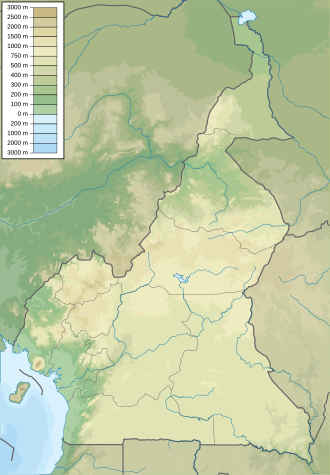
In February 2012, 650 elephants in Bouba Njida National Park, Cameroon, were slaughtered by Chadian raiders, one of the worst mass poaching incidents recorded.
Image source: Bouba Njida National Park
May 2015
% complete
China was the biggest market for poached ivory but announced in May 2015 that it would phase out the legal domestic manufacture and sale of ivory products.
Sep 2015
% complete
In September 2015, China and the United States said they would enact a nearly complete ban on the import and export of ivory due to concerns about extinction.
2016
% complete
The IUCN estimated that the total elephant population in Africa is approximately 415,000 individuals for both species combined as of 2016, a fraction of historical numbers.
2020
% complete
In 2020, the IUCN listed the Asian elephant as endangered due to the population declining by half over 'the last three generations'.
Image source: Asian elephant
2021
% complete
African bush elephants were listed as Endangered by the IUCN in 2021, and African forest elephants were listed as Critically Endangered in the same year, marking an unprecedented conservation crisis for both species.
2001 - 2006
% complete
From 2000 to 2004, 300 people died in Jharkhand, and in Assam, 239 people were reportedly killed between 2001 and 2006, highlighting deadly human-elephant conflicts in India.
Image source: Human–wildlife conflict
Dec 2002
% complete
Purportedly drunk elephants attacked an Indian village in December 2002, killing six people, which led to the retaliatory slaughter of about 200 elephants by locals.
2019 - 2022
% complete
Throughout India, 1,500 people were killed by elephants between 2019 and 2022, which led to 300 elephants being killed in retaliation, underscoring escalating human-elephant conflict.
Or browse the full history timeline directory, with more than 2,000 topics.
This Evolution of Elephants timeline was generated with the help of AI, using information found on the internet.
We work hard to keep these timelines accurate, but mistakes do get through. If you spot one, email us at [email protected] and we'll fix it for future visitors.
Generate yours with AI or build it from scratch, for free.
Export your timeline, add your own events, edit or remove AI-generated events, and much more
No credit card required.
Cancel anytime.
Cancel anytime.
You can create an unlimited number of timelines with up to 10 events on each one, customize how they look, export them to PDF, PNG, PowerPoint, CSV, and Excel, and share them with a link. Paid plans raise the event limit and add features like spreadsheet imports and collaborators.
Yes. You can cancel your subscription from your account page at any time, and you will not be charged again. Your subscription stays active for the rest of the period you already paid for.
Yes. We will email you a reminder before the annual renewal, and we will also email you a receipt.
Yes. You can email us within 15 days of any payment, and we will issue you a full refund.
Check out our pricing docs or send us an email anytime: [email protected].