-
Use Cases
-
Resources
-
Pricing
The history of banking traces the development of financial institutions from ancient grain loans in Mesopotamia and money lending in classical Greece and Rome, through Renaissance merchant banks like the Medici, to the establishment of modern central banks such as the Bank of England, and finally to today's era of digital and online banking. More Less
2000 BC
% complete
In ancient Mesopotamia, temples and palaces served as safe storage for grain and precious metals. Priests began making loans of these commodities to farmers and merchants, charging interest and recording transactions on clay tablets, creating some of the earliest known banking practices.
Image source: History of banking
1754 BC
% complete
The Code of Hammurabi established legal rules governing loans, interest rates, and debt repayment in Babylon. It capped interest on grain and silver loans and protected borrowers from exploitative practices, representing one of the earliest financial regulations in history.
Image source: Code of Hammurabi

600 BC
% complete
In ancient Greece, temples such as those at Delos and Athens accepted deposits and made loans, while private money changers (trapezitai) exchanged coinage and offered credit to merchants, laying foundations for more sophisticated banking services.
Image source: Ancient Greece
300 BC
% complete
Roman bankers known as argentarii operated from benches (bancus) in the Forum, accepting deposits, making loans, exchanging currency, and facilitating auctions. Their operations introduced many concepts still used in banking today.
Image source: Roman economy
1200
% complete
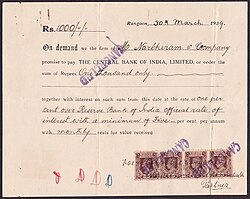
Italian merchant bankers developed the bill of exchange, allowing merchants to transfer funds across Europe without physically moving coins. This innovation reduced the risks of transporting cash and became a cornerstone of international trade finance.
Image source: Negotiable instrument
1397
% complete
Giovanni di Bicci de' Medici founded the Medici Bank in Florence, which grew into one of the most powerful financial institutions in Europe. The bank pioneered branch banking, double-entry bookkeeping, and letters of credit, financing popes, kings, and merchants alike.
Image source: Medici Bank
1587
% complete
The Republic of Venice established the Banco della Piazza di Rialto as a public bank to stabilize payments and provide reliable deposit and transfer services to merchants, an early example of state-sponsored banking.
Image source: Banco della Piazza di Rialto
1609
% complete
The Bank of Amsterdam was founded by the city government to serve the booming Dutch trade economy. It provided a stable currency of account, secure deposits, and efficient transfers, becoming a model for central banks across Europe.
Image source: Bank of Amsterdam

1720
% complete
Speculation in shares of the South Sea Company led to a dramatic stock market crash in London, ruining thousands of investors and prompting the Bubble Act. The crisis shaped British attitudes toward corporate finance and speculation for a century.
Image source: South Sea Company
1800
% complete
Mayer Amschel Rothschild and his sons built an international banking dynasty with branches in Frankfurt, London, Paris, Vienna, and Naples. They financed governments, funded wars including Wellington's campaign, and pioneered international bond markets.
Image source: Rothschild family
1668
% complete
Sweden's Riksbank, founded in 1668 from the private Stockholms Banco, is generally considered the world's oldest surviving central bank. It issued the first modern banknotes and managed the state's finances.
Image source: Sveriges Riksbank
Jul 27, 1694
% complete
The Bank of England was established by royal charter to raise funds for the government's war against France. It became the model for modern central banking, issuing banknotes, managing public debt, and eventually acting as lender of last resort.
Image source: Bank of England
Feb 25, 1791
% complete
Championed by Alexander Hamilton, the First Bank of the United States was chartered to manage government finances, issue a stable currency, and support commercial growth, sparking debates over federal power that shaped American banking politics.
Image source: First Bank of the United States
May 10, 1837
% complete
A severe financial crisis triggered by speculative land sales, the collapse of banks after Andrew Jackson's destruction of the Second Bank of the United States, and a sharp contraction of credit plunged America into a deep depression lasting years.
Image source: Panic of 1837
Sep 18, 1873
% complete
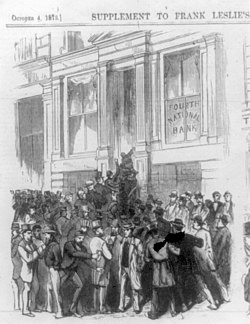
The failure of Jay Cooke & Company over railroad financing set off a global financial panic. Stock exchanges closed, banks failed, and a prolonged economic depression swept through Europe and North America, reshaping banking regulation debates.
Image source: Panic of 1873
Dec 23, 1913
% complete
Following recurring banking panics, Congress passed the Federal Reserve Act establishing the Federal Reserve System. The Fed was designed to provide an elastic currency, act as lender of last resort, and supervise banks, transforming American finance.
Image source: Federal Reserve
Jul 1, 1944 - Jul 22, 1944
% complete
Delegates from 44 nations met at Bretton Woods, New Hampshire, to design the postwar monetary system. They created the IMF and World Bank and pegged currencies to the US dollar, which was convertible to gold, anchoring global finance for decades.
Image source: Bretton Woods Conference
Aug 15, 1971
% complete
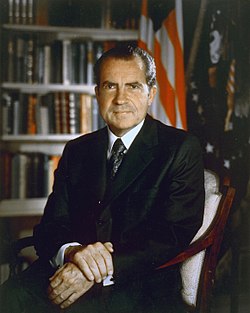
President Richard Nixon suspended the dollar's convertibility into gold, effectively ending the Bretton Woods system. Currencies began floating freely, ushering in an era of exchange rate volatility and expanding the role of central banks in managing monetary policy.
Image source: Nixon shock
1988
% complete
The Basel Committee on Banking Supervision issued the first Basel Accord, requiring banks to hold capital equal to a percentage of their risk-weighted assets. It marked the beginning of coordinated international bank regulation.
Jan 1, 1999
% complete
Eleven European Union countries adopted the euro as an accounting currency, with physical notes and coins following in 2002. The European Central Bank assumed responsibility for monetary policy across the eurozone, reshaping European banking.
Image source: Euro
Dec 16, 2010
% complete
In response to the 2008 crisis, the Basel Committee introduced Basel III, raising capital requirements, adding liquidity coverage ratios, and introducing leverage limits to make banks more resilient to financial shocks.
Jun 5, 2014
% complete
The European Central Bank cut its deposit rate below zero, followed by Japan, Switzerland, and others. Negative rates were an unconventional tool to stimulate lending and inflation, profoundly affecting bank profitability and monetary policy thinking.
Image source: Interest rate
Oct 29, 1929
% complete
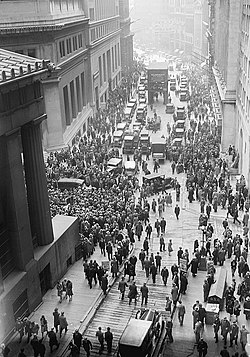
The collapse of US stock prices triggered a wave of bank failures and a worldwide economic depression. Thousands of banks failed as panicked depositors withdrew funds, exposing weaknesses in the fragmented American banking system.
Image source: Wall Street Crash of 1929
Jun 16, 1933
% complete
As part of the New Deal response to the Great Depression, the Glass–Steagall Act separated commercial and investment banking, created the FDIC to insure deposits, and aimed to prevent the conflicts of interest blamed for bank failures.
Image source: Glass–Steagall legislation
1950
% complete
Frank McNamara founded Diners Club, introducing the first multipurpose charge card usable at multiple restaurants in New York. This innovation paved the way for the modern consumer credit card industry.
Image source: Diners Club International
Jun 27, 1967
% complete
Barclays unveiled the world's first automated cash dispenser at its Enfield branch, invented by John Shepherd-Barron. The ATM revolutionized retail banking by giving customers 24-hour access to their money without visiting a teller.
Image source: Automated teller machine
May 3, 1973
% complete
Banks from 15 countries created SWIFT, a cooperative messaging network enabling secure, standardized communication for cross-border payments. It became the backbone of international financial transactions worldwide.
Nov 12, 1999
% complete
Congress repealed key provisions of Glass–Steagall, allowing commercial banks, investment banks, and insurance companies to consolidate. This enabled megabanks like Citigroup and contributed to the environment preceding the 2008 crisis.
Image source: Gramm–Leach–Bliley Act
Sep 15, 2008
% complete
The bankruptcy of Lehman Brothers amid the subprime mortgage meltdown ignited a global financial crisis. Banks worldwide required massive bailouts, credit markets froze, and the crisis prompted sweeping reforms of banking regulation and supervision.
Image source: Lehman Brothers
Oct 31, 2008
% complete
Satoshi Nakamoto published the Bitcoin whitepaper describing a decentralized digital currency secured by blockchain technology. Bitcoin challenged traditional banking models and inspired thousands of cryptocurrencies and blockchain-based financial innovations.
Image source: Bitcoin
Or browse the full history timeline directory, with more than 2,000 topics.
This History of Banking timeline was generated with the help of AI, using information found on the internet.
We work hard to keep these timelines accurate, but mistakes do get through. If you spot one, email us at [email protected] and we'll fix it for future visitors.
Generate yours with AI or build it from scratch, for free.
Export your timeline, add your own events, edit or remove AI-generated events, and much more
No credit card required.
Cancel anytime.
Cancel anytime.
You can create an unlimited number of timelines with up to 10 events on each one, customize how they look, export them to PDF, PNG, PowerPoint, CSV, and Excel, and share them with a link. Paid plans raise the event limit and add features like spreadsheet imports and collaborators.
Yes. You can cancel your subscription from your account page at any time, and you will not be charged again. Your subscription stays active for the rest of the period you already paid for.
Yes. We will email you a reminder before the annual renewal, and we will also email you a receipt.
Yes. You can email us within 15 days of any payment, and we will issue you a full refund.
Check out our pricing docs or send us an email anytime: [email protected].