-
Resources
-
Pricing
The history of barometers traces the development of instruments that measure atmospheric pressure, advancing from mercury columns to portable mechanical and digital devices. More Less
Build a timeline like this one in minutes, for free. Start Yours →
Jul 27, 1630
On 27 July 1630, Giovanni Battista Baliani wrote to Galileo Galilei about an experiment in which a siphon led over a hill about 21 metres high failed to work, contributing to discussion about atmospheric pressure.
1631
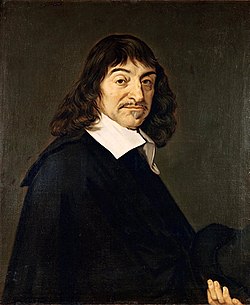
René Descartes described a design for an experiment to determine atmospheric pressure as early as 1631. There is no evidence that he built a working barometer at that time.
Image source: René Descartes
Dec 1638
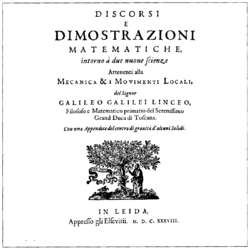
Galileo Galilei's ideas about air and fluids, presented in Two New Sciences, reached Rome in December 1638 and helped circulate ideas related to the later barometer experiments.
Image source: Two New Sciences
1639 - 1643
Science historian W. E. Knowles Middleton places an important phase of early barometer experimentation between 1639 and 1643, after Galileo's ideas reached Rome and before Berti's death.
Image source: Barometer
1640 - 1644
Gasparo Berti built a rudimentary water barometer sometime between 1640 and 1644. Because it was not intended to move and record changing air pressure, it was not a true barometer.
1643
Evangelista Torricelli is usually credited with inventing the barometer in 1643 by using a column of mercury to demonstrate and measure atmospheric pressure.
Image source: Evangelista Torricelli
1644
Middleton suggested that 1644 may be the more likely date for the invention because Torricelli first reported his experiments then; the 1643 date was proposed only after his death.
1644
Toward the end of 1644, Marin Mersenne was shown Torricelli's experiment, helping transmit knowledge of the mercury barometer to other European scientists.
Image source: Marin Mersenne
1646
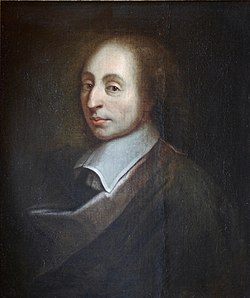
In 1646, Blaise Pascal and Pierre Petit repeated and perfected Torricelli's experiment after hearing about it through Marin Mersenne.
Image source: Blaise Pascal
1646
Pascal's work on the barometer led to predictions that mercury levels would vary with altitude, establishing a foundation for using barometers to measure elevation and atmospheric pressure.
Sep 1648
In September 1648, Florin Périer carefully carried out Pascal's proposed altitude experiment and found that Pascal's predictions about atmospheric pressure were correct.
1643
Earth's average atmospheric pressure varies between approximately 940 and 1040 hPa (mbar), a range that barometers are designed to measure.
1643
The average atmospheric pressure at sea level is approximately 1013 hPa (mbar), providing a standard reference for barometric measurements.
Dec 5, 1660 - Dec 6, 1660
Inspired by Torricelli, Otto von Guericke found unusually low air pressure on 5 December 1660 and predicted a storm. The storm occurred the following day.
Image source: Otto von Guericke
1787
During a scientific expedition on Mont Blanc in 1787, De Saussure investigated and experimentally measured the boiling point of water at different heights.
Image source: Horace Bénédict de Saussure
1787
De Saussure calculated elevation by measuring how long an alcohol burner took to boil a quantity of water, estimating Mont Blanc's height at 4775 metres.
1787
De Saussure's estimated height of 4775 metres was later found to be 32 metres less than Mont Blanc's actual height of 4807 metres.
1850
By the mid-19th century, the method of estimating height from boiling-point measurements was used by explorers.
1850 - 1900
Barometric pressure and pressure tendency, meaning the change in pressure over time, came to be used in weather forecasting during the late 19th century.
1850 - 1900
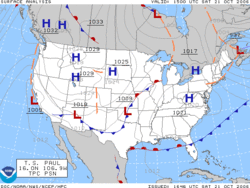
Simultaneous barometric readings from networks of weather stations allowed maps of air pressure to be produced. These were the first form of the modern weather map when created in the 19th century.
Image source: Weather map
1882
Following the Trimdon Grange colliery disaster in 1882, the mines inspector drew attention to recorded conditions and stated that atmospheric and temperature conditions had reached a dangerous point.
1668
In 1668, Robert Hooke's marine barometer, made by Henry Hunt, was noticed, prompting efforts to make the instrument seaworthy.
Image source: Robert Hooke
1668
Robert Hooke's notable contribution was a double thermometer marine barometer, also called a manometer. It was presented to the Royal Society in 1668 and constructed by Henry Hunt.
1698 - 1700
Edmond Halley tested the marine barometer prototype during his South Atlantic voyage from 1698 to 1700 and praised its reliability in forecasting weather changes.
Image source: Edmond Halley
1772 - 1775
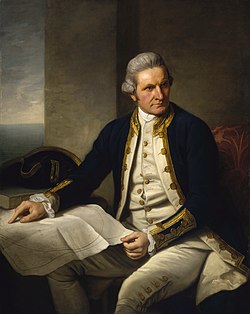
For Captain James Cook's second Pacific expedition, the Board of Longitude and the Royal Society commissioned marine barometers as part of the preparations for the 1772–1775 voyage.
Image source: James Cook
1772 - 1789
Variants of Nairne's barometer were incorporated into voyages by the East India Company, Russian explorers, and French and Spanish navigators, including Lapérouse in 1785 and Malaspina in 1789.
1800 - 1850
Sympiesometers were compact and lightweight barometers widely used on ships in the early 19th century.
1801 - 1804
In 1801, the Royal Society sent Captain Matthew Flinders on a three-year voyage from New Holland to New South Wales equipped with one of Nairne's barometers, reaffirming the instrument's practical marine value.
Image source: Matthew Flinders
1700
Gottfried Wilhelm Leibniz proposed the concept of an aneroid barometer around 1700, although a successful instrument would not be invented for decades.
1770 - 1840
From 1770 onward, many Italians came to England because they were accomplished glass blowers or instrument makers. By 1840, Italians dominated the industry in England.
1778
In 1778, Blondeau developed an iron tube barometer using narrow-bore musket barrels.
1810
Around 1810, the wheel barometer, readable from a great distance, became the first practical commercial instrument favored by farmers and the educated classes in the United Kingdom.
1844
In 1844, French scientist Lucien Vidi successfully invented the aneroid barometer, fulfilling the concept proposed by Leibniz around 1700.
1957
Repair and trade of antique barometers produced before late 1957 remained unrestricted despite later restrictions on new mercury measuring instruments.
2007
In 2007, a European Union directive restricted the use of mercury in new measuring instruments intended for the general public, effectively ending production of new mercury barometers in Europe.
Feb 2013
Using vacuum pump oil as the working fluid led to the creation of the new World's Tallest Barometer in February 2013.
Build a timeline like this one in minutes, for free. Start Yours →
Or browse the full history timeline directory, with more than 2,500 topics.
This History of Barometers timeline was generated with the help of AI, using information found on the internet.
We work hard to keep these timelines accurate, but mistakes do get through. If you spot one, email us at [email protected] and we'll fix it for future visitors.
Generate yours with AI or build it from scratch, for free.
Export your timeline, add your own events, edit or remove AI-generated events, and much more
No credit card required.
15-day money-back guarantee.
You can create an unlimited number of timelines with up to 10 events on each one, customize how they look, export them to PDF, PNG, PowerPoint, CSV, and Excel, and share them with a link. Timelines made with Timeline Maker AI keep every event the generator created, and you can add up to 5 events of your own. Paid plans remove the event limit, add spreadsheet imports and hide Preceden's branding, and the higher-priced plan also adds collaborators, a custom logo and a custom domain.
Yes. You can cancel your subscription from your account page at any time, and you will not be charged again. Your subscription stays active for the rest of the period you already paid for.
Yes. We email you a reminder 15 days before your annual renewal, and we email you a receipt after every payment.
Yes. You can email us within 15 days of any payment, and we will issue you a full refund.
Check out our pricing docs or send us an email anytime: [email protected].