-
Use Cases
-
Resources
-
Pricing
Black pepper, often called the 'King of Spices,' has shaped world history for thousands of years. Native to India's Malabar Coast, it drove ancient trade networks, fueled European exploration during the Age of Discovery, sparked wars and economic empires, and remains the most widely used spice in the world today. More Less
2000 BCE
% complete
Black pepper has been known to Indian cooking since at least 2000 BCE. Native to the Malabar Coast of India, it became a foundational spice of South Asian cuisine and later one of the most sought-after trade goods in the ancient world.
Image source: Black pepper
1213 BCE
% complete
Black peppercorns were found stuffed in the nostrils of Ramesses II, placed there as part of the mummification rituals shortly after his death in 1213 BCE. This is among the earliest archaeological evidence of black pepper, showing it had traveled from India to Egypt.
Image source: Ramesses II
400 BCE
% complete
Pepper, both long and black, was known in Greece at least as early as the fourth century BCE, though it was probably an uncommon and expensive item that only the very rich could afford.
200 BCE
% complete
It is possible that black pepper was known in China in the second century BCE, if poetic reports regarding an explorer named Tang Meng are correct. However, definitive textual evidence for black pepper in China would not appear until centuries later.
Image source: Meng Tang
250 CE
% complete
Apicius' De re coquinaria, a third-century cookbook probably based at least partly on one from the first century CE, includes pepper in a majority of its recipes, demonstrating how central pepper had become to Roman cuisine.
Image source: Apicius
250 CE
% complete
In the third century CE, black pepper made its first definite appearance in Chinese texts, where it was called hujiao or 'foreign pepper', reflecting its South Asian origins and its arrival along trade routes.
350
% complete
Despite its appearance in third-century texts as hujiao, black pepper does not appear to have been widely known in China at the time, failing to appear in a fourth-century work describing a wide variety of spices from beyond China's southern border, including long pepper.
450
% complete
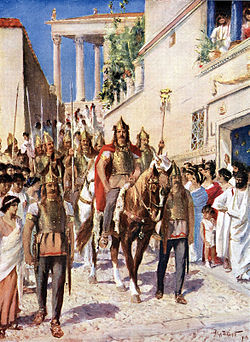
Alaric, king of the Visigoths, included 3,000 pounds of pepper as part of the ransom he demanded from Rome when he besieged the city in the fifth century, a striking testament to pepper's enormous value in late antiquity.
Image source: Alaric I
500
% complete
After the fall of Rome, others took over the middle legs of the spice trade, first the Persians and then the Arabs, controlling the flow of pepper and other spices from India to markets in the Mediterranean and beyond.
Image source: Spice trade
550
% complete
Innes Miller cites the account of Cosmas Indicopleustes, who travelled east to India in the sixth century, as proof that 'pepper was still being exported from India' even after the fall of Rome disrupted older trading networks.
Image source: Cosmas Indicopleustes
900 - 1100
% complete
Innes Miller notes that pepper was grown in southern Thailand and in Malaysia starting in the early 10th to the 11th century, when the South Indian kings began to extend their empire, carrying pepper cultivation with them across Southeast Asia.
1150
% complete
By the 12th century, black pepper had become a popular ingredient in the cuisine of the wealthy and powerful in China, sometimes taking the place of China's native Sichuan pepper, the tongue-numbing dried fruit of an unrelated plant.
Image source: Sichuan pepper
1280
% complete
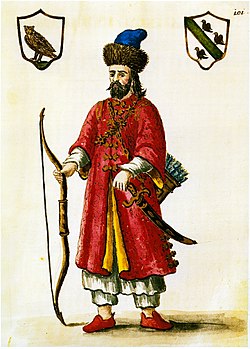
Marco Polo testifies to pepper's popularity in 13th-century China, relating that an officer of the Great Kaan's customs stated the quantity of pepper introduced daily for consumption into the city of Kinsay (Hangzhou) amounted to 43 loads, each load being equal to 223 pounds.
Image source: Marco Polo
1350
% complete
Spice mills, such as pepper mills, were found in European kitchens as early as the 14th century, though the mortar and pestle used earlier for crushing pepper remained a popular method for centuries afterward.
Image source: Burr mill
1405 - 1433
% complete
During the course of the Ming treasure voyages in the early 15th century, Admiral Zheng He and his expeditionary fleets returned with such a large amount of black pepper that the once-costly luxury became a common commodity in China.
Image source: Ming treasure voyages
Jun 1495
% complete
Archaeological evidence of pepper consumption in late medieval Northern Europe comes from excavations on the Danish-Norwegian flagship Gribshunden, which sank in the summer of 1495 while carrying exotic goods for the king.
1500
% complete
Before the 16th century, pepper was being grown in Java, Sunda, Sumatra, Madagascar, Malaysia, and everywhere in Southeast Asia, making the region a major source of the world's pepper supply alongside India.
Jun 7, 1494
% complete
The 1494 Treaty of Tordesillas divided newly encountered territories between Spain and Portugal, providing a legal framework through which Portugal would eventually gain much greater control of trade on the Arabian Sea, including the lucrative pepper trade.
Image source: Treaty of Tordesillas
May 1498
% complete
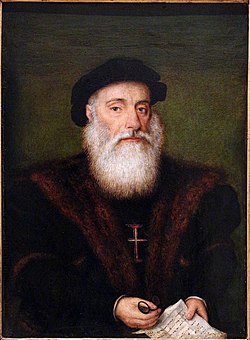
In 1498, Vasco da Gama became the first person to reach India by sailing around Africa. Asked by Arabs in Calicut who spoke Spanish and Italian why they had come, his representative replied, 'we seek Christians and spices'.
Image source: Vasco da Gama
1500
% complete
Though da Gama's first trip to India by way of the southern tip of Africa was only a modest success, the Portuguese quickly returned in greater numbers and eventually gained much greater control of trade on the Arabian Sea.
Image source: Portuguese India Armadas
1520
% complete
The presence of valuable spices in the Maluku Islands sparked European interest to buy them directly in the 16th century, intensifying competition among European powers for direct access to spice sources in the East Indies.
Image source: Maluku Islands
1550
% complete
In the 16th century, people began using the word pepper to also mean the New World chilli pepper of the genus Capsicum, which is not closely related to black pepper but inherited its name due to similar pungency.
Image source: Capsicum
1580 - 1640
% complete
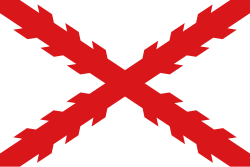
During the Iberian Union (1580–1640), Spain ruled over Portugal. The Dutch and English took advantage of this situation, occupying by force almost all Portuguese interests in the Indian Ocean area during the 17th century.
Image source: Iberian Union
1602 - 1700
% complete
In the 17th century, the Portuguese lost most of their valuable Indian Ocean trade to the Dutch and the English, who took advantage of the Spanish rule over Portugal during the Iberian Union to occupy almost all Portuguese interests in the region.
Jan 1, 1661 - Dec 31, 1663
% complete
The pepper ports of Malabar began to trade increasingly with the Dutch in the period 1661–1663, marking a shift in control of the pepper trade away from the Portuguese toward the Dutch East India Company.
Image source: Dutch East India Company
1780
% complete
In the 18th century, Edward Gibbon wrote that pepper was 'a favorite ingredient of the most expensive Roman cookery', reflecting enduring fascination with the role of spices in ancient Roman luxury and gastronomy.
Image source: Edward Gibbon
1805
% complete
Into the 19th century, the forests contained expansive wild pepper vines, as recorded by the Scottish botanist Francis Buchanan, documenting the natural abundance of wild pepper in its native habitat.
Image source: Francis Buchanan-Hamilton
1840
% complete
The crop was brought to East Malaysia in 1840 by Chinese settlers. Its most important source was India, particularly the Malabar Coast, in what is now the state of Kerala, which had long supplied the world's pepper.
Image source: East Malaysia
2021
% complete
In 2021, archaeologists recovered more than 2,000 peppercorns from the Gribshunden wreck, along with a variety of other spices and exotic foodstuffs including clove, ginger, saffron, and almond, offering rare physical evidence of late medieval spice consumption in Northern Europe.
2023
% complete
In 2023, world production of black peppercorns was 855,105 tonnes, led by Vietnam with 30% of the total, and Brazil, Indonesia, and India as secondary producers, showing how the once-priceless spice became a globally traded commodity.
Or browse the full history timeline directory, with more than 2,000 topics.
This History of Black Pepper timeline was generated with the help of AI, using information found on the internet.
We work hard to keep these timelines accurate, but mistakes do get through. If you spot one, email us at [email protected] and we'll fix it for future visitors.
Generate yours with AI or build it from scratch, for free.
Export your timeline, add your own events, edit or remove AI-generated events, and much more
No credit card required.
Cancel anytime.
Cancel anytime.
You can create an unlimited number of timelines with up to 10 events on each one, customize how they look, export them to PDF, PNG, PowerPoint, CSV, and Excel, and share them with a link. Paid plans raise the event limit and add features like spreadsheet imports and collaborators.
Yes. You can cancel your subscription from your account page at any time, and you will not be charged again. Your subscription stays active for the rest of the period you already paid for.
Yes. We will email you a reminder before the annual renewal, and we will also email you a receipt.
Yes. You can email us within 15 days of any payment, and we will issue you a full refund.
Check out our pricing docs or send us an email anytime: [email protected].