-
Resources
-
Pricing
The discovery of black holes traces the journey from theoretical predictions in Einstein's general relativity to observational confirmations, including Cygnus X-1, gravitational waves from merging black holes, and the first direct image of a black hole's event horizon. More Less
Build a timeline like this one in minutes, for free. Start Yours →
Part of our collection of science timelines.
Feb 13, 1974 - Feb 15, 1974
Later observations showed that Sagittarius A actually consists of several overlapping sub-components; a bright and very compact component, Sgr A*, was discovered on February 13 and 15, 1974, by Bruce Balick and Robert L. Brown.
1982
The asterisk * was assigned in 1982 by Brown, who understood that the strongest radio emission from the center of the galaxy appeared to be due to a compact non-thermal radio object embedded in a larger, and much brighter, radio source, Sagittarius A (Sgr A). The name Sgr A* was coined because the radio source was 'exciting', and excited states of atoms are denoted with asterisks.
1994
In 1994, infrared and sub-millimetre spectroscopy studies by a Berkeley team involving Nobel Laureate Charles H. Townes provided important measurements of gas motions near the Galactic Center, contributing to evidence for a massive compact object there.
Oct 16, 2002
On October 16, 2002, an international team led by Reinhard Genzel at the Max Planck Institute for Extraterrestrial Physics reported the observation of the motion of the star S2 near Sagittarius A* throughout a period of ten years, providing strong evidence for a supermassive black hole at the Galactic Center.
Image source: S2 (star)
Nov 2004
In November 2004, a team of astronomers reported the discovery of a potential intermediate-mass black hole, referred to as GCIRS 13E, orbiting 3 light-years from Sagittarius A*.
2011
In 2011 this conclusion was supported by Japanese astronomers observing the Milky Way's center with the Suzaku satellite, adding further evidence that Sagittarius A* is a supermassive black hole.
2011
This is a rapidly changing field—in 2011, the orbits of the most prominent stars then known were plotted, showing a comparison between their orbits and various orbits in the Solar System, illustrating the tight orbits around the central mass.
Jul 2018
In July 2018, it was reported that S2 orbiting Sgr A* had been recorded at 7,650 km/s (17.1 million mph), or 2.55% the speed of light, leading up to the pericenter approach in May 2018, at about 120 AU (approximately 1,400 Schwarzschild radii) from Sgr A*.
Oct 31, 2018
In a paper published on October 31, 2018, the discovery of conclusive evidence that Sagittarius A* is a black hole was announced, cementing decades of observational work on the Galactic Center.
Jul 2019
In July 2019, astronomers reported finding a star, S5-HVS1, traveling 1,755 km/s (3.93 million mph) or 0.006 c, likely ejected by interactions with the supermassive black hole at the Galactic Center.
2020
As of 2020, S4714 is the current record holder of closest approach to Sagittarius A*, at about 12.6 AU (1.88 billion km), almost as close as Saturn gets to the Sun, traveling at about 8% of the speed of light.
Image source: Sagittarius A* cluster
2002
First noticed as something unusual in images of the center of the Milky Way in 2002, the gas cloud G2, which has a mass about three times that of Earth, would later be confirmed to be likely on a course taking it into the accretion zone of Sgr A*.
2009
G2 has been observed to be disrupting since 2009, and was predicted by some to be completely destroyed by its encounter with the black hole, which could have led to a significant brightening of X-ray and other emission from Sgr A*.
2012
The gas cloud G2 was confirmed to be likely on a course taking it into the accretion zone of Sgr A* in a paper published in Nature in 2012. Predictions suggested it would make its closest approach (a perinigricon) in early 2014, at just over 3,000 times the radius of the event horizon from the black hole.
2013
It was thought that the passage of G2 in 2013 might offer astronomers the chance to learn much more about how material accretes onto supermassive black holes, making it one of the most anticipated events in Galactic Center research.
May 2013
It was proposed in May 2013 that, prior to its perinigricon, G2 might experience multiple close encounters with members of the black-hole and neutron-star populations thought to orbit near the Galactic Center, offering some insight to the region surrounding the supermassive black hole at the center of the Milky Way.
2014
Researchers suggested in 2014 that G2 is not a gas cloud but rather a pair of binary stars that had been orbiting the black hole in tandem and merged into an extremely large star, explaining why the cloud survived its close passage.
Mar 19, 2014 - Mar 20, 2014
Astronomers from the UCLA Galactic Center Group published observations obtained on March 19 and 20, 2014, concluding that G2 was still intact (in contrast to predictions for a simple gas cloud hypothesis) and that the cloud was likely to have a central star.
Jul 21, 2014
An analysis published on July 21, 2014, based on observations by ESO's Very Large Telescope in Chile, concluded alternatively that the cloud might be a dense clump within a continuous but thinner stream of matter, acting as a constant breeze on the disk of matter orbiting the black hole rather than sudden gusts.
Jan 5, 2015
On January 5, 2015, NASA reported observing an X-ray flare 400 times brighter than usual, a record-breaker, from Sgr A. The total luminosity from such outbursts is estimated to be a million times stronger than the current output from Sgr A, comparable with a typical active galactic nucleus.
2019
In 2019, measurements made with the High-resolution Airborne Wideband Camera-Plus (HAWC+) mounted in the SOFIA aircraft revealed that magnetic fields cause the surrounding ring of gas and dust, with temperatures ranging from −280 to 17,500 °F, to flow into an orbit around Sagittarius A*, keeping black hole emissions low.
May 13, 2019
On May 13, 2019, astronomers using the Keck Observatory witnessed a sudden brightening of Sgr A*, which became 75 times brighter than usual, suggesting that the supermassive black hole may have encountered another object.
Jun 2023
In June 2023, unexplained filaments of radio energy were found associated with Sagittarius A*, adding a new mystery to the environment around the Milky Way's central supermassive black hole.
2026
A third associated gas cloud, called G3, was discovered in 2026, joining G1 and G2 as objects tracked in the vicinity of Sagittarius A* and offering further opportunities to study accretion onto the supermassive black hole.
2017
In 2017, the Event Horizon Telescope, a world-wide network of radio observatories, collected the radio interferometer data that would later be used to produce the first image of the accretion disk around the event horizon of Sagittarius A*.
Image source: Event Horizon Telescope
2018
A 2018 paper predicted an image of Sagittarius A* that is in agreement with later observations, anticipating what the Event Horizon Telescope would eventually capture of the shadow of the Milky Way's central black hole.
2019
In 2019, the Event Horizon Telescope Collaboration released the first confirmed image of a black hole: the supermassive black hole at the center of Messier 87. This paved the way for the later imaging of Sagittarius A*.
2020
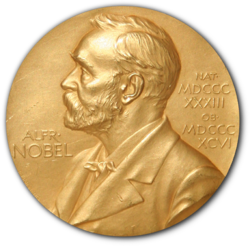
Reinhard Genzel and Andrea Ghez were each awarded a quarter-share in the 2020 Nobel Prize in Physics for their discovery that Sagittarius A* is a supermassive compact object, for which a black hole was the only explanation.
Image source: Nobel Prize in Physics
May 12, 2022
On May 12, 2022, the first image of Sagittarius A* was released by the Event Horizon Telescope Collaboration. The image confirms that the object contains a black hole and is the second confirmed image of a black hole, after Messier 87's supermassive black hole in 2019.
Build a timeline like this one in minutes, for free. Start Yours →
Or browse the full history timeline directory, with more than 2,500 topics.
This Discovery of Black Holes timeline was generated with the help of AI, using information found on the internet.
We work hard to keep these timelines accurate, but mistakes do get through. If you spot one, email us at [email protected] and we'll fix it for future visitors.
Generate yours with AI or build it from scratch, for free.
Export your timeline, add your own events, edit or remove AI-generated events, and much more
No credit card required.
15-day money-back guarantee.
You can create an unlimited number of timelines with up to 10 events on each one, customize how they look, export them to PDF, PNG, PowerPoint, CSV, and Excel, and share them with a link. Timelines made with Timeline Maker AI keep every event the generator created, and you can add up to 5 events of your own. Paid plans remove the event limit, add spreadsheet imports and hide Preceden's branding, and the higher-priced plan also adds collaborators, a custom logo and a custom domain.
Yes. You can cancel your subscription from your account page at any time, and you will not be charged again. Your subscription stays active for the rest of the period you already paid for.
Yes. We email you a reminder 15 days before your annual renewal, and we email you a receipt after every payment.
Yes. You can email us within 15 days of any payment, and we will issue you a full refund.
Check out our pricing docs or send us an email anytime: [email protected].