-
Use Cases
-
Resources
-
Pricing
The history of dinosaur discoveries traces humanity's evolving understanding of dinosaurs, beginning with early fossil interpretations in the 17th century and the first scientific descriptions in the 1820s. Key milestones include Richard Owen coining the term 'Dinosauria' in 1842, the famous 'Bone Wars' of the late 19th century, the discovery of feathered dinosaurs in China in the 1990s, and ongoing excavations worldwide that continue to reveal new species and reshape theories about dinosaur behavior, evolution, and extinction. More Less
1676
% complete
Part of a bone, now known to have been the femur of a Megalosaurus, was recovered from a limestone quarry at Cornwell near Chipping Norton, Oxfordshire, in 1676. It was one of the earliest dinosaur fossils ever collected.
Image source: Megalosaurus
1677
% complete
The bone fragment was sent to Robert Plot, Professor of Chemistry at the University of Oxford and first curator of the Ashmolean Museum, who published a description in his The Natural History of Oxford-shire (1677).
Image source: Robert Plot
1699
% complete
Edward Lhuyd, a friend of Sir Isaac Newton, published Lithophylacii Britannici ichnographia (1699), the first scientific treatment of what would now be recognized as a dinosaur.
Image source: Edward Lhuyd
1815 - 1824
% complete
Between 1815 and 1824, the Rev William Buckland, the first Reader of Geology at the University of Oxford, collected more fossilized bones of Megalosaurus and became the first person to describe a non-avian dinosaur in a scientific journal.
Image source: William Buckland
1822
% complete
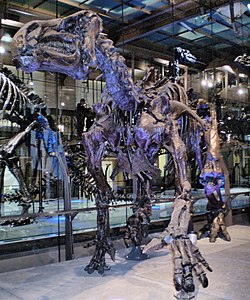
The second non-avian dinosaur genus to be identified, Iguanodon, was purportedly discovered in 1822 by Mary Ann Mantell, the wife of English geologist Gideon Mantell, though this is disputed and some historians say Gideon had acquired remains years earlier.
Image source: Iguanodon
1825
% complete
Gideon Mantell recognized similarities between his fossils and the bones of modern iguanas and published his findings in 1825.
Image source: Gideon Mantell
Apr 1842
% complete
In 1842 the English paleontologist Sir Richard Owen coined the term 'dinosaur' (meaning 'terrible lizard'), using it to refer to the 'distinct tribe or sub-order of Saurian Reptiles'. He had given a presentation about fossil reptiles in 1841 without mentioning the word, introducing the Dinosauria only in the revised text version of his talk published in April 1842.
Image source: Richard Owen
1897
% complete
The famous fight between two rival scientists lasted for over 30 years, ending in 1897 when Cope died after spending his entire fortune on the dinosaur hunt.
Image source: Bone Wars
1990
% complete
The release of the first edition of The Dinosauria in 1990 (with a second edition in 2004), and of a review paper by Paul Sereno in 1998, were accompanied by increases in the number of published phylogenetic trees for dinosaurs.
Image source: The Dinosauria
2009 - 2020
% complete
Across theropods, sauropodomorphs, and ornithischians, the number of named genera began to increase drastically in the 1990s, with up to 30 new species named each year by 2008. At least sauropodomorphs experienced a further increase in the 2010s, with an average of 9.3 new species named each year between 2009 and 2020; more sauropodomorphs were named between 1990 and 2020 than in all previous years combined.
Image source: Sauropodomorpha
2017
% complete
Barrett in 2017 suggested a radical revision of dinosaurian systematics, reshaping how the major dinosaur groups are related to one another.
Image source: Dinosaur classification
2018
% complete
Dinosaurs have always been recognized as an extremely varied group: over 900 non-avian dinosaur genera have been confidently identified (2018) with 1,124 species (2016). Estimates put the total number of genera preserved in the fossil record at 1850, nearly 75% still undiscovered, and the number that ever existed at 3,400.
Image source: Dinosaur
1852
% complete
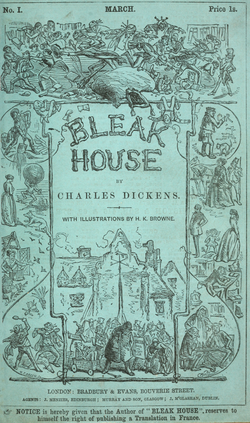
Beginning in 1852 with a passing mention in Charles Dickens' Bleak House, dinosaurs have been featured in large numbers of fictional works.
Image source: Bleak House
1854
% complete
Public enthusiasm for dinosaurs first developed in Victorian England, where in 1854, three decades after the first scientific descriptions of dinosaur remains, a menagerie of lifelike dinosaur sculptures was unveiled in London's Crystal Palace Park.
Image source: Crystal Palace Dinosaurs
1864
% complete
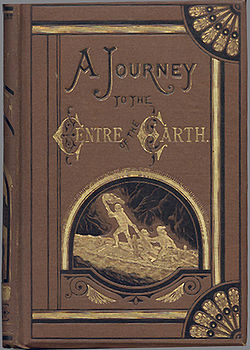
Jules Verne's 1864 novel Journey to the Center of the Earth was one of the early notable examples of dinosaur appearances in fiction.
Image source: Journey to the Center of the Earth
1912
% complete
Sir Arthur Conan Doyle's 1912 book The Lost World became one of the most famous fictional works featuring dinosaurs.
Image source: The Lost World (Doyle novel)
1914
% complete
The 1914 animated film Gertie the Dinosaur featured the first animated dinosaur, becoming a landmark in both animation history and dinosaur popular culture.
Image source: Gertie the Dinosaur
1933
% complete
The iconic 1933 film King Kong featured memorable dinosaur sequences and cemented dinosaurs as staples of popular entertainment.
Image source: King Kong (1933 film)
1954
% complete
The 1954 film Godzilla and its many sequels made dinosaur-inspired monsters icons of cinema and popular culture worldwide.
Image source: Godzilla (1954 film)
1990 - 1993
% complete
Michael Crichton's best-selling 1990 novel Jurassic Park and its 1993 film adaptation brought dinosaurs to a massive global audience and renewed public fascination with paleontology.
Image source: Jurassic Park
2007
% complete
A village in Henan, central China was reported in 2007 to have spent the previous several decades excavating and using real dinosaur bones as 'dragon bones' for traditional Chinese medicine purposes.
Image source: Long gu
1858
% complete
In 1858, William Parker Foulke discovered the first known American dinosaur in marl pits in the small town of Haddonfield, New Jersey. Hadrosaurus was one of the first nearly complete dinosaur skeletons found (the first was in 1834, in Maidstone, England), and it was clearly a bipedal creature.
Image source: Hadrosaurus
1878
% complete
Amphicoelias fragillimus, known only from a now lost partial vertebral neural arch, was described in 1878. Recent size estimates in 2023 have this sauropod reaching lengths of up to 44 m (144 ft) long and placed in a colossal weight range of around 110000–170000 kg (240000–370000 lb).
Image source: Amphicoelias
1878
% complete
The first potential evidence for herding or flocking as a widespread behavior common to many dinosaur groups was the 1878 discovery of 31 Iguanodon, ornithischians that were then thought to have perished together in Bernissart, Belgium, after they fell into a deep, flooded sinkhole and drowned.
Image source: Iguanodon
1884
% complete
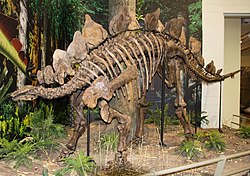
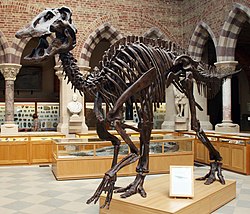
Among ornithischians, in 1884 Jacob Wortman found skin impressions on the first known specimen of Edmontosaurus annectens, which were largely destroyed during the specimen's excavation. Owen and Hooley subsequently described skin impressions of Hypsilophodon and Iguanodon in 1885 and 1917.
Image source: Edmontosaurus annectens
1888
% complete
Dinosaur fossils with scaly skin impressions have been found since the 19th century. Samuel Beckles discovered a sauropod forelimb with preserved skin in 1852 that was incorrectly attributed to a crocodile; it was correctly attributed by Marsh in 1888.
Image source: Samuel Beckles
1907
% complete
The longest complete dinosaur is the 27 meters (89 ft) long Diplodocus, which was discovered in Wyoming in the United States and displayed in Pittsburgh's Carnegie Museum of Natural History in 1907.
Image source: Diplodocus
1907 - 1912
% complete
Important dinosaur remains were discovered in Tanzania between 1907 and 1912, yielding some of the most famous giant sauropods known to science.
Image source: Tendaguru Formation
1971
% complete
From a behavioral standpoint, one of the most valuable dinosaur fossils was discovered in the Gobi Desert in 1971, preserving a predator and prey locked in combat.
Image source: Fighting Dinosaurs
1978
% complete
Bob Makela and Jack Horner's 1978 discovery of a Maiasaura ('good mother lizard') nesting ground in Montana demonstrated that parental care continued long after birth among ornithopods.
Image source: Maiasaura
1993
% complete
A specimen of the oviraptorid Citipati osmolskae was discovered in a chicken-like brooding position in 1993, which may indicate that they had begun using an insulating layer of feathers to keep the eggs warm.
Image source: Citipati
2003
% complete
Cannibalism amongst some species of dinosaurs was confirmed by tooth marks found in Madagascar in 2003, involving the theropod Majungasaurus.
Image source: Majungasaurus
2009
% complete
A 2009 review indicated that non-avians used visual displays and possibly non-vocal sounds, such as hissing, jaw-grinding or -clapping, splashing, and wing-beating (possible in winged maniraptoran dinosaurs).
Image source: Dinosaur
2016
% complete
A 2016 study concludes that some dinosaurs may have produced closed-mouth vocalizations, such as cooing, hooting, and booming. A 2016 estimate also put the number of dinosaur species living in the Mesozoic at 1,543–2,468.
2021
% complete
In 2021, the best preserved specimen of a dinosaur's cloacal vent exterior was described for Psittacosaurus, demonstrating lateral swellings similar to crocodylian musk glands used in social displays by both sexes and pigmented regions which could also reflect a signalling function.
Image source: Psittacosaurus
1868
% complete
The possibility that dinosaurs were the ancestors of birds was first suggested in 1868 by Thomas Henry Huxley. Brought to light just two years after Charles Darwin's seminal On the Origin of Species (1859), its discovery spurred the nascent debate between proponents of evolutionary biology and creationism.
Image source: Thomas Henry Huxley
1896
% complete
In 1896, Marsh calculated ratios between brain weight and body weight of seven species of dinosaurs, showing that the brain of dinosaurs was proportionally smaller than in today's crocodiles, and that the brain of Stegosaurus was smaller than in any living land vertebrate.
Image source: Othniel Charles Marsh
1924
% complete
As later discoveries showed, clavicles (or a single fused wishbone) were not actually absent in dinosaurs; they had been found as early as 1924 in Oviraptor, but misidentified as an interclavicle. This evidence was key to debates over the bird-dinosaur link.
Image source: Oviraptor
1968
% complete
Through most of the 20th century, before birds were recognized as dinosaurs, most of the scientific community presumed dinosaurs to have been sluggish and cold-blooded. Bakker, an early proponent of dinosaur endothermy, published an influential paper on the topic in 1968.
Image source: Robert T. Bakker
1969
% complete
John Ostrom discovered the bird-like dromaeosaurid theropod Deinonychus and described it in 1969, revolutionizing views of dinosaurs as active animals and reviving the bird-dinosaur connection.
Image source: Deinonychus
1972
% complete
In 1972, Bakker expanded on his arguments based on energy requirements and predator-prey ratios, supporting the idea of warm-blooded, active dinosaurs.
1973
% complete
Harry Jerison, in 1973, showed that proportionally smaller brains are expected at larger body sizes, and that brain size in dinosaurs was not smaller than expected when compared to living reptiles.
Image source: Humanoid
1986
% complete
Bakker published a series of studies that argued for active lifestyles in dinosaurs based on anatomical and ecological evidence, which were subsequently summarized in his 1986 book The Dinosaur Heresies.
2005
% complete
Various mineralized structures that likely represented red blood cells and collagen fibres had been found by Schweitzer and others in tyrannosaurid bones as early as 1991. In 2005, Schweitzer and colleagues reported that a femur of Tyrannosaurus preserved soft, flexible tissue within, including blood vessels, bone matrix, and connective tissue that had retained their microscopic structure.
Image source: Mary Higby Schweitzer
2008
% complete
Large meat-eating dinosaurs had a complex system of air sacs similar to those found in modern birds, according to a 2005 investigation led by Patrick M. O'Connor. In 2008, scientists described Aerosteon riocoloradensis, the skeleton of which supplies the strongest evidence to date of a dinosaur with a bird-like breathing system.
Image source: Aerosteon
2009
% complete
In 2009, Schweitzer and colleagues reported that a Brachylophosaurus femur preserved similar microstructures, and immunohistochemical techniques demonstrated the presence of proteins such as collagen, elastin, and laminin.
Image source: Brachylophosaurus
2015
% complete
In 2015, Sergio Bertazzo and colleagues reported the preservation of collagen fibres and red blood cells in eight Cretaceous dinosaur specimens that did not show any signs of exceptional preservation, indicating that soft tissue may be preserved more commonly than previously thought.
Image source: Ivaldo Bertazzo
1980
% complete
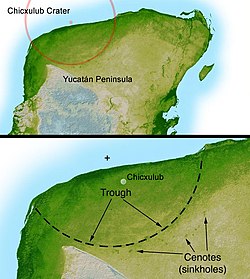
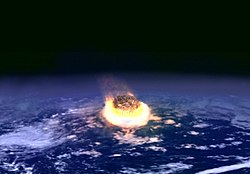
The bolide impact hypothesis, first brought to wide attention in 1980 by Walter Alvarez, Luis Alvarez, and colleagues, attributes the K-Pg extinction event to a bolide (extraterrestrial projectile) impact.
Image source: Chicxulub crater
1984
% complete
Just before the K-Pg extinction event, the number of non-avian dinosaur species that existed globally has been estimated at between 628 and 1078. In 1984, Dale Russell carried out an analysis to account for biases and found no evidence of a decline; another analysis by David Fastovsky and colleagues in 2004 even showed that dinosaur diversity continually increased until the extinction.
Image source: Cretaceous–Paleogene extinction event
1991
% complete
The actual impact site remained elusive until a crater measuring 180 km (110 mi) wide was discovered in the Yucatán Peninsula of southeastern Mexico, and was publicized in a 1991 paper by Alan Hildebrand and colleagues.
2000
% complete
In 2000, Spencer Lucas and colleagues reported the discovery of a single hadrosaur right femur in the San Juan Basin of New Mexico, and described it as evidence of Paleocene dinosaurs surviving past the K-Pg boundary.
2020
% complete
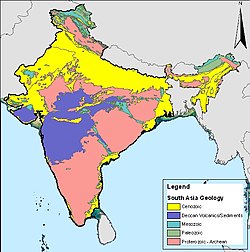
Before 2000, arguments that the Deccan Traps eruptions—as opposed to the Chicxulub impact—caused the extinction were usually linked to the view that the extinction was gradual. In 2020, Alfio Chiarenza and colleagues suggested the Deccan Traps may even have had the opposite effect: long-term warming from its carbon dioxide emissions may have dampened the impact winter from the Chicxulub impact.
Image source: Deccan Traps
Or browse the full history timeline directory, with more than 2,000 topics.
This History of Dinosaur Discoveries timeline was generated with the help of AI, using information found on the internet.
We work hard to keep these timelines accurate, but mistakes do get through. If you spot one, email us at [email protected] and we'll fix it for future visitors.
Generate yours with AI or build it from scratch, for free.
Export your timeline, add your own events, edit or remove AI-generated events, and much more
No credit card required.
Cancel anytime.
Cancel anytime.
You can create an unlimited number of timelines with up to 10 events on each one, customize how they look, export them to PDF, PNG, PowerPoint, CSV, and Excel, and share them with a link. Paid plans raise the event limit and add features like spreadsheet imports and collaborators.
Yes. You can cancel your subscription from your account page at any time, and you will not be charged again. Your subscription stays active for the rest of the period you already paid for.
Yes. We will email you a reminder before the annual renewal, and we will also email you a receipt.
Yes. You can email us within 15 days of any payment, and we will issue you a full refund.
Check out our pricing docs or send us an email anytime: [email protected].