-
Use Cases
-
Resources
-
Pricing
The history of Champagne traces the development of the world's most famous sparkling wine from the Champagne region of northeastern France. Beginning with still wines produced by medieval monks, the region's cool climate and chalky soils created unique winemaking challenges that led to accidental secondary fermentation in bottles. Key figures like Dom Pérignon refined production methods in the 17th century, while later innovations such as Madame Clicquot's riddling technique and Louis Pasteur's understanding of fermentation transformed Champagne into a prestigious global luxury symbol enjoyed at celebrations worldwide. More Less
400 - 499
% complete
The history of champagne began when the Romans planted vineyards in this region of northeast France in the 5th century, or possibly earlier, laying the foundation for centuries of winemaking in the region.
Image source: Champagne
400 - 499
% complete
In the 5th century, Remi (Saint Remigius) rose to prominence in Reims, helping establish the city as a religious center that would shape the identity and prestige of the Champagne region for centuries.
Image source: Saint Remigius
400 - 499
% complete
The city became known as the spiritual capital of France, and for the next eight centuries monarchs would follow the tradition of Capet and hold their coronations in Reims, bringing royal attention to the region's wines.
Image source: Reims
1500 - 1599
% complete
By the 16th century, the village of Ay, located south of Reims, was widely acclaimed for the quality of its wine, with King Francis I proclaiming himself 'Roi d'Aÿ et de Gonesse'—King of the lands where the country's greatest wines and flour were produced.
Image source: Aÿ
1500 - 1699
% complete
Throughout the 16th and early 17th century, Champenois winemakers tried to produce the best white wine they could from red wine grapes, though results often ranged from greyish color to a shade of pink known as oeil de perdrix, or partridge eye.
1531
% complete
Blanquette de Limoux, from Languedoc, shows up in writings from as early as 1531 by the Abbey monks of Saint-Hilaire, providing an early documented reference to sparkling wine production in France.
Image source: Limoux
1600 - 1699
% complete
The English also rediscovered the use of cork stoppers, once used by the Romans but forgotten for centuries after the fall of the Western Roman Empire, allowing wines to retain their bubbles better than earlier closures.
Image source: Cork (material)
1600 - 1699
% complete
During the 17th century, English glassmakers used coal-fueled ovens and produced stronger, more durable glass bottles than wood-fired French glass, making it safer to contain sparkling wine under pressure.
1661
% complete
By 1661, the Abbey had 25 acres (10 ha) of vineyards, but was also receiving tithes in the form of grapes from nearby villages, including the highly regarded vineyards of Ay and Avenay-Val-d'Or.
Image source: Hautvillers Abbey
1661
% complete
Non-sparkling Champagne became popular in London society following the arrival of epicurean Charles de Saint-Évremond in 1661, establishing an important English market for the wines of Champagne.
Image source: Charles de Saint-Évremond
1662
% complete
The English scientist Christopher Merret presented a paper detailing how the presence of sugar in a wine led to it eventually sparkling, and that nearly any wine could be made to sparkle by adding sugar before bottling—an early description of secondary fermentation.
Image source: Christopher Merret
1663
% complete
In 1663, the British poet Samuel Butler penned the first written English reference to 'brisk' Champagne, capturing the lively, bubbling character of the wine in literature for the first time.
Image source: Samuel Butler (poet)
1668
% complete
In 1668, Pierre Perignon was appointed to the position of cellar master at the Abbey of Hautvillers, where he would make lasting contributions to quality winemaking in Champagne.
Image source: Dom Pérignon
1698
% complete
The 1698 George Farquhar play Love and a Bottle featured one of the characters marveling at the steady stream of bubbles in a glass of Champagne, reflecting the growing fascination with sparkling wine in popular culture.
Image source: George Farquhar
1715
% complete
Following the death of Louis XIV of France in 1715, his nephew Philippe II, Duke of Orléans became Regent of France, and his court made the sparkling version of champagne a favorite among the French nobility.
Image source: Philippe II, Duke of Orléans
1700 - 1799
% complete
Throughout the 18th century, Champagne houses opened up, creating a new business dynamic in the Champagne region as merchants began buying grapes and producing and selling their own wines.
1800
% complete
However, by the end of the 18th century non-sparkling pinkish wine production still accounted for over 90% of the Champagne region's output, showing that sparkling wine was not yet the dominant style.
1815 - 1917
% complete
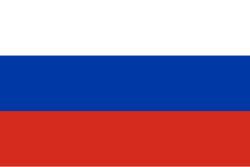
For the next century, until the Russian Revolution of 1917, the Russian Empire would be the second largest consumer of Champagne in the world, becoming a vital export market for Champagne houses.
Image source: Russian Empire
1829
% complete
Advances by Veuve Clicquot in the méthode champenoise made large-scale sparkling wine production profitable, and this period saw the founding of many famous champagne houses, including Bollinger in 1829.
Image source: Bollinger
1843
% complete
The Champagne house Krug was founded in 1843 during the boom period when advances in the méthode champenoise made large-scale sparkling wine production profitable, joining the ranks of today's most celebrated houses.
Image source: Champagne Krug
1846
% complete
Throughout most of the 19th century Champagne was made sweet, but in 1846 the Champagne house Perrier-Jouët introduced a wine made without any added sugar, foreshadowing the drier styles to come.
Image source: Perrier-Jouët
1854
% complete
In 1854, the French national railroad system linked Reims with the rest of the country, including its coastal ports, dramatically expanding Champagne producers' ability to ship their wines to domestic and international markets.
Image source: Rail transport in France
1858
% complete
The Champagne house Pommery was established in 1858 amid the flourishing of the modern champagne industry, later playing a pioneering role in popularizing the brut style of champagne.
Image source: Pommery
1874
% complete
Over the next generation, the brut style with significantly less sugar than wines labeled extra dry became fashionable, with Pommery introducing the first Brut champagne in 1874, characterized by its lower sugar content.
Image source: Sweetness of wine
1890 - 1910
% complete
The fortunes of the Champenois suffered as phylloxera appeared in the region, destroying vineyards and compounding a series of setbacks that also included riots, lost markets, and war.
Image source: Phylloxera
1890 - 1901
% complete
To compound the misery for Champenois vine growers, the last few vintages of the 19th century were difficult, with frost and rains severely reducing crop yields and straining the livelihoods of local growers.
Image source: Champagne Riots
1902 - 1909
% complete
The harvests between 1902 and 1909 were further troubled by mold and mildew, continuing a run of poor vintages that deepened the economic hardship facing vineyard growers in Champagne.
1910
% complete
The 1910 vintage was particularly troublesome, with hailstorms and flooding devastating the crop and further aggravating tensions between vine growers and the Champagne houses.
Jan 1911 - 1911
% complete
In January 1911, frustrations reached a boiling point as vine growers rioted in the towns of Damery and Hautvilliers, angry over Champagne houses using cheaper grapes from outside the region while local growers suffered poor harvests and low prices.
1914 - 1917
% complete
Still some Champenois forged on in producing Champagne during the difficult vintages of World War I (1914–1917), even as the vineyards of the region became a battlefield on the Western Front.
Image source: Western Front (World War I)
Oct 1917
% complete
In 1917 Russia, the October Revolution saw massive prohibition of Champagne as an imported beverage, closing one of the world's largest markets and dealing a severe blow to Champagne exports.
Image source: Sovetskoye Shampanskoye
1919
% complete
In 1919, the French government passed a series of laws that would lay the groundwork for the Appellation d'origine contrôlée (AOC) system, strictly defining winemaking laws and regional boundaries to protect the Champagne name.
Image source: Appellation d'origine contrôlée
1920
% complete
The 1920 declaration of prohibition in the United States closed off yet another major export market, and the global economic downturn of the Great Depression led to a further decrease in Champagne sales.
Image source: Prohibition in the United States
1924
% complete
Along with the introduction of the New Economic Policy, the Soviet government decreed in 1924 the domestic production of sparkling and dessert wines for the masses, replacing French imports within the USSR.
1937
% complete
The first bottle of Soviet Champagne (Советское Шампанское) was produced in 1937 using technology very similar to the Charmat method used in Asti, creating a mass-produced substitute for French champagne in the USSR.
May 7, 1945
% complete
It was in Reims, on May 7, 1945, that the German military commander Alfred Jodl offered an unconditional surrender to Supreme Allied Commander General Dwight D. Eisenhower, marking a pivotal moment ending World War II in Europe.
Image source: German Instrument of Surrender
May 8, 1945
% complete
The following morning, the signing of the German surrender in Reims was celebrated with six cases of the 1934 vintage of Pommery champagne, symbolically linking the city's liberation with its famous wine.
1981
% complete
As global tastes evolved toward ever drier styles, Laurent-Perrier released Ultra Brut in 1981—publicized as one of the first modern Brut Nature Champagnes made without any dosage, a category later formalized by the CIVC.
1985
% complete
In 1985, use of the term méthode champenoise was outlawed for producers outside the region, who opted instead for phrases like méthode traditionnelle to signify that their sparkling wine is made using the same production methods as Champagne.
Image source: Traditional method
1991
% complete
Ultimately, French Champagne saw its mass introduction back into the Russian beverage scene with the fall of the Iron Curtain in 1991, reopening a historic market more than seven decades after the revolution.
1996
% complete
Building on the trend toward drier champagnes, the CIVC formally codified the Brut Nature category in 1996, defining wines made without any added dosage following the trail blazed by Ultra Brut in 1981.
Image source: Comité Interprofessionnel du vin de Champagne
2008
% complete
In 2008, an expansion of the Champagne appellation was approved, adding 40 more villages to Champagne production while delisting 2 villages, increasing the AOC area by about 30% to meet growing demand.
Or browse the full history timeline directory, with more than 2,000 topics.
This History of Champagne timeline was generated with the help of AI, using information found on the internet.
We work hard to keep these timelines accurate, but mistakes do get through. If you spot one, email us at [email protected] and we'll fix it for future visitors.
Generate yours with AI or build it from scratch, for free.
Export your timeline, add your own events, edit or remove AI-generated events, and much more
No credit card required.
Cancel anytime.
Cancel anytime.
You can create an unlimited number of timelines with up to 10 events on each one, customize how they look, export them to PDF, PNG, PowerPoint, CSV, and Excel, and share them with a link. Paid plans raise the event limit and add features like spreadsheet imports and collaborators.
Yes. You can cancel your subscription from your account page at any time, and you will not be charged again. Your subscription stays active for the rest of the period you already paid for.
Yes. We will email you a reminder before the annual renewal, and we will also email you a receipt.
Yes. You can email us within 15 days of any payment, and we will issue you a full refund.
Check out our pricing docs or send us an email anytime: [email protected].