-
Use Cases
-
Resources
-
Pricing
The history of Chinese cuisine spans thousands of years, evolving from Neolithic agricultural practices through imperial dynasties to the eight great regional culinary traditions known today. Influenced by philosophy, trade routes like the Silk Road, and technological innovations, Chinese cooking developed distinctive techniques, ingredients, and cultural customs that have shaped food culture across Asia and around the world. More Less
200 BC
% complete
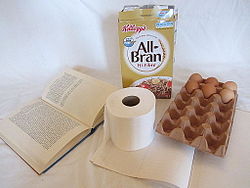
Although wrapping paper had been used in China since the 2nd century BC, its culinary significance would grow dramatically in later eras, eventually playing an important role in preserving the flavors of foods such as tea leaves during the Tang dynasty.
Image source: Paper
600 AD
% complete
Historian Endymion Wilkinson remarks that to somebody brought up on late twentieth century Chinese cuisine, Ming food would probably still seem familiar, but anything further back, especially pre-Tang food, would probably be difficult to recognize as 'Chinese'.
Image source: Chinese cuisine
Oct 2005
% complete
The 2005 discovery at Lajia of 4,000-year-old noodles confirmed that noodle making in China predates similar traditions elsewhere, reinforcing claims that China was among the first civilizations to develop this iconic staple.
Image source: Noodle
Oct 2005
% complete
In October 2005, the oldest noodles yet discovered were located at the Lajia archaeological site near the upper reaches of the Yellow River in Qinghai province. Dating back roughly 4,000 years, these millet-based noodles provided remarkable evidence of early Chinese culinary sophistication.
Image source: Lajia
618 AD
% complete
The Tang dynasty marked a turning point in Chinese culinary history. The cosmopolitan culture of the Tang capital brought new ingredients, techniques, and dining customs that began shaping a cuisine more recognizably 'Chinese' to modern eyes.
Image source: Tang dynasty
700 AD - 907 AD
% complete
During the Tang dynasty, the Chinese used wrapping paper as folded and sewn square bags to hold and preserve the flavor of tea leaves, building on the papermaking tradition that had existed since the 2nd century BC.
Image source: Chinese tea culture
760 AD
% complete
Lu Yu's Classic of Tea codified tea preparation, water quality, and drinking etiquette. Its influence spread beyond China to Japan and Korea, embedding tea at the heart of East Asian culinary and spiritual life.
Image source: Lu Yu
760 AD - 780 AD
% complete
The 8th-century author Lu Yu, known as the Sage of Tea, wrote a treatise on the art of drinking tea called the Classic of Tea (Chájīng). This seminal work elevated tea drinking to a refined art form and profoundly influenced Chinese and East Asian tea culture.
Image source: The Classic of Tea
960 AD - 1279 AD
% complete
In the Song dynasty, rice had become the major staple crop of the poor. The flourishing commercial economy of the Song also saw restaurants, street food, and regional cooking styles flourish in cities like Kaifeng and Hangzhou.
Image source: Song dynasty
960 AD - 1279 AD
% complete
With rice as the major staple crop of the poor, Song cities developed vibrant restaurant scenes, night markets, and street vendors. Cookbooks appeared, and distinctions between northern wheat-based and southern rice-based cuisines deepened.
Image source: Economy of the Song dynasty
1000 AD
% complete
Each year the emperor had laborers carve 1000 blocks of ice from frozen creeks in mountain valleys, each block measuring 0.91 by 0.91 by 1.06 meters. This ice allowed imperial courts to preserve and chill foods centuries before refrigeration.
1644 AD - 1912 AD
% complete
Many writers tried their hands at classification of Chinese regional cuisines, but since internal political boundaries over the centuries did not coincide with shifting cultural identities, there was no way to establish clear-cut or enduring classifications or ranking of foods and cooking styles.
1271 AD - 1368 AD
% complete
During the Yuan dynasty, contacts with the West brought new influences into Chinese kitchens. Under Mongol rule, trade routes connected China to distant lands, introducing foreign food products and methods of preparation.
Image source: Yuan dynasty
1271 AD - 1368 AD
% complete
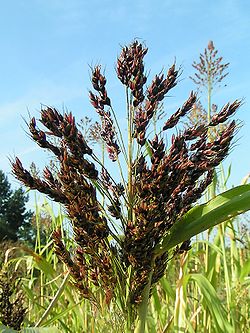
During the Yuan dynasty, contacts with the West brought the introduction to China of sorghum, a major food crop, along with other foreign food products and methods of preparation. Sorghum became especially important in northern China.
Image source: Sorghum
1271 AD - 1368 AD
% complete
Under Mongol rule, Muslim, Central Asian, and Persian culinary traditions entered China alongside sorghum and other foreign products. These exchanges enriched Chinese cooking methods and broadened its ingredient palette.
1368 AD
% complete
The founding of the Ming dynasty ushered in an era of renewed Chinese self-confidence and economic expansion. Ming food, unlike earlier periods, would probably still seem familiar to someone raised on late twentieth century Chinese cuisine.
Image source: Ming dynasty
1500 AD - 1644 AD
% complete
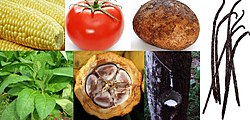
China during the Ming dynasty became involved in a new global trade of goods, plants, animals, and food crops known as the Columbian Exchange. Crops from the Americas transformed Chinese agriculture and diet in lasting ways.
Image source: Columbian exchange
1500 AD - 1560 AD
% complete
Through the Columbian Exchange, Ming China gained access to American crops such as maize, peanuts, and chili peppers alongside sweet potatoes. Over time these ingredients became integral to regional Chinese cooking.
1560 AD
% complete
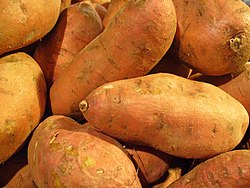
After sweet potatoes were introduced to China around 1560 via the Columbian Exchange, they gradually became the traditional food of the lower classes. The hardy crop helped feed growing populations, particularly in southern coastal regions.
Image source: Sweet potato
1600 AD
% complete
In the decades after sweet potatoes were introduced to China around 1560, the crop gradually became the traditional food of the lower classes, providing reliable sustenance where rice could fail and helping sustain population growth.
Image source: Sweet potato cultivation in Polynesia
1644 AD
% complete
The fall of the Ming dynasty closed a chapter in which China had absorbed American crops through the Columbian Exchange. By this point, Ming food would probably still seem familiar to someone brought up on late twentieth century Chinese cuisine.
1912 AD
% complete
The collapse of the Qing dynasty ended millennia of imperial rule. The transition to a republic brought social upheaval that affected every aspect of daily life, including how food was grown, sold, and eaten across China.
Image source: 1911 Revolution
Oct 1, 1949
% complete
The establishment of the People's Republic of China under Communist Party rule set the stage for sweeping collectivization of agriculture. Government policies over the following decade would have catastrophic consequences for the nation's food supply.
Image source: China
Jan 1959
% complete
By January 1959, the food supply for residents in Beijing was reduced to 1 cabbage per household per day, an early sign of the severe shortages that would soon grip the entire nation during the Great Leap Forward.
Image source: Great Leap Forward
1960 AD
% complete
Beginning in 1960, the Great Chinese Famine contributed to more problems due to bad government policies. One of the deadliest famines in human history, it caused tens of millions of deaths and left deep scars on Chinese society and its relationship with food.
Image source: Great Chinese Famine
1978 AD
% complete
Deng Xiaoping's reform and opening-up policies revitalized China's economy, allowing private restaurants to reopen and traditional dishes to return to tables. Food abundance gradually replaced scarcity, and regional cuisines flourished once again.
1990 AD
% complete
In the early 1990s, restaurants serving nostalgic dishes from the Maoist era began attracting diners across China. This Retro-Maoist cuisine turned the austere foods of past decades into fashionable novelty items.
1994 AD
% complete
The revival effort met with some success; in 1994 the "Yan's family eatery" earned 15,000 yuan net income per month, demonstrating the profitability of nostalgia-driven dining and the entrepreneurial spirit of the reform era.
Feb 1994
% complete
In February 1994, the Wall Street Journal wrote an article about Retro-Maoist cuisine being a hit in China, drawing international attention to the curious phenomenon of nostalgic Mao-era restaurants thriving in market-reform China.
Or browse the full history timeline directory, with more than 2,000 topics.
This History of Chinese Cuisine timeline was generated with the help of AI, using information found on the internet.
We work hard to keep these timelines accurate, but mistakes do get through. If you spot one, email us at [email protected] and we'll fix it for future visitors.
Generate yours with AI or build it from scratch, for free.
Export your timeline, add your own events, edit or remove AI-generated events, and much more
No credit card required.
Cancel anytime.
Cancel anytime.
You can create an unlimited number of timelines with up to 10 events on each one, customize how they look, export them to PDF, PNG, PowerPoint, CSV, and Excel, and share them with a link. Paid plans raise the event limit and add features like spreadsheet imports and collaborators.
Yes. You can cancel your subscription from your account page at any time, and you will not be charged again. Your subscription stays active for the rest of the period you already paid for.
Yes. We will email you a reminder before the annual renewal, and we will also email you a receipt.
Yes. You can email us within 15 days of any payment, and we will issue you a full refund.
Check out our pricing docs or send us an email anytime: [email protected].