-
Use Cases
-
Resources
-
Pricing
1800 - 1899
During the 19th century, China experienced poverty, droughts, famines, and conflicts including the Opium Wars and the Taiping Rebellion. These conditions contributed to migration from China, including refugees fleeing violence such as the Punti-Hakka Clan Wars.
Image source: History of China
1848 - 1855
The California gold rush began the first significant wave of 19th-century Chinese immigration to the United States. Chinese migration continued as workers were recruited for major labor projects, including construction of the first transcontinental railroad.
Image source: California Gold Rush
1870
The North Adams strike ended when the employer replaced all striking workers with 75 Chinese men. The episode sparked widespread working-class protest, influenced congressional debate, and helped make Chinese immigration a sustained national issue.
1873
After the Panic of 1873, Chinese immigrants were blamed for depressing workers' wages. Strikes followed the North Adams strike, including action at the Beaver Falls Cutlery Company in Pennsylvania, broadening anti-Chinese labor agitation.
Aug 27, 1873
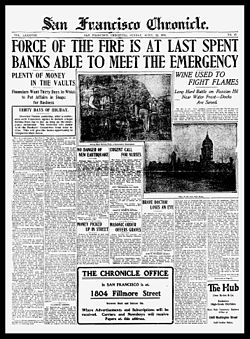
The San Francisco Chronicle published the headline “The Chinese Invasion! They Are Coming, 900,000 Strong.” The language later received attention as an early example of invasion rhetoric associated with anti-immigration politics.
Image source: San Francisco Chronicle
1876
San Francisco lawyer H. N. Clement spoke before a California State Committee in 1876 and declared, “The Chinese are upon us.” His statement reflected the political rhetoric used to portray Chinese immigration as a crisis.
1858
The California Legislature passed a law making it illegal for anyone described as belonging to the Chinese or Mongolian races to enter the state.
1862
California's State Supreme Court struck down the 1858 law restricting entry by people of the Chinese or Mongolian races.
Jan 1868
The US Senate ratified the Burlingame Treaty with China in January 1868. The treaty allowed an unrestricted flow of Chinese people into the United States.
1875
The Page Act barred Chinese women and other Asian women categorized as immigrants likely to become forced laborers or sex workers. It sought to prevent Chinese family settlement while continuing to permit Chinese men and their labor.
Image source: Page Act of 1875
1876
The competitive political climate of 1876 allowed California politicians to transform opposition to Chinese immigration from a state issue into a national one. Leaders elsewhere increasingly adopted anti-Chinese positions because of electoral politics and labor concerns.
1878
By 1878, Congress felt compelled to consider legislation that would ban immigration from China. The measure was later vetoed by President Rutherford B. Hayes.
1879
California adopted a new constitution that authorized the state government to determine who could reside in the state. It also barred Chinese people from employment by corporations and by state, county, or municipal governments.
1880
The Angell Treaty revised the Burlingame Treaty and allowed the United States to suspend Chinese immigration. It greatly diminished Chinese immigrants' rights and interests and provided the diplomatic basis for later exclusion legislation.
1882
President Chester A. Arthur vetoed a bill proposing a 20-year ban on Chinese laborers, concluding that it breached the renegotiated treaty of 1880. He objected to denying entry but supported a compromise measure.
1882 - 1892
The 1882 law defined excludable Chinese immigrants broadly as skilled and unskilled laborers and people employed in mining. Because many applicants struggled to prove they were not laborers, very few Chinese people could enter under the act.
May 6, 1882
President Chester A. Arthur signed the Chinese Exclusion Act into law on May 6, 1882. The federal law prohibited Chinese laborers from immigrating to the United States for 10 years and became the first major US law to exclude all members of a specific national group.
1884
Amendments made in 1884 tightened the rules governing Chinese immigrants who left the United States and sought to return. They also clarified that the law applied to ethnic Chinese regardless of their country of origin.
1888
The Scott Act expanded the exclusion system by prohibiting Chinese immigrants from reentering the United States after leaving, even when they had previously lived there legally.
1889
In the 1889 Supreme Court exclusion case commonly associated with Chae Chan Ping, the Court declared that the power to exclude foreigners was an incident of national sovereignty belonging to the United States government.
1892
When the original exclusion period expired in 1892, Congress renewed it for another 10 years through the Geary Act. The extension strengthened the exclusion regime and imposed additional documentation requirements.
1895
In United States v. Lem Moon Sing, the Supreme Court upheld restrictions on judicial review of negative immigration decisions, reinforcing the federal government's authority under the exclusion system.
1902
Congress made Chinese exclusion permanent in 1902. The law required each Chinese resident to register and obtain a certificate of residence or face deportation, extending its effects into the 20th century and to Hawaii and the Philippines.
1905
In United States v. Ju Toy, the Supreme Court reaffirmed that port inspectors and the Secretary of Commerce had final authority over who could be admitted to the United States.
1924
The Immigration Act of 1924 further restricted immigration, excluded all classes of Chinese immigrants, and extended restrictions to other Asian immigrant groups. It also established quotas reflecting the gatekeeping ideology associated with earlier exclusion.
1880 - 1920
The Chinese population in the United States declined from approximately 105,000 in 1880 to 89,000 in 1900 and 61,000 in 1920. Exclusion and related restrictions separated many immigrants from their families and helped freeze Chinese communities in place.
Image source: Chinese Americans
1885
In an 1885 San Francisco case, Treasury Department officials in Washington overturned a decision that had denied entry to two Chinese students, demonstrating that federal officials could reverse exclusion decisions.
Sep 2, 1885
The Rock Springs massacre was one of the large-scale outbreaks of anti-Chinese violence in the western United States during the exclusion era.
Image source: Rock Springs massacre
1887
The Hells Canyon massacre was another large-scale episode of anti-Chinese violence in the western states. The victims included Chinese workers associated with the Sam Yup company, which had operated in the area since October 1886.
Oct 19, 1888
On October 19, 1888, Congress agreed to provide greatly reduced compensation related to the Hells Canyon massacre while ignoring claims connected to earlier crimes.
1904 - 1906
The extension of exclusion in 1902, together with related developments, triggered a boycott of US goods in China between 1904 and 1906. The boycott expressed opposition to American treatment of Chinese immigrants.
1905
The Industrial Workers of the World openly opposed the Chinese Exclusion Act from its inception in 1905, challenging racial exclusion within the American labor and immigration system.
Image source: Industrial Workers of the World
1910 - 1940
From 1910 to 1940, Angel Island Immigration Station in San Francisco Bay processed most of the recorded Chinese immigrants entering or returning to the United States. Of approximately 56,113 recorded arrivals, more than 30 percent were returned to China.
Image source: Angel Island Immigration Station
1956 - 1965
The Immigration and Naturalization Service operated the Chinese Confession Program from 1956 to 1965. It encouraged Chinese immigrants who had committed immigration fraud to confess in exchange for the possibility of more lenient treatment.
Dec 17, 1943
The Magnuson Act repealed the Chinese Exclusion Act in 1943, when China was an ally of the United States against Japan in World War II. It allowed a quota of 105 Chinese immigrants to enter the United States each year.
1952
The Immigration and Nationality Act of 1952 abolished direct racial barriers in US immigration law, although restrictive quotas and other limitations remained.
Oct 3, 1965
The Immigration and Nationality Act of 1965 abolished the National Origins Formula. Large-scale Chinese immigration did not resume until after this change, which removed a major structural barrier to migration from China.
Jun 18, 2012
On June 18, 2012, the US House of Representatives passed H.Res. 683, formally expressing regret for the Chinese Exclusion Act and acknowledging its discriminatory impact. A similar Senate resolution had been approved in October 2011.
2014
In 2014, the California Legislature passed measures recognizing the accomplishments of Chinese Americans in California and calling on Congress to formally apologize for adopting the Chinese Exclusion Act.
2024
A 2024 study found that the Chinese Exclusion Act harmed the labor-market integration of Chinese immigrants in the United States, providing later evidence of the law's long-term economic effects.
Or browse the full history timeline directory, with more than 2,500 topics.
This Chinese Exclusion Act timeline was generated with the help of AI, using information found on the internet.
We work hard to keep these timelines accurate, but mistakes do get through. If you spot one, email us at [email protected] and we'll fix it for future visitors.
Generate yours with AI or build it from scratch, for free.
Export your timeline, add your own events, edit or remove AI-generated events, and much more
No credit card required.
Cancel anytime.
Cancel anytime.
You can create an unlimited number of timelines with up to 10 events on each one, customize how they look, export them to PDF, PNG, PowerPoint, CSV, and Excel, and share them with a link. Paid plans raise the event limit and add features like spreadsheet imports and collaborators.
Yes. You can cancel your subscription from your account page at any time, and you will not be charged again. Your subscription stays active for the rest of the period you already paid for.
Yes. We will email you a reminder before the annual renewal, and we will also email you a receipt.
Yes. You can email us within 15 days of any payment, and we will issue you a full refund.
Check out our pricing docs or send us an email anytime: [email protected].