
-
Resources
-
Pricing
The Declaratory Act of 1766 asserted Parliament’s authority to legislate for the American colonies in all cases, following the repeal of the Stamp Act. More Less
Build a timeline like this one in minutes, for free. Start Yours →
1719
The Declaratory Act 1719 was enacted by the Parliament of Great Britain and later served as the model for the 1766 Declaratory Act.
1763
The Sugar Act 1763 was amended in connection with the legislation surrounding the Declaratory Act and the repeal of the Stamp Act.
1765
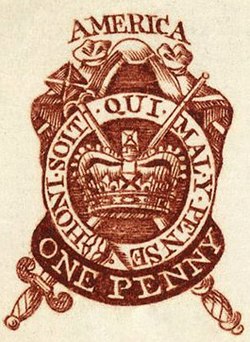
The Stamp Act 1765 imposed duties in the American colonies and became the central target of colonial resistance discussed in the events leading to the Declaratory Act.
1766
The 1766 Declaratory Act was copied almost word for word from the Declaratory Act 1719.
Image source: Declaratory Act 1719
1766
The Declaratory Act declared Parliament’s authority to legislate for the American colonies, including authority described as extending to taxation.
Image source: Declaratory Act
1766
The American Colonies Act 1766 is commonly known as the Declaratory Act and is identified as 6 Geo. 3. c. 12.
1766
Parliament introduced the American Colonies Act 1766, commonly known as the Declaratory Act, alongside legislation repealing the Stamp Act.
1766
In 1766, Parliament considered repealing the Stamp Act while also asserting its authority over the American colonies through a separate declaratory measure.
Mar 18, 1766
The repeal of the Stamp Act was paired with the Declaratory Act, combining a concession to colonial opposition with an assertion of parliamentary authority.
Mar 18, 1766
On March 18, 1766, Parliament passed the Declaratory Act, formally asserting its authority to make laws for the American colonies.
1778
The Taxation of Colonies Act 1778 was the stated exception to the post-1766 pattern of Parliament not directly imposing taxation on its colonies or overseas territories.
1765
Representatives from a number of the Thirteen Colonies assembled in response to the Stamp Act 1765, reflecting organized colonial opposition to parliamentary taxation.
1765
The Stamp Act Congress brought representatives from several colonies together to respond collectively to the Stamp Act 1765.
1765
The colonial response to the Stamp Act included debate over Parliament’s authority to impose taxes on the colonies.
Image source: Stamp Act Congress
1765
The assembly of colonial representatives helped express constitutional objections to taxation imposed without colonial representation.
1766
The declaration that a parliamentary majority could pass any law it considered appropriate was greeted with an outcry of horror in the colonies.
1766 - 1778
The period after 1766 and before the Taxation of Colonies Act 1778 is identified as a period in which Parliament did not again directly impose taxation upon its colonies or overseas territories.
1766
Following passage of the Declaratory Act, Parliament did not again directly attempt to impose taxation on one of its colonies or overseas territories for many years.
1766
The act’s immediate political role was to accompany the repeal of the Stamp Act while preserving Parliament’s claimed constitutional power.
Mar 18, 1766
On March 18, 1766, Parliament repealed the Stamp Act at the same time that it passed the Declaratory Act.
1778
The 1778 act is specifically identified as an exception to the claim that Parliament never again directly attempted to impose colonial taxation after the Declaratory Act.
1964
The Statute Law Revision Act 1964 provided the legislative mechanism by which the whole Declaratory Act was repealed.
Image source: Statute Law (Repeals) Act 1993
1964
Section 1 and the schedule to the Statute Law Revision Act 1964 repealed the whole of the Declaratory Act.
Jul 31, 1964
The repeal of the Declaratory Act came into force on July 31, 1964.
Jul 31, 1964
On July 31, 1964, the whole act ceased to have effect under the repeal enacted through the Statute Law Revision Act 1964.
1766
The Declaratory Act expressed the position that Parliament possessed unlimited authority to legislate for the colonies.
1766
The act reflected the British Parliament’s commitment to the principle of parliamentary sovereignty as unlimited and unlimitable.
1962
The remaining British colonies in the West Indies were already governed by constitutions explicitly granted under the authority of Parliament.
1962
The West Indies Act 1962 is identified as part of the parliamentary constitutional framework governing the remaining British colonies in the West Indies.
Image source: West Indies Federation
1962
The West Indies colonies’ constitutions were described as being explicitly granted under Parliament’s authority.
Build a timeline like this one in minutes, for free. Start Yours →
Or browse the full history timeline directory, with more than 2,500 topics.
This Declaratory Act timeline was generated with the help of AI, using information found on the internet.
We work hard to keep these timelines accurate, but mistakes do get through. If you spot one, email us at [email protected] and we'll fix it for future visitors.
Generate yours with AI or build it from scratch, for free.
Export your timeline, add your own events, edit or remove AI-generated events, and much more
No credit card required.
15-day money-back guarantee.
You can create an unlimited number of timelines with up to 10 events on each one, customize how they look, export them to PDF, PNG, PowerPoint, CSV, and Excel, and share them with a link. Timelines made with Timeline Maker AI keep every event the generator created, and you can add up to 5 events of your own. Paid plans remove the event limit, add spreadsheet imports and hide Preceden's branding, and the higher-priced plan also adds collaborators, a custom logo and a custom domain.
Yes. You can cancel your subscription from your account page at any time, and you will not be charged again. Your subscription stays active for the rest of the period you already paid for.
Yes. We email you a reminder 15 days before your annual renewal, and we email you a receipt after every payment.
Yes. You can email us within 15 days of any payment, and we will issue you a full refund.
Check out our pricing docs or send us an email anytime: [email protected].