-
Resources
-
Pricing
The Morrill Land-Grant Acts of 1862 and 1890 established federal support for colleges focused on agriculture, mechanical arts, and practical education, reshaping American higher education and expanding access. More Less
Build a timeline like this one in minutes, for free. Start Yours →
1796
In his 1796 address to Congress, President George Washington called for public support of agricultural education, an early federal endorsement of the educational purpose later associated with land-grant institutions.
Image source: 2026 State of the Union Address
1800 - 1850
For most of the early nineteenth century, support for agricultural education was prevalent among the Whig Party and in the region that would become the Midwest.
Image source: Whig Party (United States)
1850
The first Bachelor of Science degrees, which typically required no Latin, came into being around 1850, reflecting the broader movement toward practical and scientific higher education associated with land-grant ideals.
Image source: Bachelor of Science
1850
The Michigan Constitution of 1850 called for the creation of an agricultural school, establishing a constitutional foundation for the institution that followed.
Image source: Michigan State University
Feb 8, 1853
The Illinois Legislature adopted a resolution drafted by Jonathan Baldwin Turner. It urged Illinois’s congressional delegation to pursue a land-grant bill supporting a system of industrial colleges, one in each state.
Image source: Jonathan Baldwin Turner
Feb 12, 1855
Michigan governor Kinsley S. Bingham signed a bill establishing the Agricultural College of the State of Michigan, now Michigan State University. It became the first agriculture college in the United States and a model for the Morrill Act.
1857
Justin Smith Morrill first proposed the legislation that would become the Morrill Act in 1857, seeking federal support for colleges focused on practical and industrial education.
Image source: Morrill Land-Grant Acts
1859
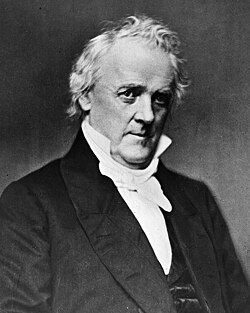
Congress passed the original Morrill land-grant bill in 1859, but the measure did not become law because President James Buchanan vetoed it.
1859
President James Buchanan vetoed the Morrill bill after its passage by Congress in 1859, delaying creation of the federal land-grant college system.
Image source: James Buchanan
1861
In 1861, Morrill resubmitted the proposal with an amendment requiring the proposed institutions to teach military tactics as well as engineering and agriculture.
Jul 2, 1862
President Abraham Lincoln signed the reconfigured Morrill Act into law on July 2, 1862, creating the federal framework for land-grant colleges during the American Civil War.
1890
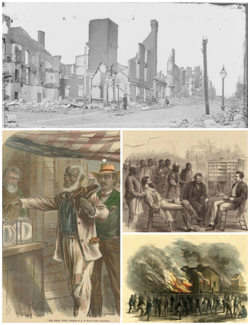
The Morrill Act of 1890, also called the Agricultural College Act of 1890, required each state either to show that race was not an admissions criterion or to designate a separate land-grant institution for African Americans.
Image source: Morrill Land-Grant Acts
1800 - 1899
Most of the land used for the federal land endowment had been acquired by the United States through lopsided treaties and violent conflict throughout the nineteenth century.
1862
Overall, the 1862 Morrill Act allocated 17,400,000 acres of land. When sold, those lands produced a collective endowment of $7.55 million.
1862
Management of New York’s land-grant scrip by its university produced one third of the total grant revenues generated by all states, even though New York received only one-tenth of the 1862 land grant.
1862
The Morrill Act of 1862 provided each state with land scrip representing 30,000 acres of public land for each of its representatives and senators in Congress.
1862
Some states lacked a state college in 1862 and used their land-grant funds to create one. The University of Nevada is an example of an institution established through this process.
Image source: University of Nevada, Reno
Sep 12, 1862
Iowa became the first state to accept the terms of the Morrill Act on September 12, 1862. The resulting funding boost supported the fledgling State Agricultural College and Model Farm.
Image source: Iowa State University
1863
Kansas State University, established in 1863, was the first land-grant institution actually created under the Morrill Act.
Image source: Kansas State University
1890
Unlike the 1862 law, the 1890 act granted cash rather than land. It nevertheless gave participating colleges the same legal standing as colleges established under the 1862 act.
1890
Because the 1890 institutions received the same legal standing as 1862 act colleges, the term land-grant college properly came to apply to both groups.
1890
Through its separate-institution provision, the 1890 act became a major basis for supporting colleges serving African American students within the land-grant system.
Image source: Historically black colleges and universities
1917
Founded in 1917, the University of Alaska Fairbanks was the latest school created with funds provided through the 1862 Morrill Act.
Image source: University of Alaska Fairbanks
1865 - 1890
By 1890, efforts to reconstruct the South and establish a biracial democracy had failed, and white supremacy had become law. This context shaped the second Morrill Act.
Image source: Reconstruction era
1966
In imitation of the land-grant colleges’ focus on agricultural and mechanical research, Congress established sea grant colleges in 1966 for aquatic research.
Image source: National Sea Grant College Program
1985
Congress established urban grant colleges in 1985, extending the land-grant model to urban research.
1988
Space grant colleges were established in 1988 to support space research in imitation of the land-grant colleges’ research mission.
1994
The 1994 land-grant schools receive congressional apportionments, are chartered by American Indian nations, and predominantly enroll Native students.
Image source: Land-grant university
1994
The 1994 expansion added tribal colleges and universities to the land-grant system. Like the 1890 schools, these institutions are not funded through land grants but are considered land-grant schools in accordance with the 1862 act.
2003
Sun grant colleges were established in 2003 for sustainable energy research, providing another research-oriented expansion of the land-grant model.
2023
As of 2023, there were 35 1994 land-grant schools in the United States.
1866 - 1870
In 1866, about 300 American men had graduated with engineering degrees and only six reputable colleges granted them. Four years later, 21 colleges offered engineering degrees and the number of graduates had tripled to 866.
Image source: Engineering education
1870 - 1911
The following decade added another 2,249 engineers. By 1911, the United States was graduating 3,000 engineers annually, with 38,000 engineers in the workforce.
1887
Beginning in 1887, Congress funded agricultural experiment stations and several categories of agricultural and veterinary research under the direction of land-grant universities.
Mar 2, 1887
President Grover Cleveland signed the Hatch Act into law on March 2, 1887. It provided each land-grant college with $15,000 annually to support an agricultural experiment station.
1914
The Smith–Lever Act of 1914 began federal funding for cooperative extension services operated by land-grant schools.
2006
In fiscal year 2006, the USDA budget allocated $1.033 billion to research and cooperative extension activities nationwide.
Image source: United States Department of Agriculture
2008
For fiscal year 2008, President George W. Bush proposed an appropriation of $1.035 billion for research and cooperative extension activities nationwide.
Image source: George W. Bush
Build a timeline like this one in minutes, for free. Start Yours →
Or browse the full history timeline directory, with more than 2,500 topics.
This Morrill Land-Grant Acts timeline was generated with the help of AI, using information found on the internet.
We work hard to keep these timelines accurate, but mistakes do get through. If you spot one, email us at [email protected] and we'll fix it for future visitors.
Generate yours with AI or build it from scratch, for free.
Export your timeline, add your own events, edit or remove AI-generated events, and much more
No credit card required.
15-day money-back guarantee.
You can create an unlimited number of timelines with up to 10 events on each one, customize how they look, export them to PDF, PNG, PowerPoint, CSV, and Excel, and share them with a link. Timelines made with Timeline Maker AI keep every event the generator created, and you can add up to 5 events of your own. Paid plans remove the event limit, add spreadsheet imports and hide Preceden's branding, and the higher-priced plan also adds collaborators, a custom logo and a custom domain.
Yes. You can cancel your subscription from your account page at any time, and you will not be charged again. Your subscription stays active for the rest of the period you already paid for.
Yes. We email you a reminder 15 days before your annual renewal, and we email you a receipt after every payment.
Yes. You can email us within 15 days of any payment, and we will issue you a full refund.
Check out our pricing docs or send us an email anytime: [email protected].