-
Resources
-
Pricing
The history of coins traces the development of minted money from the first standardized pieces in the ancient world to the diverse currencies used today. Coins transformed trade, strengthened governments, recorded political messages, and reflected advances in technology, art, and economics. More Less
Build a timeline like this one in minutes, for free. Start Yours →
610 BC - 560 BC
Kingdom of Lydia in western Anatolia produced some of the earliest known standardized metal coins, struck from naturally occurring electrum, a gold-and-silver alloy. Their official designs and guaranteed weights helped transform precious metal into convenient state-backed money.
550 BC
Lydian king Croesus is traditionally credited with replacing variable electrum pieces with separate gold and silver coinages of consistent purity. This innovation established a bimetallic system and strengthened the connection between coinage, royal authority, and taxation.
Image source: Croesus
550 BC - 323 BC
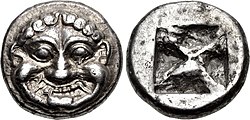
Greek poleis developed distinctive silver, gold, and bronze coinages bearing gods, rulers, animals, plants, and civic symbols. Coins supported trade across the Mediterranean while expressing the political identity and independence of their issuing communities.
Image source: Ancient Greek coinage
515 BC - 330 BC
The Achaemenid Persian Empire established a royal coinage centered on the gold daric and silver siglos. These coins facilitated imperial payments, military finance, and taxation while displaying the authority of the Persian Great King.
510 BC - 323 BC
Athens issued large quantities of silver tetradrachms featuring Athena and her owl. The coins became widely trusted in Mediterranean commerce, supported by the silver from Laurion and the economic power of the Athenian state.
336 BC - 323 BC
Alexander's conquests spread a widely recognized Attic-weight silver standard across his empire. Alexander tetradrachms depicting Heracles and Zeus continued to be minted by successor kingdoms long after his death and became major trade coins.
211 BC
During the Second Punic War, Rome introduced the denarius as a standard silver denomination. It became the foundation of Roman monetary circulation, military pay, taxation, and commercial exchange for centuries.
Image source: Denarius
44 BC
In 44 BC, coins were struck bearing the living Julius Caesar's portrait, a major departure from Roman Republican tradition. The practice linked coinage directly to personal political power and was continued and expanded by Roman emperors.
Image source: Julius Caesar

23 BC
Augustus reorganized Roman denominations and clarified the relationship among gold aurei, silver denarii, brass sestertii, and smaller bronze coins. The system supported the administration and military economy of the Roman Empire.
215
Emperor Caracalla introduced the antoninianus, nominally worth two denarii but containing much less than twice their silver. Its later debasement reflected the growing fiscal pressures that destabilized Roman money.
294
Diocletian created new denominations, including the silver argenteus and large nummus, and attempted to restore reliable weights and precious-metal standards. His reforms were part of a broader effort to stabilize imperial finances.
312
Constantine the Great introduced the gold solidus at a stable weight of roughly 4.5 grams. The coin became the principal high-value currency of the Byzantine Empire and remained influential in European and Mediterranean monetary systems for centuries.
498
Anastasius I reformed Byzantine bronze currency and retained the gold solidus, known in Greek as the nomisma. Byzantine coins combined imperial portraits and Christian symbolism and circulated widely around the eastern Mediterranean.
Image source: Byzantine coinage
600 - 699
Umayyad caliph Abd al-Malik introduced a distinctly Islamic gold dinar bearing Arabic inscriptions rather than human images. The reform also produced standardized silver dirhams and helped unify the monetary administration of the caliphate.
Image source: Dinar
793
Charlemagne standardized the silver denier and its relationship to the pound and shilling. Although the system was mainly silver-based, its accounting structure influenced European money and terminology throughout the Middle Ages.
960 - 1279
The Song dynasty greatly expanded copper cash production and developed government-backed paper money to address the limitations of transporting heavy coins. This created one of history's earliest large-scale paper monetary systems alongside coin circulation.
1252
The Republic of Florence introduced the gold florin, stamped with Saint John the Baptist and the city's lily emblem. Its dependable weight and purity made it a leading international trade coin and a model for later European gold currencies.
Image source: Florin
1260
The Mongol Yuan government issued state paper currency, known as jiaochao, and required its use in much of China. Its success depended on taxation and redemption policies, though over-issuance later contributed to severe inflation.
Image source: Jiaochao
1284
Venice introduced the gold ducat, later called the zecchino, with a stable weight and fineness. It became one of the most trusted commercial coins in Europe and the Mediterranean for several centuries.
Image source: Ducat
1477
Sultan Mehmed II introduced the Ottoman gold sultani, also known as the altın. Its design and weight supported the empire's expanding fiscal and commercial system and reflected the influence of Venetian gold coinage.
1518
The Kingdom of Bohemia began striking large silver coins from mines near Joachimsthal. Their name, shortened to thaler and adapted into dollar, became one of the most influential coin names in world monetary history.
1535
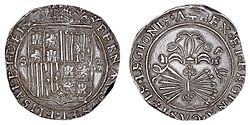
The Spanish monarchy established major American mints and produced large quantities of eight-real silver coins. Known as pieces of eight, they circulated across Europe, the Americas, Asia, and Africa and became a foundational global trade currency.
Image source: Spanish dollar
1694
The creation of the Bank of England strengthened the English financial system and supported public borrowing, while later reforms standardized the relationship between gold, silver, and copper denominations. The institution helped shape the modern monetary state.
Image source: Bank of England
1696 - 1698
England recalled and recoined worn and clipped silver pieces in one of the largest early modern monetary operations. The reform sought to restore trust in coin weights and reduce the effects of widespread clipping and counterfeiting.
Apr 2, 1792
The United States Coinage Act created the United States Mint, defined the dollar in relation to silver and gold, and authorized denominations from the half cent to the eagle. It established the legal framework for national American coinage.
Image source: Coinage Act of 1792
1797
Matthew Boulton's Soho Mint used steam-powered machinery and innovative edge lettering to produce high-quality copper coins for Britain and other governments. Mechanized minting improved consistency and made counterfeiting more difficult.
1816 - 1821
Britain's Coinage Act of 1816 and subsequent resumption of convertibility established a formal gold standard based on the sovereign. London's financial power helped spread gold-standard practices internationally during the nineteenth century.
Image source: Gold standard
1849
The California Gold Rush increased United States gold supplies and led to the introduction of the gold dollar in 1849. The Mint also issued larger gold denominations, expanding the country's circulating gold coinage.
1865 - 1927
France, Belgium, Switzerland, and Italy formed the Latin Monetary Union to coordinate coin weights, fineness, and denominations. Other countries adopted compatible standards, although the union eventually weakened under changing economic conditions.
Image source: Latin Monetary Union
1871
Japan's New Currency Act introduced the yen as part of the Meiji government's modernization program. Decimal denominations and a modern minting system replaced older feudal monetary practices and integrated Japan into global finance.
Image source: Japanese yen
1957
India decimalized its currency in 1957, dividing the rupee into 100 naye paise. The reform simplified calculations and aligned the country's coin denominations with widespread international decimal practices.
Image source: Indian rupee
Feb 15, 1971
On Decimal Day, Britain replaced its pounds, shillings, and pence system with a decimal pound divided into 100 new pence. New coin denominations and a nationwide public information campaign accompanied the transition.
Image source: Decimal Day
Jan 1, 2002
Euro coins and banknotes entered everyday circulation in twelve European Union countries, replacing national currencies. Each coin combines a common European side with a national design, creating a shared monetary system with visible national identities.
May 4, 2012
Canada stopped distributing its one-cent coin after concluding that production and handling costs outweighed its practical value. Cash transactions were rounded to the nearest five cents, while non-cash payments remained exact.
Image source: Penny (Canadian coin)
Nov 8, 2016
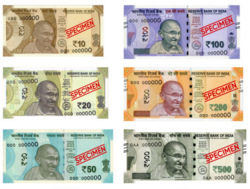
India withdrew its 500- and 1,000-rupee banknotes from legal tender in an effort to combat unreported wealth, corruption, and counterfeit currency. The policy caused major disruption and prompted rapid growth in digital payments, although it concerned banknotes rather than coins.
Image source: 2016 Indian banknote demonetisation
Build a timeline like this one in minutes, for free. Start Yours →
Or browse the full history timeline directory, with more than 2,500 topics.
This History of Coins timeline was generated with the help of AI, using information found on the internet.
We work hard to keep these timelines accurate, but mistakes do get through. If you spot one, email us at [email protected] and we'll fix it for future visitors.
Generate yours with AI or build it from scratch, for free.

Export your timeline, add your own events, edit or remove AI-generated events, and much more
No credit card required.
15-day money-back guarantee.
You can create an unlimited number of timelines with up to 10 events on each one, customize how they look, export them to PDF, PNG, PowerPoint, CSV, and Excel, and share them with a link. Timelines made with Timeline Maker AI keep every event the generator created, and you can add up to 5 events of your own. Paid plans remove the event limit, add spreadsheet imports and hide Preceden's branding, and the higher-priced plan also adds collaborators, a custom logo and a custom domain.
Yes. You can cancel your subscription from your account page at any time, and you will not be charged again. Your subscription stays active for the rest of the period you already paid for.
Yes. We email you a reminder 15 days before your annual renewal, and we email you a receipt after every payment.
Yes. You can email us within 15 days of any payment, and we will issue you a full refund.
Check out our pricing docs or send us an email anytime: [email protected].