-
Use Cases
-
Resources
-
Pricing
The history of computer keyboards traces the evolution of typing devices from mechanical typewriters and punched-card systems to today’s physical, wireless, ergonomic, and touchscreen keyboards. More Less
Build a timeline like this one in minutes, for free. Start Yours →
Part of our collection of invention and technology timelines.
1907 - 1910
The teleprinter, in its more contemporary form, began being developed between 1907 and 1910 by American mechanical engineer Charles Krum, his son Howard, and electrical engineer Frank Pearne.
1907 - 1910
Charles Krum made early contributions to the development of the modern teleprinter during the period from 1907 to 1910.
1907 - 1910
Howard Krum worked with his father, Charles Krum, on the development of the teleprinter in its more contemporary form.
1907 - 1910
Electrical engineer Frank Pearne provided early contributions to the teleprinter's development during the 1907–1910 period.
1910
The teleprinter keyboard became an input mechanism for typed communication, helping establish the role of keyboards in electrical communications.
1910 - 2000
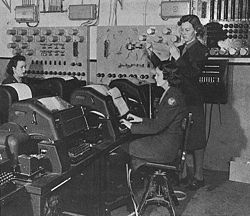
For most of the twentieth century, teleprinter keyboards played a strong role in point-to-point communication.
Image source: Teleprinter
1910 - 2000
Teleprinter keyboards also supported point-to-multipoint communication for most of the twentieth century.
1910 - 2000
Keyboards on keypunch devices played a strong role in data entry and storage for roughly as long as teleprinter keyboards dominated communications.
1910 - 2000
The keypunch keyboard became an important interface for recording data on punched cards and related storage media throughout much of the twentieth century.
1926
The ergonomic goal of Klockenberg's proposed split arrangement was to facilitate a more natural posture for two-handed typists.
Image source: Human factors and ergonomics

Build a timeline like this one in minutes, for free. Start Yours →
This History of Computer Keyboards timeline was generated with the help of AI, using information found on the internet.
We work hard to keep these timelines accurate, but mistakes do get through. If you spot one, email us at [email protected] and we'll fix it for future visitors.
Generate yours with AI or build it from scratch, for free.