-
Use Cases
-
Resources
-
Pricing
The history of the personal computer traces the evolution of affordable, user-friendly computing machines from the mid-1970s onward. Beginning with hobbyist kits like the Altair 8800 and breakthrough products such as the Apple II, the industry expanded rapidly with the IBM PC, graphical user interfaces from Apple and Microsoft, portable laptops, and today's powerful multi-purpose devices that have transformed work, education, and daily life worldwide. More Less
May 12, 1941
% complete
German engineer Konrad Zuse completed the Z3, the world's first working programmable, fully automatic digital computer. Built from electromechanical relays, the Z3 demonstrated that complex calculations could be automated by machines, laying conceptual groundwork for all future computing devices.
Image source: Z3 (computer)
Feb 15, 1946
% complete
The Electronic Numerical Integrator and Computer (ENIAC) was publicly unveiled as one of the first general-purpose electronic digital computers. Weighing 30 tons and filling an entire room with vacuum tubes, ENIAC could perform thousands of calculations per second and inspired a generation of computer designers.
Image source: ENIAC
Dec 23, 1947
% complete
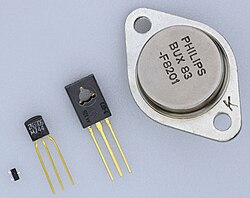
John Bardeen, Walter Brattain, and William Shockley of Bell Labs invented the transistor, a tiny semiconductor device that replaced bulky, unreliable vacuum tubes. The transistor became the fundamental building block of modern electronics and made compact, affordable computers possible.
Image source: Transistor
Sep 12, 1958
% complete
Jack Kilby of Texas Instruments demonstrated the first integrated circuit in September 1958, followed shortly by Robert Noyce's silicon-based version at Fairchild Semiconductor. By combining multiple transistors on a single chip, the IC enabled dramatic miniaturization and cost reduction in electronics.
Image source: Integrated circuit
Dec 9, 1968
% complete
Douglas Engelbart's famous 'Mother of All Demos' in San Francisco introduced the computer mouse, hypertext, on-screen windows, and video conferencing. His vision of interactive computing profoundly shaped how people would eventually use personal computers.
Image source: The Mother of All Demos
Nov 15, 1971
% complete
Intel released the 4004, the first commercially available microprocessor, packing a complete CPU onto a single chip. Originally developed for a Japanese calculator, the 4004 proved that inexpensive processors could power general-purpose computers, making the personal computer feasible.
Image source: Intel 4004
Mar 1, 1973
% complete
Researchers at Xerox PARC created the Alto, the first computer designed around a graphical user interface with windows, icons, and a mouse. Though never sold commercially, the Alto's innovations directly inspired later systems like the Apple Macintosh.
Image source: Xerox Alto
Jan 1, 1975
% complete
MITS announced the Altair 8800 on the cover of Popular Electronics, offering hobbyists an affordable build-it-yourself computer based on Intel's 8080 chip. Its runaway success spawned the homebrew computing movement and prompted Paul Allen and Bill Gates to write Altair BASIC, founding Microsoft.
Image source: Altair 8800
Jul 1, 1976
% complete
Steve Wozniak and Steve Jobs began selling the Apple I, a fully assembled circuit board for hobbyists priced at $666.66. About 200 units were built, marking the humble start of what would become one of the world's most valuable companies.
Image source: Apple I
Jun 1, 1977
% complete
The '1977 Trinity' of complete, ready-to-use home computers arrived: the Commodore PET, the Apple II, and the Tandy TRS-80. For the first time, ordinary consumers could buy a working personal computer off the shelf, igniting mass-market interest in home computing.
Image source: Home computer
Oct 1, 1979
% complete
VisiCalc, created by Dan Bricklin and Bob Frankston, was the first spreadsheet program for personal computers. It gave businesses a compelling reason to buy an Apple II, demonstrating that software applications could drive hardware sales and legitimizing the PC as a business tool.
Image source: VisiCalc
Aug 12, 1981
% complete
IBM entered the personal computer market with the IBM PC, using an open architecture and Microsoft's MS-DOS operating system. Its corporate credibility made PCs standard in offices worldwide, and its open design spawned a vast industry of IBM-compatible clones.
Image source: IBM Personal Computer
Aug 1, 1982
% complete
The Commodore 64 went on sale at $595, bringing color graphics and sound to affordable home computing. With tens of millions of units sold over its lifetime, it remains the best-selling single computer model of all time and introduced countless families to computing and gaming.
Image source: Commodore 64
Oct 25, 1983
% complete
Microsoft released Multi-Tool Word for Xenix and MS-DOS, introducing word processing software that would evolve into the dominant document application worldwide. It helped establish software productivity suites as essential companions to personal computers.
Image source: Microsoft Word
Jan 24, 1984
% complete
Apple unveiled the Macintosh with its famous '1984' Super Bowl commercial, offering an affordable computer with a mouse-driven graphical interface. The Mac popularized desktop publishing and user-friendly design, influencing every subsequent consumer computer.
Image source: Macintosh 128K
Jul 1, 1985
% complete
PageMaker, running on the Macintosh alongside Apple's LaserWriter printer, turned personal computers into professional publishing tools. Desktop publishing transformed newspapers, magazines, and small businesses, creating entirely new industries around PC-based content creation.
Image source: Desktop publishing
Sep 18, 1985
% complete
After leaving Apple, Steve Jobs founded NeXT to build high-end workstations with advanced object-oriented software. Though commercially limited, NeXTSTEP technology later became the foundation of macOS after Apple acquired NeXT in 1997.
Image source: NeXT
Sep 9, 1986
% complete
Compaq beat IBM to market with the first 386-based PC, proving that clone makers could out-innovate the original. This cemented the dominance of the IBM-compatible standard and shifted power in the PC industry toward component suppliers like Intel and Microsoft.
Image source: Compaq Deskpro 386
Mar 12, 1989
% complete
While working at CERN, Tim Berners-Lee proposed a hypertext system for sharing information over the internet. The World Wide Web transformed personal computers from standalone machines into gateways to global information, redefining their role in daily life.
Image source: History of the World Wide Web
May 22, 1990
% complete
Windows 3.0 brought a usable graphical interface to IBM-compatible PCs, selling millions of copies. It established Microsoft's dominance on the desktop and set the stage for Windows 95, which would make graphical computing universal.
Image source: Windows 3.0
Mar 22, 1993
% complete
Intel's Pentium processor delivered dramatically faster performance for multimedia and gaming, becoming a household brand name. It marked the transition of PCs into powerful multimedia machines capable of handling graphics, audio, and video.
Image source: Pentium
Apr 30, 1993
% complete
CERN released the World Wide Web technology into the public domain, making it free for anyone to use. Combined with the Mosaic browser released the same year, this decision triggered explosive growth in internet-connected personal computers.
Image source: World Wide Web
Aug 24, 1995
% complete
Microsoft launched Windows 95 with unprecedented fanfare, including a midnight release event featuring the Rolling Stones' 'Start Me Up.' Its intuitive Start menu and plug-and-play support made PCs accessible to mainstream consumers and solidified Microsoft's monopoly.
Nov 1, 1996
% complete
DVD-ROM drives began appearing in personal computers, offering far greater storage than CDs. DVDs enabled full-length movies and large software packages on PC, turning computers into home entertainment centers.
Image source: DVD
May 6, 1998
% complete
Steve Jobs returned to lead Apple and launched the colorful, translucent iMac G3, which bundled internet access and abandoned legacy ports. Its bold design and ease of use revived Apple's fortunes and emphasized industrial design as a competitive advantage.
Image source: IMac G3
Sep 1, 1999
% complete
The ratification of the 802.11b Wi-Fi standard freed personal computers from network cables, enabling wireless internet access at home, work, and cafes. Wireless connectivity became a defining feature of portable and laptop computing.
Oct 25, 2001
% complete
Windows XP merged Microsoft's stable NT kernel with a consumer-friendly interface, becoming one of the most beloved and longest-lived versions of Windows. It powered hundreds of millions of PCs for over a decade.
Oct 1, 2007
% complete
Sparked by the ASUS Eee PC, small, inexpensive netbooks surged in popularity, emphasizing portability and web browsing over raw power. They demonstrated strong demand for lightweight, always-connected computing before tablets took over that niche.
Image source: Netbook
Jan 15, 2008
% complete
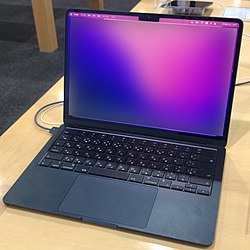
Steve Jobs pulled the original MacBook Air from a manila envelope at Macworld, showcasing an impossibly thin laptop. The Air set the template for modern ultrabooks and signaled the shift from optical drives to cloud-based storage and downloads.
Image source: MacBook Air
Feb 29, 2012
% complete
The Raspberry Pi Foundation released a credit-card-sized computer costing just $35, aimed at teaching children to code. Millions of units were sold, fueling a global maker movement and democratizing hands-on computing education.
Image source: Raspberry Pi
Or browse the full history timeline directory, with more than 2,000 topics.
This History of the Personal Computer timeline was generated with the help of AI, using information found on the internet.
We work hard to keep these timelines accurate, but mistakes do get through. If you spot one, email us at [email protected] and we'll fix it for future visitors.
Generate yours with AI or build it from scratch, for free.
Export your timeline, add your own events, edit or remove AI-generated events, and much more
No credit card required.
Cancel anytime.
Cancel anytime.
You can create an unlimited number of timelines with up to 10 events on each one, customize how they look, export them to PDF, PNG, PowerPoint, CSV, and Excel, and share them with a link. Paid plans raise the event limit and add features like spreadsheet imports and collaborators.
Yes. You can cancel your subscription from your account page at any time, and you will not be charged again. Your subscription stays active for the rest of the period you already paid for.
Yes. We will email you a reminder before the annual renewal, and we will also email you a receipt.
Yes. You can email us within 15 days of any payment, and we will issue you a full refund.
Check out our pricing docs or send us an email anytime: [email protected].