-
Use Cases
-
Resources
-
Pricing
Denver, Colorado—known as the Mile High City for its elevation of exactly one mile above sea level—was founded in 1858 as a mining town during the Pike's Peak Gold Rush. Named after Kansas Territorial Governor James W. Denver, it grew rapidly as a supply hub and railroad center, becoming the capital of Colorado in 1876 and evolving into a major center of government, commerce, culture, and outdoor recreation in the American West. More Less
Nov 1806
% complete
Explorer Zebulon Pike traveled through the region at the base of the Rocky Mountains, becoming one of the first Americans to describe the area that would later become Denver. He famously attempted to climb what is now Pikes Peak but was turned back by winter conditions.
Image source: Zebulon Pike
1858
% complete
Two rival settlements, Auraria on the west bank of Cherry Creek and Highland across the South Platte River, were established in competition with Denver City. Both would later be consolidated into the growing city.
Image source: Auraria, Denver
Nov 22, 1858
% complete
Denver City was founded as a mining town by General William Larimer and a group of land speculators from eastern Kansas, who named it after James W. Denver, governor of the Kansas Territory. The town sprang up along Cherry Creek to serve prospectors drawn by gold discoveries.
Image source: History of Denver
Apr 6, 1860
% complete
After fierce rivalry, the towns of Denver City, Auraria, and Highland agreed to consolidate under the name Denver City. The merger strengthened the community's position as the dominant settlement in the region.
Feb 28, 1861
% complete
The United States Congress established the Colorado Territory, with Denver City designated as its capital. This gave the fledgling settlement official status and spurred further growth and organization.
Image source: Colorado Territory
Nov 1, 1861
% complete
Denver City was officially incorporated by the new Colorado Territorial legislature, formalizing its government and establishing it as an important administrative center in the West.
Image source: Denver
Apr 19, 1863
% complete
A devastating fire swept through Denver's business district, destroying most of the wooden structures in the young city. Residents rebuilt using brick and stone, making the city more resilient.
May 19, 1864
% complete
Only a year after the Great Fire, a massive flood along Cherry Creek destroyed homes and businesses and killed dozens of people. The disaster prompted efforts to better manage the waterways running through the city.
1867
% complete
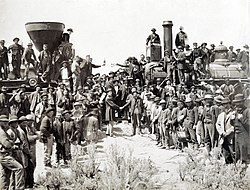
When the Union Pacific chose a route through Cheyenne instead of Denver, civic leaders feared economic isolation. They responded by organizing their own railroad company to connect Denver to the national network.
Image source: First transcontinental railroad
Jun 24, 1870
% complete
The Denver Pacific line connected Denver to the transcontinental railroad at Cheyenne, securing the city's future as a regional transportation hub and triggering a population boom.
Aug 15, 1870
% complete
Completion of the Kansas Pacific line linked Denver directly to the East Coast rail network, cementing the city's role as the commercial center of the Rocky Mountain region.
Aug 1, 1876
% complete
As Colorado joined the Union as the Centennial State, Denver stood poised to become its capital, benefiting from political power and investment that accelerated its development into a major American city.
Dec 9, 1876
% complete
Following Colorado's admission as a state, Denver was confirmed as the permanent state capital after years of competition with Golden and other communities for the honor.
1879 - 1893
% complete
Rich silver strikes at Leadville and other Colorado mines brought enormous wealth to Denver, which served as the financial center for mining operations. Grand mansions and ornate buildings transformed the cityscape during this era.
Image source: Colorado Silver Boom
1879 - 1893
% complete
Mining magnate Horace Tabor became one of Denver's most famous citizens, funding landmarks like the Tabor Grand Opera House. His fortune collapsed with the repeal of the Sherman Silver Purchase Act in 1893.
Image source: Horace Tabor
Jun 1, 1881
% complete
Denver Union Station opened, consolidating the city's many railroads into a single grand depot. It became the symbolic gateway to the West and remains a major landmark today.
Image source: Denver Union Station
Jul 1, 1893
% complete
The Panic of 1893 and the collapse of silver prices devastated Denver's economy, bankrupting banks and investors. The city diversified into agriculture, tourism, and manufacturing to recover.
Image source: Panic of 1893
1898
% complete
At the turn of the century, Denver promoted itself aggressively as the 'Queen City of the Plains,' investing in parks, boulevards, and civic beautification projects designed by planners like George Kessler.
1904 - 1920
% complete
Mayor Robert Speer championed the City Beautiful movement, creating Civic Center Park, expanding the park system, planting thousands of trees, and giving Denver much of its distinctive urban landscape.
Image source: City Beautiful movement
1917
% complete
After more than two decades of construction, the Colorado State Capitol building was completed, crowned with a golden dome plated with genuine Colorado gold leaf.
Image source: Colorado State Capitol
1948
% complete
Originally built as a baseball stadium, Bears Stadium evolved into Mile High Stadium, home of the Denver Broncos and a legendary venue whose elevation made it one of the most intimidating stadiums in professional sports.
Image source: Mile High Stadium
1952
% complete
Federal defense spending, including the Rocky Flats nuclear weapons facility and aerospace companies like Martin Marietta, transformed Denver's postwar economy and fueled rapid suburban growth.
Image source: Rocky Flats Plant
Aug 14, 1959
% complete
Denver was awarded a franchise in the newly formed American Football League. The Broncos would grow into one of the NFL's most valuable franchises and a defining part of the city's identity.
Image source: Denver Broncos
1960 - 1969
% complete
Severe smog problems in Denver during the 1960s led Colorado to pioneer aggressive air quality regulations, including the country's first mandatory vehicle emissions inspection program.
May 1989
% complete
Facing capacity limits at Stapleton Airport, Denver voters approved a bond issue to build a massive new airport northeast of the city, the largest public works project in the region's history.
Image source: Denver International Airport
Feb 28, 1995
% complete
Denver International Airport opened after months of delays, becoming the largest airport in the United States by land area. Its tent-like roof and public art, including 'Blue Mustang,' made it iconic.
Jan 25, 1998
% complete
Led by quarterback John Elway, the Denver Broncos defeated the Green Bay Packers in Super Bowl XXXII, capturing the city's first championship and setting off massive celebrations.
Image source: Super Bowl XXXII
Jan 31, 1999
% complete
John Elway capped his Hall of Fame career by leading the Broncos to victory over the Atlanta Falcons in Super Bowl XXXIII, delivering Denver's second consecutive NFL championship.
Image source: Super Bowl XXXIII
Aug 25, 2008 - Aug 28, 2008
% complete
Denver hosted the Democratic National Convention, where Barack Obama accepted the presidential nomination before 75,000 people at Invesco Field at Mile High, showcasing the city on a global stage.
Image source: 2008 Democratic National Convention
Nov 6, 2012
% complete
Colorado voters passed Amendment 64, making Colorado the first state alongside Washington to legalize recreational marijuana, transforming Denver into a center of the emerging cannabis industry.
Image source: 2012 Colorado Amendment 64
Jul 26, 2014
% complete
A sweeping $500 million redevelopment reopened Denver Union Station as a transit hub, hotel, and restaurant complex, anchoring the revitalization of the surrounding LoDo neighborhood.
Apr 22, 2016
% complete
Regional Transportation District opened commuter rail service connecting Union Station to Denver International Airport and Boulder-area suburbs, dramatically improving regional transit connectivity.
Or browse the full history timeline directory, with more than 2,000 topics.
This History of Denver timeline was generated with the help of AI, using information found on the internet.
We work hard to keep these timelines accurate, but mistakes do get through. If you spot one, email us at [email protected] and we'll fix it for future visitors.
Generate yours with AI or build it from scratch, for free.
Export your timeline, add your own events, edit or remove AI-generated events, and much more
No credit card required.
Cancel anytime.
Cancel anytime.
You can create an unlimited number of timelines with up to 10 events on each one, customize how they look, export them to PDF, PNG, PowerPoint, CSV, and Excel, and share them with a link. Paid plans raise the event limit and add features like spreadsheet imports and collaborators.
Yes. You can cancel your subscription from your account page at any time, and you will not be charged again. Your subscription stays active for the rest of the period you already paid for.
Yes. We will email you a reminder before the annual renewal, and we will also email you a receipt.
Yes. You can email us within 15 days of any payment, and we will issue you a full refund.
Check out our pricing docs or send us an email anytime: [email protected].