-
Use Cases
-
Resources
-
Pricing
Jun 15, 1878
% complete
Eadweard Muybridge's series of photographs capturing a galloping horse demonstrated that motion could be broken down into sequential images, laying crucial groundwork for the development of motion picture technology and inspiring future inventors to pursue moving images.
Image source: The Horse in Motion
Oct 14, 1888
% complete
Louis Le Prince recorded what is widely considered the earliest surviving motion picture film, a brief scene of people walking in a garden in Leeds, England. His pioneering work predated the Lumière brothers, though his mysterious disappearance in 1890 prevented him from capitalizing on his invention.
Image source: Roundhay Garden Scene
Apr 14, 1894
% complete
Thomas Edison's Kinetoscope, a peephole viewing device for short films, opened for public viewing at Holland Brothers' Kinetoscope Parlor in New York City. It marked the first commercial exhibition of motion pictures and created an early film industry in the United States.
Image source: Kinetoscope
Dec 28, 1895
% complete
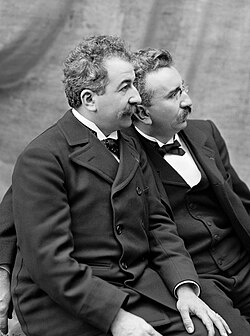
The Lumière brothers held the first paid public screening of motion pictures at the Grand Café in Paris, showing ten short films including Workers Leaving the Lumière Factory. The event is often cited as the birth of cinema as a public medium.
Image source: Auguste and Louis Lumière
Sep 1, 1902
% complete
Georges Méliès released his landmark science fiction short A Trip to the Moon, showcasing innovative special effects, hand-painted color, and narrative storytelling. The film established cinema as a medium for fantasy and imagination rather than mere documentation.
Image source: A Trip to the Moon
Jun 19, 1905
% complete
Harry Davis and John Harris opened the Nickelodeon in Pittsburgh, the first dedicated indoor movie theater. Charging five cents per admission, nickelodeons spread rapidly across America, making movies accessible to working-class audiences and fueling explosive industry growth.
Image source: Nickelodeon (movie theater)
Feb 8, 1915
% complete
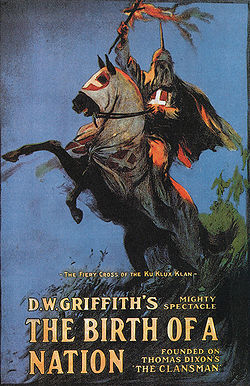
D.W. Griffith's epic The Birth of a Nation pioneered techniques like cross-cutting, close-ups, and large-scale battle scenes, demonstrating feature-length filmmaking's potential. However, its racist portrayal of African Americans and glorification of the Ku Klux Klan sparked protests that continue to shape debates about representation.
Image source: The Birth of a Nation
Feb 5, 1919
% complete
Charlie Chaplin, Mary Pickford, Douglas Fairbanks, and D.W. Griffith founded United Artists, giving filmmakers control over their own work independent of major studios. It became a powerful symbol of artistic autonomy in the growing American film industry.
Image source: United Artists
Apr 21, 1924
% complete
Buster Keaton starred in and directed Sherlock Jr., featuring groundbreaking stunts and visual effects performed without safety equipment. The film exemplified silent-era physical comedy and cemented Keaton's reputation as one of cinema's greatest visual innovators.
Image source: Sherlock Jr.
Oct 6, 1927
% complete
Warner Bros.' The Jazz Singer, starring Al Jolson, featured synchronized dialogue and songs, heralding the end of the silent era. Its commercial success triggered a rapid industry-wide conversion to sound, transforming acting, directing, and theater technology within just a few years.
Image source: The Jazz Singer
Nov 18, 1928
% complete
Steamboat Willie premiered as one of the first cartoons with fully synchronized sound, launching Mickey Mouse as a global icon. The short established Disney as a leader in animation and set new standards for the craft during animation's golden age.
Image source: Steamboat Willie
May 16, 1929
% complete
The Academy of Motion Picture Arts and Sciences presented its first Oscars at a private dinner in Hollywood, honoring films from 1927 and 1928. Wings won Outstanding Picture, and the ceremony began a tradition that would become cinema's most prestigious awards event.
Image source: 1st Academy Awards
Feb 12, 1931 - Nov 21, 1931
% complete
Universal Pictures released Dracula starring Bela Lugosi in February and Frankenstein starring Boris Karloff in November, establishing the classic monster movie formula. These hits launched the golden age of Universal horror and made horror a commercially viable Hollywood genre.
Image source: Universal Classic Monsters
Mar 2, 1933
% complete
Merian C. Cooper's King Kong amazed Depression-era audiences with Willis O'Brien's pioneering stop-motion animation of the giant ape. The film set a benchmark for creature effects and blockbuster spectacle that influenced generations of filmmakers.
Image source: King Kong (1933 film)
Dec 15, 1939
% complete
David O. Selznick's Technicolor epic Gone with the Wind premiered after years of production, becoming one of the most successful films ever made. It swept the Academy Awards, with Hattie McDaniel becoming the first Black Oscar winner, while the film itself remains controversial for its romanticized depiction of slavery.
Image source: Gone with the Wind (film)
May 1, 1941
% complete
Orson Welles's Citizen Kane introduced revolutionary deep-focus cinematography, nonlinear narrative structure, and low-angle shots. Though controversial upon release, it is now frequently cited as the greatest film ever made and a cornerstone of film language.
Image source: Citizen Kane
Nov 26, 1942
% complete
Warner Bros.' Casablanca, starring Humphrey Bogart and Ingrid Bergman, premiered to critical acclaim and won three Oscars including Best Picture. Its blend of romance, sacrifice, and wartime patriotism made it an enduring classic of Hollywood's studio era.
Image source: Casablanca (film)
Jan 1, 1948 - Dec 31, 1954
% complete
Following the Supreme Court's Paramount Decision, major studios were forced to divest their theater chains, ending vertical integration. Combined with television's rise, this reshaped Hollywood's business model and contributed to the decline of the studio system.
Image source: United States v. Paramount Pictures, Inc.
Nov 24, 1948
% complete
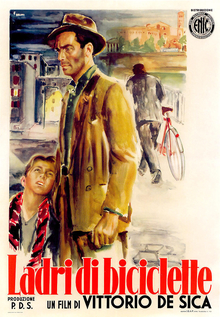
Vittorio De Sica's Bicycle Thieves exemplified Italian neorealism, using nonprofessional actors, real locations, and stories of ordinary people to portray postwar hardship. The movement profoundly influenced world cinema and later directors including Satyajit Ray and the French New Wave.
Image source: Bicycle Thieves
Sep 10, 1951
% complete
Rashomon's international success introduced Western audiences to Japanese cinema and its innovative structure of contradictory testimonies. The 'Rashomon effect' entered popular vocabulary, and the film opened doors for Asian cinema worldwide.
Image source: Rashomon
Sep 30, 1952
% complete
This Is Cinerama premiered in New York, introducing a curved, ultra-wide projection process designed to compete with television. It sparked the widescreen revolution, leading to CinemaScope, VistaVision, and other formats that redefined the theatrical experience.
Image source: Cinerama
Mar 16, 1960
% complete
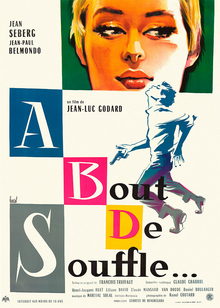
Jean-Luc Godard's Breathless embodied the French New Wave with jump cuts, handheld camerawork, and improvised energy. Alongside Truffaut and Chabrol, Godard transformed film criticism into filmmaking and inspired independent movements around the world.
Image source: Breathless (1960 film)
Jun 16, 1960
% complete
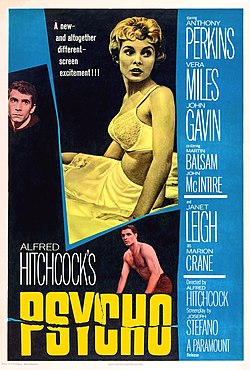
Alfred Hitchcock's Psycho broke taboos with its shocking shower murder scene, on-screen violence, and willingness to kill its protagonist mid-story. Made cheaply in black and white, it became a massive hit and laid foundations for modern horror and the slasher genre.
Image source: Psycho (1960 film)
Aug 13, 1967
% complete
Arthur Penn's Bonnie and Clyde, starring Warren Beatty and Faye Dunaway, brought graphic violence, moral ambiguity, and European-influenced style to mainstream American cinema. Its success marked the rise of New Hollywood, where young directors gained unprecedented creative freedom.
Image source: Bonnie and Clyde (film)
Apr 2, 1968
% complete
Stanley Kubrick's 2001: A Space Odyssey pushed special effects, scientific realism, and philosophical ambition to new heights. Initially divisive, it became one of the most influential science fiction films ever made, inspiring decades of filmmakers.
Image source: 2001: A Space Odyssey
Jun 20, 1975
% complete
Steven Spielberg's Jaws pioneered wide national release backed by heavy television advertising, becoming the highest-grossing film up to that time. Its success established the summer blockbuster model that still dominates Hollywood distribution strategies.
Image source: Jaws (film)
May 25, 1977
% complete
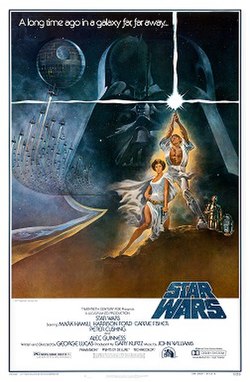
George Lucas's Star Wars revolutionized special effects through Industrial Light & Magic, spawned massive merchandising, and created modern franchise filmmaking. Its blend of mythic storytelling and spectacle reshaped audience expectations and studio priorities for decades.
Image source: Star Wars (film)
Aug 15, 1979
% complete
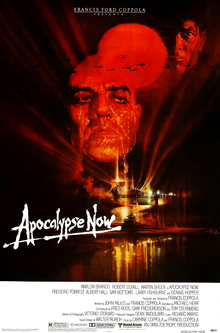
Francis Ford Coppola's Apocalypse Now endured typhoons, heart attacks, and budget overruns before premiering at Cannes, where it won the Palme d'Or. Its harrowing vision of the Vietnam War demonstrated both the excesses and artistic heights of 1970s auteur cinema.
Image source: Apocalypse Now
Jun 1, 1980
% complete
The VHS format's victory over Betamax opened a lucrative home video market, allowing studios to profit from rentals and sales. Home video transformed film consumption, extended movies' revenue lifespans, and eventually rivaled theatrical box office earnings.
Image source: Videocassette recorder
Nov 22, 1995
% complete
Toy Story, produced by Pixar and distributed by Disney, was the first entirely computer-animated feature film. Directed by John Lasseter, it launched a new era of animation, led to Disney's acquisition of Pixar, and displaced traditional hand-drawn animation as the dominant form.
Image source: Toy Story
Mar 31, 1997
% complete
The DVD's superior quality, extra features, and compact size rapidly replaced VHS, creating a collector culture around special editions and director commentaries. DVDs became a major revenue pillar for studios throughout the 2000s before streaming disrupted the market.
Image source: DVD
Mar 31, 1999
% complete
The Wachowskis' The Matrix popularized bullet time and digital compositing while exploring virtual reality themes. Its influence spread across action cinema, video games, and popular culture, defining late-1990s cyberpunk aesthetics.
Image source: The Matrix
Dec 17, 2003
% complete
The Return of the King completed Peter Jackson's ambitious adaptation shot back-to-back in New Zealand, winning eleven Oscars including Best Picture. The trilogy proved fantasy epics could achieve critical acclaim and demonstrated the power of large-scale digital effects and location shooting.
Image source: The Lord of the Rings: The Return of the King
May 2, 2008
% complete
Iron Man kicked off the Marvel Cinematic Universe, establishing an interconnected franchise model culminating in Avengers: Endgame's record-breaking success. The MCU redefined blockbuster strategy around shared universes, serialized storytelling, and global marketing.
Image source: Iron Man (2008 film)
Dec 18, 2009
% complete
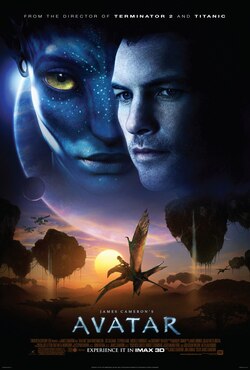
James Cameron's Avatar used advanced stereoscopic 3D and performance capture to create Pandora, becoming the highest-grossing film of all time. It triggered a wave of 3D releases and renewed investment in immersive theatrical experiences against rising home viewing.
Image source: Avatar (2009 film)
Feb 9, 2020
% complete
Bong Joon-ho's Parasite became the first non-English-language film to win the Academy Award for Best Picture, marking a milestone for international cinema. Its triumph reflected growing global audiences and streaming platforms' role in amplifying foreign-language films.
Image source: Parasite (2019 film)
Or browse the full history timeline directory, with more than 2,000 topics.
This History of Film timeline was generated with the help of AI, using information found on the internet.
We work hard to keep these timelines accurate, but mistakes do get through. If you spot one, email us at [email protected] and we'll fix it for future visitors.
Generate yours with AI or build it from scratch, for free.
Export your timeline, add your own events, edit or remove AI-generated events, and much more
No credit card required.
Cancel anytime.
Cancel anytime.
You can create an unlimited number of timelines with up to 10 events on each one, customize how they look, export them to PDF, PNG, PowerPoint, CSV, and Excel, and share them with a link. Paid plans raise the event limit and add features like spreadsheet imports and collaborators.
Yes. You can cancel your subscription from your account page at any time, and you will not be charged again. Your subscription stays active for the rest of the period you already paid for.
Yes. We will email you a reminder before the annual renewal, and we will also email you a receipt.
Yes. You can email us within 15 days of any payment, and we will issue you a full refund.
Check out our pricing docs or send us an email anytime: [email protected].