-
Use Cases
-
Resources
-
Pricing
The history of horror movies traces the evolution of the horror genre in cinema from its earliest days in the 1890s through today. Beginning with gothic adaptations and German Expressionist classics like Nosferatu (1922), horror evolved through Universal's monster movies of the 1930s, psychological thrillers of the 1950s-60s such as Psycho, slasher films of the 1970s-80s like Halloween, self-aware horror of the 1990s with Scream, and modern trends including found footage, elevated horror, and franchise reboots. More Less
Dec 24, 1896
% complete
Georges Méliès released Le Manoir du Diable, a short French film featuring bats, ghosts, and a devil, widely considered the first horror movie ever made. Its playful use of special effects and supernatural imagery established the foundations of the horror genre in cinema.
Image source: The House of the Devil (1896 film)
Feb 26, 1920
% complete
Robert Wiene's German Expressionist masterpiece The Cabinet of Dr. Caligari premiered, telling the story of a hypnotist who uses a sleepwalker to commit murders. Its distorted sets, painted shadows, and psychological themes profoundly influenced horror and film noir for decades.
Image source: The Cabinet of Dr. Caligari
Mar 4, 1922
% complete
F. W. Murnau's unauthorized adaptation of Bram Stoker's Dracula, Nosferatu, was released. Max Schreck's terrifying portrayal of Count Orlok, with his rat-like features and iconic shadow scenes, created one of cinema's most enduring monsters despite the film being ordered destroyed for copyright infringement.
Image source: Nosferatu
Sep 6, 1925
% complete
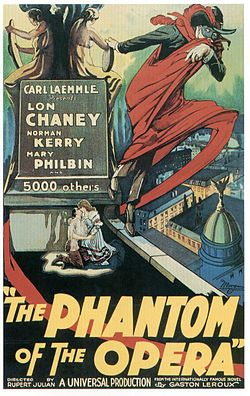
Universal Pictures released The Phantom of the Opera starring Lon Chaney, whose self-designed skull-like makeup shocked audiences. The lavish Paris Opera House set and Chaney's 'Man of a Thousand Faces' performance cemented the disfigured monster as a horror archetype.
Image source: The Phantom of the Opera (1925 film)
Feb 12, 1931
% complete
Bela Lugosi starred as Count Dracula in Universal's first sound horror hit. Lugosi's accented, hypnotic performance defined the vampire on screen and launched Universal's golden age of monster movies, proving horror could be commercially successful with sound.
Image source: Dracula (1931 English-language film)
Nov 21, 1931
% complete
James Whale's Frankenstein, starring Boris Karloff as the Monster, premiered to enormous success. Karloff's sympathetic yet frightening portrayal, combined with Jack Pierce's iconic flat-headed makeup design, became the definitive image of the creature and solidified horror as a major Hollywood genre.
Image source: Frankenstein (1931 film)
Mar 2, 1933
% complete
Merian C. Cooper and Ernest B. Schoedsack's King Kong astonished audiences with Willis O'Brien's stop-motion animation of the giant ape on Skull Island. Blending adventure, horror, and spectacle, it pioneered creature-feature filmmaking and special effects techniques used for generations.
Image source: King Kong (1933 film)
Apr 20, 1935
% complete
James Whale returned with Bride of Frankenstein, widely regarded as one of the greatest sequels ever made. Combining gothic atmosphere, dark humor, and pathos, it deepened the tragic mythology of the Monster and showcased the artistic potential of horror cinema.
Image source: Bride of Frankenstein
Dec 12, 1941
% complete
Universal's The Wolf Man, starring Lon Chaney Jr., established many werewolf conventions still used today, including silver bullets and full-moon transformations. Jack Pierce's makeup effects and the film's tragic tone made lycanthropy a cornerstone of the horror pantheon.
Image source: The Wolf Man (1941 film)
Dec 25, 1942
% complete
Produced by Val Lewton at RKO, Cat People used suggestion, shadows, and dread rather than monsters to terrify audiences. Its famous bus scene pioneered the 'Lewton bus' jump scare technique, proving that low-budget atmospheric horror could be both artistic and profitable.
Image source: Cat People (1942 film)
Apr 10, 1953
% complete
Vincent Price starred in House of Wax, Warner Bros.' first color 3D feature. The tale of a mad sculptor turning victims into wax figures capitalized on the 1950s 3D craze and established Vincent Price as a beloved icon of macabre cinema.
Image source: House of Wax (1953 film)
Nov 3, 1954
% complete
Ishirō Honda's Godzilla premiered in Japan, using the giant irradiated lizard as an allegory for nuclear devastation following Hiroshima and Nagasaki. The film launched kaiju cinema and influenced creature features worldwide, blending horror with science fiction and social commentary.
Image source: Godzilla (1954 film)
Feb 5, 1956
% complete
Don Siegel's Invasion of the Body Snatchers depicted alien pods replacing humans with emotionless duplicates. Read as commentary on McCarthyism and conformity, it became a landmark of paranoid science-fiction horror and has been remade multiple times.
Image source: Invasion of the Body Snatchers
Feb 17, 1959
% complete
William Castle's House on Haunted Hill, starring Vincent Price, employed the 'Emergo' gimmick of a flying skeleton over the audience. Castle's showmanship and marketing stunts defined late-1950s exploitation horror and drew young audiences back to theaters amid television competition.
Image source: House on Haunted Hill
Jun 16, 1960
% complete
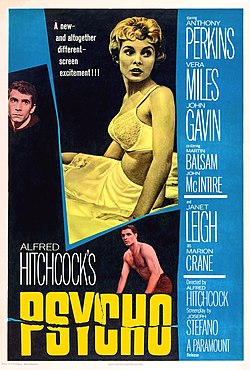
Alfred Hitchcock's Psycho shocked audiences with its brutal shower murder of star Janet Leigh and its twist revealing Norman Bates. Made cheaply in black and white, it broke censorship taboos, invented modern slasher grammar, and became one of the most influential films ever made.
Image source: Psycho (1960 film)
Jun 12, 1968
% complete
Roman Polanski's Rosemary's Baby, adapted from Ira Levin's novel, followed a pregnant woman who suspects her neighbors are satanists. Its critical and commercial success ignited a wave of occult horror films including The Exorcist and The Omen.
Image source: Rosemary's Baby (film)
Oct 1, 1968
% complete
George A. Romero's Night of the Living Dead introduced flesh-eating ghouls rising from graves, creating the modern zombie archetype. Its graphic violence, bleak ending, and casting of Duane Jones, a Black actor, as the hero challenged conventions and spawned an entire subgenre.
Image source: Night of the Living Dead
Aug 30, 1972
% complete
Wes Craven's brutal debut The Last House on the Left depicted the rape and murder of teenagers and their parents' revenge. Its raw, documentary-style violence marked the rise of grindhouse extremity and announced Craven as a provocative new voice in horror.
Image source: The Last House on the Left
Dec 26, 1973
% complete
William Friedkin's The Exorcist, about a girl possessed by a demon, caused fainting, vomiting, and lines around the block. It became the first horror film nominated for Best Picture at the Academy Awards, grossing massive sums and legitimizing horror as big-budget prestige cinema.
Image source: The Exorcist
Oct 1, 1974
% complete
Tobe Hooper's low-budget masterpiece introduced cannibalistic Leatherface and his family of killers. Marketed as a true story, its grainy realism and relentless terror made it one of the most influential and controversial horror films ever produced.
Image source: The Texas Chain Saw Massacre
Jun 20, 1975
% complete
Steven Spielberg's Jaws turned shark attacks into nationwide panic and became the highest-grossing film of all time at release. Its mechanical shark failures led to suspenseful restraint, while John Williams' theme and wide-release marketing invented the summer blockbuster model.
Image source: Jaws (film)
Nov 3, 1976
% complete
Brian De Palma's Carrie, based on Stephen King's debut novel, told the story of a telekinetic outcast who takes revenge at her prom. Sissy Spacek's Oscar-nominated performance and the shocking final scare launched decades of Stephen King adaptations.
Image source: Carrie (1976 film)
May 25, 1979
% complete
Ridley Scott's Alien trapped the crew of the Nostromo with H.R. Giger's nightmarish Xenomorph. The chestburster scene and Sigourney Weaver's Ripley redefined genre crossover, merging haunted-house dread with science fiction and launching a massive franchise.
Image source: Alien (film)
May 23, 1980
% complete
Stanley Kubrick's adaptation of Stephen King's novel, starring Jack Nicholson, transformed the Overlook Hotel into a labyrinth of psychological terror. Initially divisive among critics and King himself, it is now regarded as one of the greatest horror films ever made.
Image source: The Shining (film)
Feb 14, 1991
% complete
Jonathan Demme's thriller about FBI trainee Clarice Starling and cannibal Hannibal Lecter won five Academy Awards, including Best Picture. It remains the only horror-adjacent film to win the top Oscar, proving the genre could achieve critical supremacy.
Image source: The Silence of the Lambs (film)
Jul 14, 1999
% complete
Made for under $60,000, The Blair Witch Project used viral internet marketing and faux-documentary realism to gross nearly $250 million. It popularized found-footage horror and demonstrated how grassroots online campaigns could create blockbuster phenomena.
Image source: The Blair Witch Project
Oct 1, 2004
% complete
James Wan's Saw, made for just over $1 million, introduced Jigsaw's elaborate death traps and twist endings. Its massive success spawned seven sequels and ushered in the mid-2000s 'torture porn' trend alongside Hostel, sparking debates about horror's extremes.
Image source: Saw (film)
Sep 25, 2009
% complete
Oren Peli's Paranormal Activity, shot for $15,000 in his own home, used slow-burn scares and demand-driven theatrical releases to gross nearly $200 million. It launched a franchise and proved minimal found-footage horror could dominate the box office.
Image source: Paranormal Activity
Apr 1, 2011
% complete
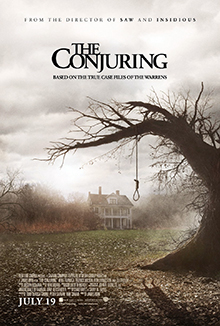
James Wan's Insidious revived old-school jump scares, and his 2013 film The Conjuring, based on Ed and Lorraine Warren's cases, grossed over $300 million. It spawned a sprawling cinematic universe including Annabelle and The Nun, making shared-universe horror a studio strategy.
Image source: The Conjuring
Feb 24, 2017
% complete
Jordan Peele's Get Out fused social commentary on racism with horror thrills, grossing $255 million on a $4.5 million budget. Peele won the Academy Award for Best Original Screenplay, marking a new era of elevated, socially conscious horror.
Image source: Get Out
Sep 8, 2017
% complete
Andy Muschietti's adaptation of Stephen King's It, featuring Bill Skarsgård's Pennywise, opened to a record-breaking $123 million weekend. Grossing over $700 million worldwide, it became the highest-grossing horror film of all time and proved King adaptations were box-office gold.
Image source: It (2017 film)
Jun 8, 2018
% complete
Ari Aster's Hereditary, distributed by A24, terrified critics and audiences with Toni Collette's devastating performance and slow-burn dread. Alongside films like The Witch and Midsommar, it cemented A24 as the home of prestige arthouse horror in the late 2010s.
Image source: Hereditary (film)
Oct 25, 1978
% complete
John Carpenter's Halloween, made for about $300,000, grossed over $70 million and defined the slasher formula: masked killer Michael Myers stalking suburban teens. Its POV shots, synth score, and final-girl structure inspired countless imitators throughout the 1980s.
Image source: Halloween (1978 film)
May 9, 1980
% complete
Sean S. Cunningham's Friday the 13th brought Jason Voorhees' Camp Crystal Lake to screens, capitalizing on Halloween's success. Its graphic kills sparked moral outrage and helped trigger the Video Nasty panic in Britain, while spawning one of horror's longest-running franchises.
Image source: Friday the 13th (1980 film)
Nov 9, 1984
% complete
Wes Craven's A Nightmare on Elm Street introduced Freddy Krueger, a killer who murders teens in their dreams. Blending surreal imagery with slasher violence, it made Robert Englund's Freddy a pop culture icon and revitalized the genre with supernatural invention.
Image source: A Nightmare on Elm Street
Sep 18, 1987
% complete
Clive Barker adapted his own novella into Hellraiser, introducing Pinhead and the Cenobites, beings who blur pain and pleasure. Its transgressive body horror pushed boundaries of gore and sadomasochistic imagery, expanding what mainstream horror could depict.
Image source: Hellraiser
Dec 20, 1996
% complete
Wes Craven and Kevin Williamson's Scream winking meta-commentary on horror rules revitalized the dying slasher genre. Grossing over $170 million, Ghostface became iconic, and the film triggered a wave of self-aware teen horror through the late 1990s.
Image source: Scream (1996 film)
Or browse the full history timeline directory, with more than 2,000 topics.
This History of Horror Movies timeline was generated with the help of AI, using information found on the internet.
We work hard to keep these timelines accurate, but mistakes do get through. If you spot one, email us at [email protected] and we'll fix it for future visitors.
Generate yours with AI or build it from scratch, for free.
Export your timeline, add your own events, edit or remove AI-generated events, and much more
No credit card required.
Cancel anytime.
Cancel anytime.
You can create an unlimited number of timelines with up to 10 events on each one, customize how they look, export them to PDF, PNG, PowerPoint, CSV, and Excel, and share them with a link. Paid plans raise the event limit and add features like spreadsheet imports and collaborators.
Yes. You can cancel your subscription from your account page at any time, and you will not be charged again. Your subscription stays active for the rest of the period you already paid for.
Yes. We will email you a reminder before the annual renewal, and we will also email you a receipt.
Yes. You can email us within 15 days of any payment, and we will issue you a full refund.
Check out our pricing docs or send us an email anytime: [email protected].