-
Use Cases
-
Resources
-
Pricing
Hollywood, a neighborhood in Los Angeles, California, became the global center of the American film industry in the early 20th century. Its history spans the silent film era, the studio-dominated Golden Age, the decline caused by television, the New Hollywood movement, the blockbuster era, and today's digital streaming revolution. More Less
Oct 1911
% complete
The Nestor Film Company established the first permanent film studio in Hollywood, converting a roadhouse on Sunset Boulevard. This marked the beginning of Hollywood's transformation from an agricultural community into the center of the American film industry.
Image source: Nestor Film Company
Apr 30, 1912
% complete
Carl Laemmle founded Universal Pictures, one of Hollywood's earliest major studios. Universal would go on to pioneer the star system and become famous for its horror films of the 1930s.
Image source: Universal Pictures

May 8, 1912
% complete
Adolph Zukor's Famous Players Film Company, which merged to form Paramount, was established in 1912. Paramount became a dominant force in Hollywood, known for its roster of stars and its role in the studio system.
Image source: Paramount Pictures
Dec 1914
% complete
Charlie Chaplin signed with Essanay Studios for a record salary, cementing his status as the world's most popular film comedian. His Tramp character became a global icon and helped establish Hollywood's international appeal.
Image source: Charlie Chaplin
Feb 8, 1915
% complete
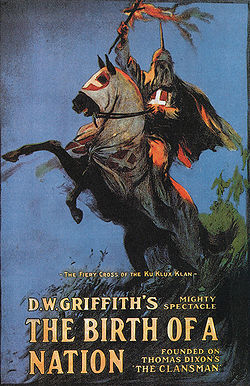
D.W. Griffith's controversial epic demonstrated the artistic and commercial potential of feature-length films. Though widely criticized for its racist portrayal of African Americans, it revolutionized filmmaking techniques and proved that movies could be big business.
Image source: The Birth of a Nation
Feb 5, 1919
% complete
Mary Pickford, Charlie Chaplin, Douglas Fairbanks, and D.W. Griffith formed United Artists, allowing top talent to produce and distribute their own films free from studio control. It was a landmark in artist independence within Hollywood.
Image source: United Artists
Jul 13, 1923
% complete
The iconic Hollywood Sign was originally built as an advertisement for a real estate development called 'Hollywoodland.' It later became the enduring symbol of the film industry and Los Angeles itself.
Image source: Hollywood Sign
Oct 6, 1927
% complete
Warner Bros.' The Jazz Singer, starring Al Jolson, featured synchronized dialogue and songs, heralding the end of silent films. Studios rushed to convert to sound, transforming production practices and ending many silent-era careers.
Image source: The Jazz Singer
May 16, 1929
% complete
The Academy of Motion Picture Arts and Sciences presented its first Oscars at a private dinner at the Hollywood Roosevelt Hotel. Wings won Best Picture, beginning what would become Hollywood's most prestigious annual tradition.
Image source: 1st Academy Awards
1930
% complete
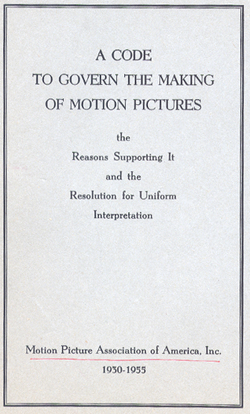
The Motion Picture Production Code, known as the Hays Code, set strict moral guidelines for film content. Enforced rigorously from 1934, it shaped Hollywood storytelling for over three decades until its replacement by the ratings system.
Image source: Hays Code
Mar 2, 1933
% complete
Merian C. Cooper's King Kong showcased groundbreaking stop-motion animation by Willis O'Brien. The RKO hit demonstrated the power of special effects and became one of Hollywood's most enduring monster classics.
Image source: King Kong (1933 film)
Dec 15, 1939
% complete
David O. Selznick's Technicolor epic Gone with the Wind premiered to massive acclaim. It won a record ten Academy Awards and long stood as the highest-grossing film in history, exemplifying Golden Age grandeur.
Image source: Gone with the Wind (film)
May 1, 1941
% complete
Orson Welles' debut feature Citizen Kane revolutionized cinema with its innovative narrative structure, deep-focus cinematography, and complex portrait of media mogul Charles Foster Kane. It is frequently cited as the greatest film ever made.
Image source: Citizen Kane
Nov 26, 1942
% complete
Warner Bros.' Casablanca, starring Humphrey Bogart and Ingrid Bergman, premiered during World War II. It won three Academy Awards including Best Picture and remains one of Hollywood's most beloved romantic dramas.
Image source: Casablanca (film)
Oct 20, 1947
% complete
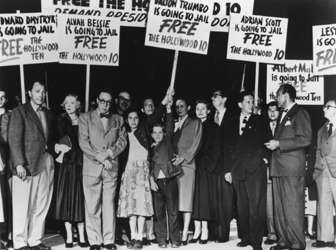
The House Un-American Activities Committee began investigating alleged communist influence in Hollywood, leading to the imprisonment of the 'Hollywood Ten' and a blacklist that ruined hundreds of careers in the industry.
Image source: Hollywood blacklist
May 1948
% complete
The Supreme Court ruled that major studios must divest their theater chains, dismantling the vertical integration of the studio system. The decision accelerated Hollywood's decline and reshaped film distribution forever.
Image source: United States v. Paramount Pictures, Inc.
Aug 10, 1950
% complete
Billy Wilder's dark satire Sunset Boulevard offered a scathing look at Hollywood's treatment of aging stars. Gloria Swanson's performance as Norma Desmond made it one of the most celebrated films about the industry itself.
Image source: Sunset Boulevard (film)
1952
% complete
As televisions spread into American homes, weekly movie attendance plummeted from its wartime peak. Hollywood responded with widescreen formats, color epics, and gimmicks like 3-D to offer experiences television could not match.
Image source: Celebration of Cinema and Television
Jul 1953
% complete
Marilyn Monroe's turn in Howard Hawks' musical solidified her status as Hollywood's premier sex symbol and comedic actress, embodying the glamour of the studio era even as that system began to crumble.
Image source: Gentlemen Prefer Blondes (1953 film)
Oct 27, 1955
% complete
Released weeks after James Dean's death, Rebel Without a Cause captured teenage alienation and made Dean an eternal icon of youthful rebellion, signaling Hollywood's growing interest in younger audiences.
Image source: Rebel Without a Cause
Jun 16, 1960
% complete
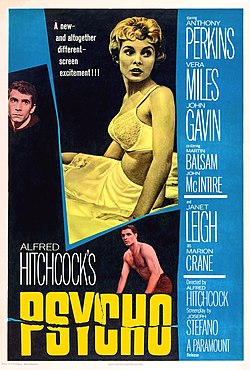
Alfred Hitchcock's Psycho broke taboos with its shocking violence and killed off its lead actress early in the story. Its success opened the door to more daring content and helped end the Production Code era.
Image source: Psycho (1960 film)
Nov 1968
% complete
Replacing the old Production Code, Jack Valenti introduced the G, M, R, and X ratings system, giving filmmakers new creative freedom and marking the start of a more adult-oriented Hollywood cinema.
Image source: Motion Picture Association film rating system
Jul 14, 1969
% complete
Dennis Hopper's low-budget Easy Rider grossed enormous sums and proved youth-oriented, independent-minded films could be profitable, ushering in the New Hollywood era of director-driven cinema.
Image source: Easy Rider
Mar 15, 1972
% complete
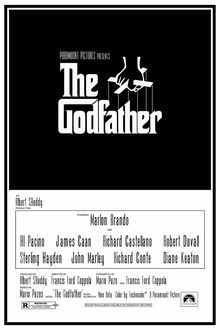
Francis Ford Coppola's adaptation of Mario Puzo's novel became a critical and commercial phenomenon, winning Best Picture and establishing the template for the modern gangster epic while elevating Al Pacino and Marlon Brando.
Image source: The Godfather
Jun 20, 1975
% complete
Steven Spielberg's Jaws pioneered wide national releases backed by heavy advertising, becoming the highest-grossing film ever at the time. It created the blockbuster model that still dominates Hollywood today.
Image source: Jaws (film)
May 25, 1977
% complete
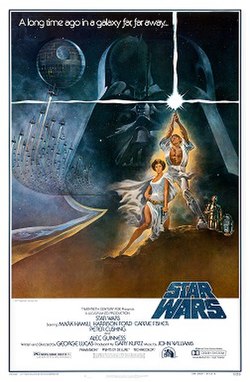
George Lucas's Star Wars became a cultural juggernaut, spawning sequels, merchandising empires, and the modern franchise model. It also revitalized interest in science fiction and special effects-driven filmmaking.
Image source: Star Wars (film)
Nov 1980
% complete
Michael Cimino's notoriously overbudget western flopped catastrophically, forcing United Artists' sale and making studios wary of giving directors unchecked control, effectively ending the New Hollywood era.
Image source: Heaven's Gate (film)
Jun 11, 1993
% complete
Steven Spielberg's Jurassic Park stunned audiences with photorealistic computer-generated dinosaurs, demonstrating digital effects' potential and transforming visual effects in Hollywood forever.
Image source: Jurassic Park
Dec 19, 1997
% complete
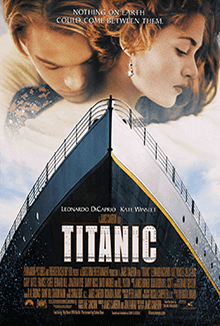
James Cameron's Titanic became the first film to gross over $1 billion worldwide and won eleven Academy Awards, proving that epic romance and spectacle could still dominate global culture.
Image source: Titanic (1997 film)
May 2, 2008
% complete
Iron Man launched the Marvel Cinematic Universe, which grew into the most successful film franchise in history and cemented superhero movies as Hollywood's dominant genre through interconnected storytelling.
Image source: Iron Man (2008 film)
Dec 18, 2009
% complete
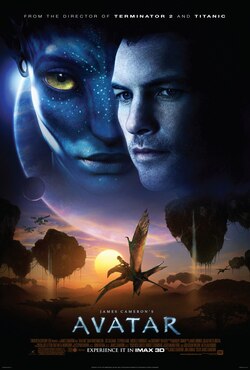
James Cameron's Avatar used cutting-edge motion capture and stereoscopic 3D to become the highest-grossing film of all time, spurring a wave of 3D releases and new theater technology worldwide.
Image source: Avatar (2009 film)
Feb 9, 2020
% complete
Bong Joon-ho's Parasite became the first non-English-language film to win the Academy Award for Best Picture, signaling Hollywood's increasing embrace of international cinema and diverse voices.
Image source: Parasite (2019 film)
Or browse the full history timeline directory, with more than 2,000 topics.
This History of Hollywood timeline was generated with the help of AI, using information found on the internet.
We work hard to keep these timelines accurate, but mistakes do get through. If you spot one, email us at [email protected] and we'll fix it for future visitors.
Generate yours with AI or build it from scratch, for free.
Export your timeline, add your own events, edit or remove AI-generated events, and much more
No credit card required.
Cancel anytime.
Cancel anytime.
You can create an unlimited number of timelines with up to 10 events on each one, customize how they look, export them to PDF, PNG, PowerPoint, CSV, and Excel, and share them with a link. Paid plans raise the event limit and add features like spreadsheet imports and collaborators.
Yes. You can cancel your subscription from your account page at any time, and you will not be charged again. Your subscription stays active for the rest of the period you already paid for.
Yes. We will email you a reminder before the annual renewal, and we will also email you a receipt.
Yes. You can email us within 15 days of any payment, and we will issue you a full refund.
Check out our pricing docs or send us an email anytime: [email protected].