-
Use Cases
-
Resources
-
Pricing
1959
Name-tag stickers bearing the text “Hello my name is,” first introduced by C-Line Products in 1959, later became widely used in graffiti and sticker art.
1962
In 1962, avant-garde artist Asger Jorn made a graffiti-like declaration in a painting: “the avant-garde won't give up.” The gesture became part of theories about graffiti's relationship to avant-garde art.
1967
In autumn 1967, an admirer spray-painted the phrase “guitar hero” on a wall in Islington, north London, helping create the cult of the guitar hero.
May 1968
Student protests and a general strike in May 1968 covered Paris with revolutionary, anarchistic, and situationist slogans, including “Boredom is counterrevolutionary” and “Read less, live more.”
Image source: May 68
1974
The term “wildstyle” was popularized by the Wild Style graffiti crew, formed by Tracy 168 of the Bronx, New York, in 1974.
Image source: Wild Style
1974
Early modern graffiti writers generally called their practice “writing.” The 1974 essay The Faith of Graffiti referred to it as “graffiti,” and that term subsequently stuck.
Image source: The Faith of Graffiti
1981
Blek le Rat created some of the first cited modern graffiti stencils in Paris in 1981, helping establish stencil work as a significant form of urban art.
Image source: Blek le Rat
1982
In 1982, French artist Jef Aerosol produced early stencil graffiti in Tours, contributing to the spread of stencil-based street art.
1983
Fab 5 Freddy and Futura 2000 brought hip-hop graffiti to Paris and London as part of the New York City Rap Tour in 1983.
1985
By 1985, stencils had appeared in New York City, Sydney, and Melbourne. Their development in those cities was documented by photographers Charles Gatewood and Rennie Ellis.
1986
The European Graffiti Union was created in 1986 to help establish legal public spaces for graffiti, develop commissions, support artists, and strengthen Munich's graffiti scene.
1978 - 1994
From 1978 to 1994, the Australian group Billboard Utilising Graffitists Against Unhealthy Promotions, known as BUGA UP, regularly painted over tobacco, alcohol, and other advertising.
Image source: Billboard Utilising Graffitists Against Unhealthy Promotions
1993
After several expensive cars were spray-painted in Singapore in 1993, police arrested Michael P. Fay, a student at the Singapore American School, and charged him with vandalism under Singapore's strict anti-graffiti law.
1994
Under Singapore's 1966 Vandalism Act, Michael P. Fay was sentenced to four months in jail, a S$3,500 fine, and caning. Despite international calls for clemency, the caning took place on May 5, 1994.
2001
IBM launched an advertising campaign in Chicago and San Francisco in 2001 that used spray-painted peace symbols, hearts, and Tux figures to represent “Peace, Love, and Linux.” IBM paid the two cities a combined US$120,000 in punitive damages and cleanup costs.
Image source: Guerrilla marketing
2004
In 2004, the anti-capitalist art group Space Hijackers created a work addressing the contradiction between Banksy's capitalist elements and his use of political imagery.
2005
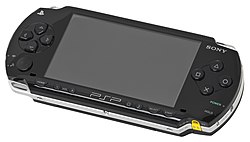
In 2005, Sony and its advertising agency launched a graffiti-style campaign in New York, Chicago, Atlanta, Philadelphia, Los Angeles, and Miami to market the PlayStation Portable.
Image source: PlayStation Portable
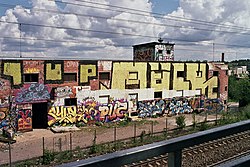
2005
Since 2005, artists have been allowed to display their work freely along some sections of riverside retaining walls in designated graffiti zones.
Image source: Graffiti
2007
Beginning in 2007, Taipei's department of cultural affairs permitted graffiti on fences surrounding major public construction sites.
2008
Many international artists, including Banksy, left work in Melbourne. In early 2008, a perspex screen was installed to protect a Banksy stencil that had survived since 2003 because local street artists generally avoided painting over it.
Image source: Banksy
Mar 2020
In March 2020, Finnish graffiti artist Psyke objected after the newspaper Ilta-Sanomat published a photograph of a Peugeot 208 in a new-car article with his graffiti prominently visible in the background.
1979
The 1979 documentary 80 Blocks from Tiffany's offered a rare view of late-1970s New York and the South Bronx, presenting graffiti and the neighborhood's Puerto Rican community alongside gang members, police, and community leaders.
1982
Photographs from a graffiti documentation project were presented in 1982 in a one-person exhibition titled Les murs murmurent, ils crient, ils chantent ... at the Centre Georges Pompidou in Paris.
Image source: Centre Pompidou
1983
In 1983, tags and pieces began appearing on Munich streets. Many were experimental works or references to famous New York sprayers such as Z-Roc, Mitch, and Ray.
1983
Also in 1983, Munich developed a small hip-hop and breakdancing scene. Media attention helped draw more teenagers toward graffiti.
Image source: Hip hop (culture)
1983
The graffiti artist Ray, or Ray X, was among the first people creating graffiti in Munich at this time. He became known for a humorous or satirical dog character often used for social criticism.
1985
Ray placed graffiti in hard-to-reach locations throughout Munich. In 1985, he sprayed an astronaut on a concrete support pylon of the 30-meter-high Großhesseloher bridge south of the city.
1988
In 1988, the first graffiti exhibition subsidized by the city of Munich and organized by the European Graffiti Union took place on Lothringer Street. It included artists such as Darco, Skel, Won, Zeal, and Mitch.
1995
The Pasinger Fabrik cultural center hosted the Graffiti Munich exhibition in 1995. A book titled Graffiti Art 3: Writing in Munich was published with it, helping record the local scene alongside its predecessor, Graffiti Art 2: Southern Germany and Switzerland.
1996
The Kallmann museum in Munich hosted a graffiti exhibition in 1996. It was accompanied by Theory of Style – The Liberation of the Alphabet, a graffiti book written by graffiti artists.
1996
The ISART project began in Munich in 1996, allowing people to create graffiti under the Brudermühl bridge once or twice a year. Its organizers noted that acceptance of graffiti appeared to be growing.
1996
Soly Cisse, a 1996 graduate of Dakar's École Nationale des Beaux-Arts, became an example of an artist drawing on graffiti and translating its visual concepts into paintings and installation work.
2006
A 2006 exhibition at the Brooklyn Museum presented graffiti as an art form that began in New York's outer boroughs and reached major heights in the early 1980s through artists including Crash, Lee, Daze, Keith Haring, and Jean-Michel Basquiat.
Image source: Brooklyn Museum
2007
The 2007 film Jisoe offered a glimpse into the life of a Melbourne graffiti writer and showed graffiti in economically struggling areas of the city.
Mar 2009 - Apr 2009
Between March and April 2009, the Grand Palais in Paris exhibited 300 graffiti pieces by 150 artists, reflecting the growing institutional presentation of graffiti.
2010
Exit Through the Gift Shop, released in 2010, was produced by the notorious artist Banksy and became a prominent film about street art and graffiti culture.
Image source: Exit Through the Gift Shop
2011
Graffiti played an important role in the street-art scene of the Middle East and North Africa, particularly after the Arab Spring of 2011 and the Sudanese Revolution of 2018–2019.
Image source: Arab Spring
2015
The Bahnwärter-Kulturstätten culture site opened in 2015 on the grounds of Munich's former Viehhof freight-container station, followed later that year by Bahnwärter Thiel. The project provided studios, rehearsal spaces, open workspaces, and workshops for street and graffiti artists.
Or browse the full history timeline directory, with more than 2,500 topics.
This History of Graffiti timeline was generated with the help of AI, using information found on the internet.
We work hard to keep these timelines accurate, but mistakes do get through. If you spot one, email us at [email protected] and we'll fix it for future visitors.
Generate yours with AI or build it from scratch, for free.
Export your timeline, add your own events, edit or remove AI-generated events, and much more
No credit card required.
Cancel anytime.
Cancel anytime.
You can create an unlimited number of timelines with up to 10 events on each one, customize how they look, export them to PDF, PNG, PowerPoint, CSV, and Excel, and share them with a link. Paid plans raise the event limit and add features like spreadsheet imports and collaborators.
Yes. You can cancel your subscription from your account page at any time, and you will not be charged again. Your subscription stays active for the rest of the period you already paid for.
Yes. We will email you a reminder before the annual renewal, and we will also email you a receipt.
Yes. You can email us within 15 days of any payment, and we will issue you a full refund.
Check out our pricing docs or send us an email anytime: [email protected].