-
Use Cases
-
Resources
-
Pricing
The history of museums traces the evolution of institutions dedicated to collecting, preserving, and displaying objects of cultural, artistic, scientific, and historical significance. From the ancient Mouseion of Alexandria to the public museums of the Enlightenment and today's digital and interactive institutions, museums have transformed from private royal collections into accessible centers of education and cultural exchange for people around the world. More Less
1471
% complete
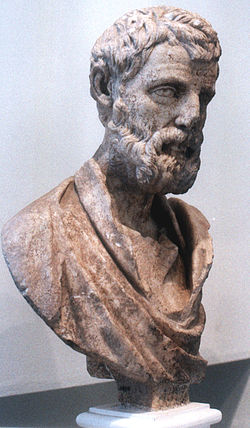
The origins of public museums can be traced back to 1471, when Pope Sixtus IV donated a collection of important ancient bronze sculptures to the people of Rome, laying the groundwork for the Capitoline Museums and the idea of art held for the public rather than private owners.
Image source: Capitoline Museums
1506
% complete
The Vatican Museums trace their origins to the purchase of a single marble sculpture, Laocoön and His Sons, which was put on public display in 1506 by Pope Julius II. This marked the beginning of a collection that would grow over centuries into one of the world's greatest art institutions.
Image source: Vatican Museums
1677
% complete
The Ashmolean Museum was founded in 1677 from the personal collection of Elias Ashmole and set up in the University of Oxford to be open to the public, making it a pioneering institution in the history of public museums.
May 24, 1683
% complete
The Ashmolean Museum opened on 24 May 1683, with naturalist Robert Plot as its first keeper. Its collection included antique coins, books, engravings, geological specimens, and zoological specimens, including the stuffed body of the last dodo ever seen in Europe.
Image source: Ashmolean Museum
1700 - 1800
% complete
Eighteenth-century scholars of the Age of Enlightenment saw their ideas of the museum as superior and based their natural history museums on 'organization and taxonomy' rather than displaying everything in any order after the style of Aldrovandi.
Image source: Museum
1734
% complete
The Vatican Museums were officially opened to the public in 1734 under Pope Clement XII, establishing them as the first institution where art could be enjoyed by ordinary people rather than just the owners.
1755
% complete
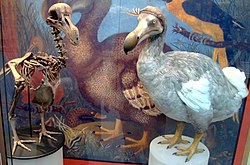
By 1755, the Ashmolean's stuffed dodo—the last ever seen in Europe—was so moth-eaten that it was destroyed, except for its head and one claw, illustrating early challenges in preserving museum collections.
Image source: Dodo
1759
% complete
When the British Museum opened to the public in 1759, it was a concern that large crowds could damage the artifacts. It would go on to become one of the most visited museums in the world.
Image source: British Museum
1793
% complete
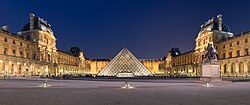
In France, the first public museum was the Louvre in Paris, opened in 1793 during the French Revolution, which enabled for the first time free access to the former French royal collections for people of all stations and status.
1793
% complete
The fabulous art treasures collected by the French monarchy over centuries were made accessible to the public three days each 'décade', the 10-day unit which had replaced the week in the French Republican Calendar.
Image source: Louvre
1815
% complete
Following Napoleon's defeat in 1815, some of the art treasures he had amassed from across Europe were eventually returned to their owners, an early episode in the long history of contested cultural property.
Image source: Napoleon
Apr 1770
% complete
The Gweagal Shield, thought to be a very significant shield taken from Botany Bay in April 1770, is one of many Indigenous artifacts now held in Western museums whose return has been demanded by source communities.
Image source: Gweagal shield
1805
% complete
The Parthenon marble sculptures were taken from Greece by Lord Elgin in 1805 and remain one of the most famous examples of disputed museum holdings and calls for repatriation.
Image source: Elgin Marbles
1868
% complete
Since 1868, several monolithic human figures known as Moai have been removed from Easter Island and put on display in major Western museums such as the National Museum of Natural History, the British Museum, the Louvre, and the Royal Museums of Art and History.
Image source: Moai
1954
% complete
UNESCO and Blue Shield International serve as international partners for museums under the Hague Convention for the Protection of Cultural Property from 1954 and its Second Protocol from 1999, protecting heritage in armed conflict.
Image source: Hague Convention for the Protection of Cultural Property in the Event of Armed Conflict
1990
% complete
In the United States, the repatriation of human remains from museum collections is shaped by the Native American Graves Protection and Repatriation Act (NAGPRA), enacted in 1990, requiring museums to return remains and cultural items to Native communities.
Image source: Native American Graves Protection and Repatriation Act
2004
% complete
In the United Kingdom, the Human Tissue Act 2004 allows national museums to return human remains under certain conditions, and several institutions have since repatriated remains to Indigenous communities, including those in Australia.
Image source: Human Tissue Act 2004
2011 - 2014
% complete
Blue Shield conducted extensive missions to protect museums and cultural assets in armed conflict, including in Egypt and Libya in 2011, Syria in 2013, and Mali and Iraq in 2014.
Image source: Blue Shield International
2018
% complete
The 2018 report on the restitution of African cultural heritage is a prominent example regarding the decolonization of museums and other collections in France and the claims of African countries to regain artifacts illegally taken from their original cultural settings.
Image source: Report on the restitution of African cultural heritage
1800 - 1900
% complete
In the 19th century, museums focused mainly on scientific research and organizing collections, especially natural history specimens, reflecting the era's emphasis on classification and scholarship.
1800 - 1850
% complete
Chinese visitors in the early 19th century named Western museums based on what they contained, defining them as 'bone amassing buildings', 'courtyards of treasures', 'painting pavilions', 'curio stores', 'halls of military feats', or 'gardens of everything'.
1800 - 1900
% complete
The British Museum became increasingly popular during the 19th century among all age groups and social classes, who visited especially on public holidays, demonstrating the growing public appetite for museums.
1880 - 1920
% complete
A period of intense museum building, both intellectual and physical, was realized in the late 19th and early 20th centuries, often called 'The Museum Period' or 'The Museum Age'.
1900 - 1950
% complete
In the early 20th century, museums focused on collecting, studying, and preserving artifacts, with an emphasis on scientific research and authenticity.
1900 - 1929
% complete
John Cotton Dana detailed the process of founding the Newark Museum in a series of books in the early 20th century so that other museum founders could plan their own institutions.
Image source: The Newark Museum of Art
1995
% complete
Drawing on Michel Foucault's concept of liberal government, Tony Bennett suggested that modern 19th-century museums were part of new strategies by Western governments to produce a citizenry that monitored and regulated its own conduct rather than being directed by coercive forces.
2000
% complete
In the 21st century, museums focus on being accessible and inclusive. While not every museum participates in this trend, it appears to be the trajectory of museums in the twenty-first century with its emphasis on inclusiveness.
2015
% complete
After opening, one Spanish museum attracted over 1.1 million visitors in 2015, with 63% coming from outside Spain, illustrating the international draw of major cultural institutions in the 21st century.
Image source: Museo Nacional Centro de Arte Reina Sofía
2015
% complete
UNESCO's 2015 Recommendation underscores the need to combat illicit trafficking and promote sustainable conservation methods, such as climate-controlled storage and digital archiving.
Image source: UNESCO
2022
% complete
The International Council of Museums adopted its current definition of a museum in 2022: 'A museum is a not-for-profit, permanent institution in the service of society that researches, collects, conserves, interprets and exhibits tangible and intangible heritage.'
1933
% complete
In the United States, labor unrest within the arts and cultural sector goes back nearly a century to 1933, when a New York-based collective of artists eventually known as the Artist's Union used collective bargaining to win state relief for unemployed artists.
Image source: Artists Union
1950 - 2000
% complete
In the latter half of the 20th century, reduced government funding pushed museums to rely more on private support and focus on attracting visitors to generate revenue.
2009
% complete
As of 2009, funding for United States museums came from four major categories: government support at all levels (24.4%), private charitable giving (36.5%), earned income (27.6%), and investment income (11.5%).
2011 - 2015
% complete
Government funding from the National Endowment for the Arts, the largest museum funder in the United States, decreased by $18.260 million between 2011 and 2015 when adjusted for inflation, pushing museums toward other revenue sources.
Image source: National Endowment for the Arts
2016
% complete
In 2016, the average spent per visitor in an art museum was $8 between admissions, retail sales, and dining, whereas the average expense per visitor was $55, highlighting persistent financial challenges for museums.
Image source: Art museum
2017
% complete
Corporate giving to the arts was projected to increase by 3.3% in 2017, offering some relief to museums facing declining government support.
Image source: Philanthropy
2019
% complete
In 2019, workers in multiple museums voted to form unions, with more protests pressing for fair contracts and against unfair labor practices across the cultural sector.
Image source: Trade union
Nov 2019
% complete
The Marciano Art Foundation, established by Guess clothing co-founders Maurice Marciano and Paul Marciano, closed indefinitely in November 2019 after workers attempted to unionize.
Image source: Marciano Art Foundation
2021
% complete
Security guards at the Seattle Art Museum formed an independent union in 2021 and achieved a contract following their strike in 2024.
Apr 2021
% complete
MASS MoCA workers formed their union in April 2021 and later secured a contract after a prolonged strike in 2024, marking a milestone in museum labor organizing.
May 2022
% complete
In the country of Georgia, 40 museum employees were fired in May 2022 as part of a restructuring, drawing attention to labor conditions in the cultural sector.
Image source: Georgia (country)
2023 - 2025
% complete
Workers at the Science Museum of Minnesota formed a wall-to-wall union in 2023 and ratified their first contract in 2025, continuing the wave of museum labor organizing.
Image source: Science Museum of Minnesota
Mar 2024
% complete
At the Massachusetts Museum of Contemporary Art (MASS MoCA), unionized staff held a three-week strike in March 2024, resulting in a new contract with higher minimum wages, increased base pay, and improved overtime and holiday pay.
Image source: Massachusetts Museum of Contemporary Art
Dec 2024
% complete
In December 2024, security guards at the Natural History Museum, Science Museum, and Victoria & Albert Museum organized a coordinated strike and picketing in the United Kingdom, seeking higher pay, sick leave from the first day of employment, and additional annual leave.
Image source: Natural History Museum, London
Dec 2024
% complete
At the Seattle Art Museum, security guards went on strike for 11 days in December 2024, which led to their first contract and wage increases.
Image source: Seattle Art Museum
Feb 2025
% complete
In February 2025, Brooklyn Museum workers from UAW Local 2110 and Local 1502 of District Council 37 rallied outside the museum to protest the planned termination of 47 employees.
Image source: Brooklyn Museum
Or browse the full history timeline directory, with more than 2,000 topics.
This History of Museums timeline was generated with the help of AI, using information found on the internet.
We work hard to keep these timelines accurate, but mistakes do get through. If you spot one, email us at [email protected] and we'll fix it for future visitors.
Generate yours with AI or build it from scratch, for free.
Export your timeline, add your own events, edit or remove AI-generated events, and much more
No credit card required.
Cancel anytime.
Cancel anytime.
You can create an unlimited number of timelines with up to 10 events on each one, customize how they look, export them to PDF, PNG, PowerPoint, CSV, and Excel, and share them with a link. Paid plans raise the event limit and add features like spreadsheet imports and collaborators.
Yes. You can cancel your subscription from your account page at any time, and you will not be charged again. Your subscription stays active for the rest of the period you already paid for.
Yes. We will email you a reminder before the annual renewal, and we will also email you a receipt.
Yes. You can email us within 15 days of any payment, and we will issue you a full refund.
Check out our pricing docs or send us an email anytime: [email protected].