-
Use Cases
-
Resources
-
Pricing
1200 - 1299
In the 13th century, artists used oil to add details to tempera paintings, representing an early combination of oil-based and water-based painting methods.
1300 - 1399
In the 14th century, Cennino Cennini described a technique in which tempera painting was covered with light layers of oil.
1300 - 1399
The technique described by Cennino Cennini used thin oil layers over tempera, illustrating the gradual development of mixed painting practices.
Image source: Oil painting
1600 - 1699
Ham House in Surrey, England, remains an example of 17th-century house oil painting. Its decoration used a primer, several undercoats, and an elaborate decorative overcoat.
1600 - 1699
In the 17th century, pigment and oil mixtures for house painting were ground into paste with a mortar and pestle before application.
1800 - 1899
Milk paints, also called casein paints, became common in the 19th century. Their medium was derived from the natural emulsion in milk, and they remain in use.
2003
South African archaeologists reported finds at Blombos Cave indicating that humans had made a 100,000-year-old ochre-based mixture that could have been used like paint.
Image source: Blombos Cave
2004
Additional reporting in 2004 continued to document the discovery of ancient ochre-based material at Blombos Cave, providing evidence for early pigment processing and paint-like substances.
2011
The toolkit reported from Blombos Cave included equipment for grinding pigments, showing that early people had organized methods for preparing ochre-based coloring materials.
2011
Further excavation at Blombos Cave led to a 2011 report describing a complete toolkit for grinding pigments and producing a primitive paint-like substance.
1700 - 1799
By the proper onset of the Industrial Revolution in the mid-18th century, paint was being ground in steam-powered mills, increasing the scale and efficiency of production.
Image source: Industrial Revolution
1700 - 1799
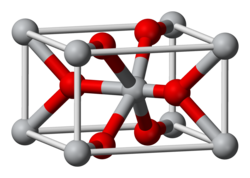
During the mid-18th century, a white derivative of zinc oxide provided an alternative to lead-based pigments in paint.
Image source: Zinc oxide
1718
In England in 1718, Marshall Smith invented a “Machine or Engine for the Grinding of Colors,” mechanizing part of the preparation of paint pigments.
1800 - 1899
Interior house painting increasingly became the norm as the 19th century progressed, both for decoration and because paint helped prevent walls from rotting due to damp.
1866
In 1866, Sherwin-Williams invented a paint that could be used directly from the tin without additional preparation.
1866
Sherwin-Williams opened in the United States in 1866 and became a large paint-maker.
1900 - 1999
Throughout the 20th century, paints generally used pigments suspended in a liquid medium.
1900 - 1999
During the 20th century, new water-borne paints entered the market, including acrylic paints developed alongside other latex paints.
Image source: Acrylic paint
2005
In 2005, foundry refractory coatings based on a similar principle were introduced for use in foundries.
1900 - 1999
Paint manufacturers began replacing white lead pigments with titanium white, or titanium dioxide, as concerns about lead toxicity increased.
Image source: Titanium dioxide
1900 - 1999
The degree of paint blistering can be assessed using ISO 4628 Part 2 or ASTM Method D714, the standard test method for evaluating blistering.
1900 - 1999
The degree of paint chalking can be assessed under ISO 4628 Part 6 or 7 or ASTM Method D4214, which evaluates chalking of exterior paint films.
1900 - 1999
The degree of paint cracking can be assessed using ISO 4628 Part 4 or ASTM Method D661, the standard test method for evaluating cracking of exterior paints.
1978
The United States Consumer Product Safety Commission banned lead in paint for residential use in 1978, following the transition toward titanium dioxide and other alternatives.
Image source: Lead paint
2009
A polychlorinated biphenyl was reported in 2009 in air samples collected in Chicago, Philadelphia, the Arctic, and several sites around the Great Lakes.
2000 - 2099
In the 21st century, paints using structural color were created, producing color through physical structures rather than relying solely on conventional pigments.
Image source: Structural coloration
2019
In 2019, 44.4 million tons of paint were produced globally, and 95 percent of that paint was plastic-based.
2022
A 2022 study by Environmental Action revealed that approximately 58 percent of microplastics found in oceans and waterways could be traced back to paint.
Image source: Microplastics
2023
As of 2023, a gallon of plastic-based paint could cost around $20 to $30, illustrating the established market position of plastic-based products.
2023
As of 2023, specialized paints such as graphene and lime paints ranged from $34 to $114 per gallon, highlighting the financial challenges of transitioning away from plastic-based paints.
Or browse the full history timeline directory, with more than 2,500 topics.
This History of Paint timeline was generated with the help of AI, using information found on the internet.
We work hard to keep these timelines accurate, but mistakes do get through. If you spot one, email us at [email protected] and we'll fix it for future visitors.
Generate yours with AI or build it from scratch, for free.
Export your timeline, add your own events, edit or remove AI-generated events, and much more
No credit card required.
Cancel anytime.
Cancel anytime.
You can create an unlimited number of timelines with up to 10 events on each one, customize how they look, export them to PDF, PNG, PowerPoint, CSV, and Excel, and share them with a link. Paid plans raise the event limit and add features like spreadsheet imports and collaborators.
Yes. You can cancel your subscription from your account page at any time, and you will not be charged again. Your subscription stays active for the rest of the period you already paid for.
Yes. We will email you a reminder before the annual renewal, and we will also email you a receipt.
Yes. You can email us within 15 days of any payment, and we will issue you a full refund.
Check out our pricing docs or send us an email anytime: [email protected].