
-
Use Cases
-
Resources
-
Pricing
Gymnastics is one of the world's oldest sports, tracing its roots to ancient Greece where it was practiced for physical training. The modern discipline was formalized in the 19th century by German educator Friedrich Ludwig Jahn, known as the 'father of gymnastics.' Gymnastics became a permanent Olympic sport for men in 1896, with women's events added in 1928. Today it encompasses artistic, rhythmic, trampoline, and acrobatic disciplines, governed internationally by the FIG (Fédération Internationale de Gymnastique), founded in 1881. More Less
1770
% complete
Don Francisco Amorós y Ondeano, a Spanish colonel born on 19 February 1770 in Valencia who died on 8 August 1848 in Paris, was the first person to introduce educative gymnastics in France.
1811
% complete
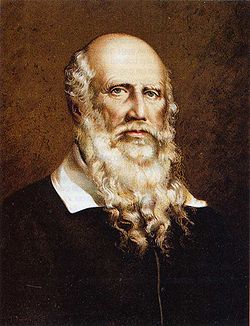
The German Friedrich Ludwig Jahn began the German gymnastics movement in 1811 in Berlin, which led to the invention of the parallel bars, rings, the horizontal bar, the pommel horse and the vault horse.
Image source: Friedrich Ludwig Jahn
1825
% complete
Beck opened the first gymnasium in the US in 1825 at the Round Hill School in Northampton, Massachusetts.
1826
% complete
Follen opened the first college gymnasium and the first public gymnasium in the US in 1826 at Harvard University and in Boston, Massachusetts, respectively.
Image source: Gymnastics
1827
% complete
Neal was the first American to open a public gymnasium in the US, in Portland, Maine, in 1827.
1910 - 1932
% complete
Elin Falk revolutionized how gymnastics was taught in Swedish schools between 1910 and 1932.
1930
% complete
In 1930, the first UK mass movement organization of women in gymnastics, the Women's League of Health and Beauty, was founded by Mary Bagot Stack in London.
Image source: Mary Bagot Stack
Apr 9, 2013
% complete
On 9 April 2013, the Indian state of Madhya Pradesh declared mallakhamba as the state sport.
Image source: Mallakhamba
1881
% complete
The Federation of International Gymnastics (FIG) was founded in Liege in 1881, becoming the governing body for the sport worldwide.
Image source: International Gymnastics Federation
2003
% complete
The International Federation of Aesthetic Group Gymnastics (IFAGG) was established in 2003 to govern the sport internationally.
Image source: Aesthetic group gymnastics
2006
% complete
In 2006, FIG introduced a new points system for artistic gymnastics, replacing the previous system in which a gymnast's final score was deducted from a possible maximum of 10. The current method of scoring, by adding D and E scores to give the final score, has been in place since 2006.
Image source: Artistic gymnastics
2011
% complete
In 2011, the FIG decided to eliminate the use of rope in senior individual rhythmic gymnastics competitions.
Image source: Rhythmic gymnastics
2022
% complete
In 2022, the Whyte Review was published, criticizing extensive abusive practices by British Gymnastics that included sexual and emotional abuse and excessive weight management of athletes.
Image source: British Gymnastics
Oct 2024
% complete
Para-gymnastics, gymnastics for disabled athletes with para-athletics classifications, was recognized as a new FIG discipline in October 2024.
1896
% complete
By the end of the nineteenth century, men's gymnastics competition was popular enough to be included in the first modern Olympic Games, held in Athens in 1896.
Image source: Gymnastics at the 1896 Summer Olympics
1904
% complete
It was included in the 1904 and 1932 Summer Olympic Games, expanding gymnastics' presence on the Olympic program.
Image source: Gymnastics at the 1904 Summer Olympics
1928
% complete
These games were held in 1928 in Amsterdam, marking an important stage in the development of international gymnastics competition.
Image source: 1928 Summer Olympics
1984
% complete
Following the first World Championships in 1963, rhythmic gymnastics made its first appearance at the Olympics in 1984.
2000
% complete
1932
% complete
Tumbling was originally contested as one of the events in Men's Artistic Gymnastics at the 1932 Summer Olympics, and later in 1955 and 1959 at the Pan American Games.
Image source: Tumbling (sport)
1939
% complete
The largest general gymnastics exhibition is the quadrennial World Gymnaestrada, which was first held in 1939.
Image source: World Gymnaestrada
1955 - 1959
% complete
After appearing at the 1932 Olympics, tumbling was also contested in 1955 and 1959 at the Pan American Games.
1963
% complete
The first World Championships were held in 1963, and rhythmic gymnastics made its first appearance at the Olympics in 1984.
Image source: 2026 Rhythmic Gymnastics World Championships
1964
% complete
The first Trampoline World Championships were held in 1964, establishing a world-level competition for the discipline.
1974
% complete
The Acrobatic Gymnastics World Championships have been held since 1974. From 1974 to 1998 tumbling was included as an event for both genders at these championships.
1976
% complete
The tumbling event has been contested since 1976 at the Trampoline and Tumbling World Championships.
1995
% complete
The Aerobic Gymnastics World Championships have been held since 1995, formalizing international competition in aerobic gymnastics.
Image source: Aerobic gymnastics
1996
% complete
The first official competition was held in Finland in 1996. There is no World Championships; however, there has been a European Championships held since 2010.
2000
% complete
The first Aesthetic Group Gymnastics World Championships was held in 2000, followed by the establishment of the International Federation of Aesthetic Group Gymnastics (IFAGG) in 2003.
2001
% complete
In 2001, the traditional vaulting horse was replaced with a new apparatus, sometimes known as a tongue, horse, or vaulting table.
Image source: Vault (gymnastics)
Jan 28, 2018
% complete
On 28 January 2018, parkour, also known as freerunning, was given the go-ahead to begin development as a FIG sport. The FIG planned to run World Cup competitions from 2018 onwards.
Image source: Parkour
Oct 15, 2022 - Oct 16, 2022
% complete
The first Parkour World Championships were planned for 2020, but were delayed due to the COVID-19 pandemic, and instead took place from 15 to 16 October 2022 in Tokyo, Japan.
Or browse the full history timeline directory, with more than 2,000 topics.
This History of Gymnastics timeline was generated with the help of AI, using information found on the internet.
We work hard to keep these timelines accurate, but mistakes do get through. If you spot one, email us at [email protected] and we'll fix it for future visitors.
Generate yours with AI or build it from scratch, for free.
Export your timeline, add your own events, edit or remove AI-generated events, and much more
No credit card required.
Cancel anytime.
Cancel anytime.
You can create an unlimited number of timelines with up to 10 events on each one, customize how they look, export them to PDF, PNG, PowerPoint, CSV, and Excel, and share them with a link. Paid plans raise the event limit and add features like spreadsheet imports and collaborators.
Yes. You can cancel your subscription from your account page at any time, and you will not be charged again. Your subscription stays active for the rest of the period you already paid for.
Yes. We will email you a reminder before the annual renewal, and we will also email you a receipt.
Yes. You can email us within 15 days of any payment, and we will issue you a full refund.
Check out our pricing docs or send us an email anytime: [email protected].