-
Use Cases
-
Resources
-
Pricing
Track and field is one of the oldest organized sports in human history, tracing its roots to ancient Greek Olympic competitions featuring running, jumping, and throwing events. Over the centuries, the sport evolved from amateur contests into a global professional discipline governed by World Athletics, featuring sprinting, distance running, hurdling, jumping, and throwing events at the Olympic Games and World Championships. More Less
776 BC
% complete
The first recorded ancient Olympic Games were held at Olympia in Greece, with a single footrace, the stadion, won by the cook Coroebus of Elis. The festival grew to include jumping, discus, javelin, and other events, laying the foundation for track and field athletics.
708 BC
% complete
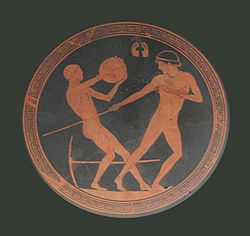
The pentathlon, combining the stadion race, long jump, discus throw, javelin throw, and wrestling, was introduced at Olympia. It became the premier test of all-around athleticism in the ancient world and an early ancestor of modern combined events.
Image source: Pentathlon
393 AD
% complete
Emperor Theodosius I banned the pagan Olympic festivals, bringing the ancient Games to an end after nearly twelve centuries of continuous celebration at Olympia.
Image source: Ancient Olympic Games
1612
% complete
Robert Dover established the Cotswold Olimpick Games in Gloucestershire, England, featuring running, jumping, and throwing events. The festival helped keep competitive athletics alive in Europe during the centuries between the ancient and modern Olympic eras.
Image source: Cotswold Olimpick Games
1850
% complete
Organized track and field competitions began taking shape at English public schools and universities, with Exeter College, Oxford hosting one of the earliest documented annual sports meetings, helping formalize rules for running and field events.
Image source: Track and field
Oct 22, 1850
% complete
Dr. William Penny Brookes organized the first Wenlock Olympian Games in Much Wenlock, England, featuring athletics events. The games inspired Pierre de Coubertin and contributed directly to the revival of the modern Olympic movement.
Image source: Wenlock Olympian Games
Mar 5, 1864
% complete
Oxford and Cambridge universities contested their first annual athletics meeting at Christ Church Ground, Oxford, establishing standardized competition between institutions and popularizing track and field across Britain.
1866
% complete
The Amateur Athletic Club was formed to govern amateur athletics in Britain, codifying rules for events and defining amateur status, before its functions passed to the Amateur Athletic Association founded in 1880.
Image source: Amateur Athletic Association of England
Apr 24, 1880
% complete
The Amateur Athletic Association of England was founded as the national governing body for athletics, unifying rules across clubs and organizing the AAA Championships, which became the model for national athletics federations worldwide.
Jul 17, 1912
% complete
Representatives from 17 nations met in Stockholm to found the International Amateur Athletics Federation (IAAF), creating the first global governing body for track and field and standardizing rules, records, and international competition.
Image source: World Athletics
Apr 6, 1896 - Apr 15, 1896
% complete
Track and field was central to the first modern Olympic Games in Athens, featuring 12 events including the marathon won by Spyridon Louis. American athlete James Connolly became the first modern Olympic champion in the triple jump.
Image source: Athletics at the 1896 Summer Olympics
Jul 7, 1928 - Jul 29, 1928
% complete
Women competed in Olympic track and field for the first time in Amsterdam, after a brief appearance in 1928's Paris program was initially planned. The 1928 Games included five women's events, marking a major step toward gender equality in the sport.
Image source: Athletics at the 1928 Summer Olympics
Aug 1932
% complete
Mildred 'Babe' Didrikson won gold in the 80-meter hurdles and javelin and silver in the high jump at the 1932 Olympics, showcasing extraordinary versatility and becoming one of the most celebrated female athletes in history.
Image source: Babe Didrikson Zaharias
Aug 3, 1936 - Aug 9, 1936
% complete
Jesse Owens captured four gold medals at the Berlin Olympics in the 100m, 200m, long jump, and 4x100m relay, delivering a powerful rebuttal to Nazi racial ideology and becoming one of the most iconic figures in sports history.
Image source: Jesse Owens
Aug 1948
% complete
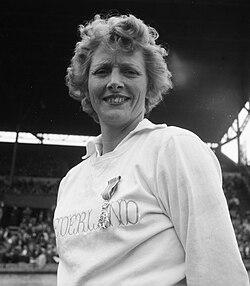
Dutch sprinter Fanny Blankers-Koen, a 30-year-old mother of two, won gold in the 100m, 200m, 80m hurdles, and 4x100m relay at the London Olympics, earning the nickname 'the Flying Housewife' and transforming perceptions of female athletes.
Image source: Fanny Blankers-Koen
Sep 10, 1960
% complete
Ethiopia's Abebe Bikila won the Olympic marathon in Rome running barefoot through the streets, becoming the first Black African Olympic champion and inspiring generations of East African distance runners.
Image source: Abebe Bikila
Oct 16, 1968
% complete
After finishing first and third in the 200 meters, Tommie Smith and John Carlos raised gloved fists on the podium in a human rights salute, creating one of the most enduring images of protest in sports history.
Image source: 1968 Olympics Black Power salute
Aug 3, 1984
% complete
Edwin Moses won his second Olympic gold medal in the 400m hurdles in Los Angeles, part of a legendary streak of 122 consecutive victories over nine years, nine months, and nine days that redefined dominance in track and field.
Image source: Edwin Moses
May 6, 1954
% complete
Roger Bannister ran the mile in 3:59.4 at Iffley Road Track in Oxford, becoming the first person to break the four-minute barrier, a feat long considered impossible and one of the most famous achievements in athletics history.
Image source: Roger Bannister
Oct 18, 1968
% complete
At the Mexico City Olympics, Bob Beamon leaped 8.90 meters in the long jump, smashing the world record by 55 centimeters. The 'Beamonesque' jump stood as the world record for nearly 23 years.
Image source: Bob Beamon
Jan 1, 1980
% complete
The IAAF expanded its official recognition of world records and standardized measurement and wind conditions, tightening verification procedures that shaped how records are ratified in the modern era.
Aug 7, 1983 - Aug 14, 1983
% complete
The inaugural IAAF World Championships took place in Helsinki, giving athletes a global championship outside the Olympics and establishing a biennial showcase for track and field's best competitors.
Image source: 1983 World Championships in Athletics
Sep 24, 1988
% complete
Canadian sprinter Ben Johnson set a world record winning the 100m final but tested positive for stanozolol days later, was stripped of his gold medal, and triggered a global reckoning with performance-enhancing drugs in athletics.
Image source: Ben Johnson (Canadian sprinter)
Aug 7, 1995
% complete
Britain's Jonathan Edwards jumped 18.29 meters at the World Championships in Gothenburg, becoming the first triple jumper beyond 18 meters; his world record still stands more than two decades later.
Image source: Jonathan Edwards (triple jumper)
Aug 1, 1996
% complete
Michael Johnson ran 19.32 seconds in the 200m final at the Atlanta Olympics, lowering his own world record by an astonishing margin while wearing golden shoes, en route to an unprecedented 200m-400m double.
Image source: Michael Johnson (sprinter)
May 31, 2008
% complete
Usain Bolt ran 9.72 seconds in New York to claim the 100m world record, then electrified the Beijing Olympics with 9.69 and 19.30 world records in the 100m and 200m, launching an era of unprecedented sprinting dominance.
Image source: Usain Bolt
Aug 16, 2009
% complete
At the World Championships in Berlin, Usain Bolt ran 9.58 seconds in the 100m and 19.19 in the 200m, setting world records that remain unbeaten and cementing his status as the greatest sprinter of all time.
Oct 2019
% complete
The IAAF officially changed its name to World Athletics, adopting a new brand identity aimed at making the sport more accessible and appealing to global audiences under president Sebastian Coe.
Aug 3, 2021
% complete
Norway's Karsten Warholm ran 45.94 seconds to win Olympic gold in Tokyo, obliterating his own 400m hurdles world record by three-quarters of a second in what many called the greatest single track performance ever witnessed.
Image source: Karsten Warholm
Or browse the full history timeline directory, with more than 2,000 topics.
This History of Track and Field timeline was generated with the help of AI, using information found on the internet.
We work hard to keep these timelines accurate, but mistakes do get through. If you spot one, email us at [email protected] and we'll fix it for future visitors.
Generate yours with AI or build it from scratch, for free.
Export your timeline, add your own events, edit or remove AI-generated events, and much more
No credit card required.
Cancel anytime.
Cancel anytime.
You can create an unlimited number of timelines with up to 10 events on each one, customize how they look, export them to PDF, PNG, PowerPoint, CSV, and Excel, and share them with a link. Paid plans raise the event limit and add features like spreadsheet imports and collaborators.
Yes. You can cancel your subscription from your account page at any time, and you will not be charged again. Your subscription stays active for the rest of the period you already paid for.
Yes. We will email you a reminder before the annual renewal, and we will also email you a receipt.
Yes. You can email us within 15 days of any payment, and we will issue you a full refund.
Check out our pricing docs or send us an email anytime: [email protected].