-
Use Cases
-
Resources
-
Pricing
Hip hop is a cultural movement that emerged in the early 1970s in the South Bronx, New York City, encompassing four core elements: DJing, MCing (rapping), breakdancing, and graffiti art. Pioneered by figures like DJ Kool Herc, Grandmaster Flash, and Afrika Bambaataa, the genre evolved from block parties into a dominant global force in music, fashion, language, and culture. More Less
1800
% complete
A common variation on "hip hop" is "hippity hop", which was in wide usage by the 19th century. It appears in works like an 1882 poem where four children sing, "[h]ippity hop to the candy shop!" It was a common refrain in skipping games.
1963
% complete
An early usage of "hip hop" in recorded popular music is found in The Dovells' 1963 dance song "You Can't Sit Down": "...you gotta slop, bop, flip flop, hip hop, never stop".
1979
% complete
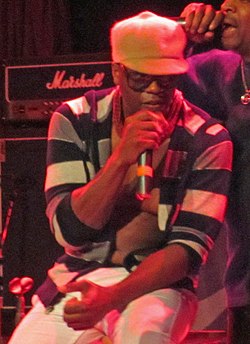
Lovebug Starsky recalls originating the phrase when he messed up the change between records: "I picked up the mic and just started saying 'a hip hop, hip hop, de hibbyhibbyhibbyhibby hop'", claiming credit for inventing the name by 1979. The phrase was in common usage by the time The Sugarhill Gang recorded "Rapper's Delight" in 1979.
Image source: Lovebug Starski
1900
% complete
In 20th-century Western music, rhythmic spoken vocal delivery was a widely used practice in everything from sprechstimme to the talking blues, prefiguring rap.
1946
% complete
Bo Diddley made several influential talking records, and the gospel group The Jubalaires' 1946 song "Noah" is frequently seen as a forerunner of rap.
Image source: The Jubalaires
1963
% complete
Other notable talking records were Muhammad Ali's I Am the Greatest (1963) and Pigmeat Markham's "Here Comes the Judge" (1968).
Image source: Muhammad Ali
1969
% complete
During these proto-rap years in America, Jamaican music regularly featured talking records like U-Roy and Peter Tosh's "Righteous Ruler" and King Stitt's "Fire Corner" in 1969.
Image source: U-Roy
1971
% complete
In 1971, one city councilman had dubbed Philadelphia "The Graffiti Capital of the World". It was one of the first hip-hop centers outside of New York, and by 1979, hip-hop recordings such as Jocko Henderson's "Rhythm Talk" and Lady B's "To the Beat, Y'all" were emerging from the city.
Aug 11, 1973
% complete
Kool Herc first began extending breaks at a back-to-school rent party his sister Cindy Campbell hosted in the recreation room of their building at 1520 Sedgwick Avenue in the Bronx. The date has been aggressively marketed as the "Birth of Hip-Hop".
Image source: DJ Kool Herc
1976
% complete
Mercedes Ladies, formed in the Bronx in 1976, were the first all-female group with a DJ.
Image source: Mercedes Ladies
1977
% complete
By 1977, bootleg tapes made from the soundboards of hip-hop DJs were being circulated beyond New York City, spreading the sound regionally.
1977
% complete
A 1977 documentary film, Simpson Street, includes a hip-hop party on the roof of Casita Maria in the Bronx, with Grandmaster Flash in attendance; this is the earliest known footage of the hip-hop scene.
Image source: Grandmaster Flash
Jul 13, 1977
% complete
During the New York City blackout of 1977, DJ equipment was heavily looted due to the popularity of the emerging genre. Kool Herc recalls, "The next day there were a thousand new D.J.'s." By 1978, Billboard magazine was taking notice of the popularity of "B-beats" in the Bronx.
1979
% complete
Another early rap record, from an artist in the disco scene, was Joe Bataan's 1979 track "Rap-O Clap-O." Bataan had already achieved popularity within the Latin community thanks to his blend of boogaloo, salsa, and soul, and the song became a hit in Europe.
Image source: Joe Bataan
1979
% complete
In 1979, Kurtis Blow released "Christmas Rappin'" which sold 400,000 copies, an early commercial success for recorded hip-hop.
Image source: Kurtis Blow
Mar 1979
% complete
In March 1979, Fatback Band released "You're My Candy Sweet" as a single, among the earliest rap records.
1980
% complete
In 1980, the Roland Corporation launched the TR-808 Rhythm Composer. Devices like the TR-808 drum machine, Linn 9000, and Akai MPC 2000 became beloved tools for hip-hop creators.
Image source: Roland TR-808
1980
% complete
In 1980, Kurtis Blow's "The Breaks" was the first hip-hop single certified gold.
Image source: The Breaks (song)
1981
% complete
The 1981 songs "Rapture" by Blondie and "Christmas Wrapping" by the new wave band the Waitresses were among the first pop songs to use rap.
Image source: Rapture (Blondie song)
1981
% complete
The first hip-hop artists to appear on national television were the group Funky 4 + 1, who appeared on Saturday Night Live in 1981.
1981
% complete
Grandmaster Flash's "The Adventures of Grandmaster Flash on the Wheels of Steel" (1981) typified the diversification of hip-hop in the new decade.
Image source: The Adventures of Grandmaster Flash on the Wheels of Steel
1982
% complete
Hip-hop reached Japan by 1982, when DJ Hiroshi Fujiwara started playing it in dance clubs.
1982
% complete
Hip-hop and electronic dance music were fused in Afrika Bambaataa & Soulsonic Force's "Planet Rock" (1982), which helped spawn electro music, including songs like Planet Patrol's "Play at Your Own Risk" (1982) and C Bank's "One More Shot" (1982).
Image source: Planet Rock (song)
1982
% complete
The influential single "The Message" (1982) by Grandmaster Flash and the Furious Five, with its focus on the misery in housing projects, was a pioneering force for politically conscious rap.
Image source: The Message (Grandmaster Flash and the Furious Five song)
1984
% complete
Musician and presenter Sidney became France's first black TV presenter with his 1984 show H.I.P. Along with his radio show, his Rapattitude compilations and 1984 album Paname City Rappin' popularized hip-hop in the country.
Image source: Sidney Bechet
1983
% complete
The second wave of hip-hop began around 1983–84 and became known as new school, marked by a harder-edged, minimalist sound.
Image source: New-school hip-hop
1985
% complete
In 1985, Schoolly D released "P.S.K." Ice-T's "jaw dropped" when he first heard the song, and it inspired his 1986 track "6 in the Mornin'", helping launch gangsta rap.
Image source: Schoolly D
1986
% complete
Sprite hired Kurtis Blow to appear in one of their commercials in 1986, signaling hip-hop's growing commercial appeal.
Jul 15, 1986
% complete
Run-DMC's third album, Raising Hell, was the first in the genre to be certified platinum on July 15, 1986, marking hip-hop's mainstream breakthrough.
Image source: Raising Hell (album)
1987
% complete
1987 alone produced landmark albums like Boogie Down Productions' Criminal Minded and Public Enemy's Yo! Bum Rush the Show. Boogie Down Productions' Criminal Minded set a precedent by featuring guns on its cover; Kool Moe Dee's How Ya Like Me Now cover that year featured LL Cool J's Kangol hat under the wheel of his Jeep Wrangler.
Image source: Criminal Minded
1989
% complete
In 1989, the National Academy of Recording Arts & Sciences decided to create a Grammy Award for Best Rap Performance. The inaugural statue was given in 1989 to DJ Jazzy Jeff & the Fresh Prince for "Parents Just Don't Understand".
Image source: Grammy Award for Best Rap Performance
1989
% complete
N.W.A's blockbuster 1989 album Straight Outta Compton established Los Angeles as a legitimate rival to hip-hop's capital New York City. On their follow-up trajectory, By All Means Necessary (1988) saw KRS-One holding an uzi but also emerging with his anti-violence persona "The Teacher".
Image source: Straight Outta Compton
1989
% complete
In 1989, 19-year-old Queen Latifah released her debut album All Hail the Queen, becoming one of the most notable female rappers.
Image source: All Hail the Queen
1990
% complete
1990 was "the year that rap exploded". By February 1990, nearly a third of the songs on the Billboard Hot 100 were hip-hop. MC Hammer's "U Can't Touch This", released in May 1990, became a global phenomenon, selling 18 million units by 1996.
1992
% complete
In reaction to Parents Music Resource Center's new "Parental Advisory" stickers, Ice-T rapped, "that sticker makes 'em sell gold." His 1992 heavy metal song "Cop Killer" prompted so much backlash that Time Warner Music balked at releasing his next hip-hop album Home Invasion.
Image source: Cop Killer (song)
1992
% complete
Dr. Dre's The Chronic was released in 1992, popularizing the G-funk style of gangsta rap and being certified 3× platinum. Snoop Dogg's album Doggystyle followed in 1993, certified 4× platinum, though black radio stations kept hip-hop at a distance.
Image source: The Chronic
1993
% complete
In 1993, Wu-Tang Clan's Enter the Wu-Tang (36 Chambers) pioneered a hardcore rap response to the west coast's gangsta dominance.
Image source: Enter the Wu-Tang (36 Chambers)
Nov 30, 1994
% complete
On November 30, 1994, in New York City, Tupac Shakur was shot five times. His February 1996 debut for Death Row, All Eyez on Me, was promoted by relentlessly highlighting his grievances with east coast personalities.
Image source: Tupac Shakur
1995
% complete
Goodie Mob's Soul Food (1995) and Outkast's ATLiens (1996) were critically acclaimed. When Outkast won Best New Rap Group at the 1995 Source Awards, it signaled a power shift in Atlanta's direction.
Image source: Outkast
Sep 7, 1996
% complete
On September 7, 1996, Shakur was killed in Las Vegas, deepening the East Coast–West Coast rivalry. On March 9, 1997, the Notorious B.I.G. was also killed, shocking the hip-hop world.
Image source: Murder of Tupac Shakur
1997
% complete
The musical approach was typified by Sean "Puff Daddy" Combs, who ruled the 1997 charts by repurposing old hits into new ones.
Image source: Sean Combs
1998
% complete
In 1998, hardcore rapper DMX released his album It's Dark and Hell Is Hot, seen by some as bringing hip-hop "back to the streets". That same year, Cash Money Records supercharged its sales by signing a distribution deal with Universal.
Image source: It's Dark and Hell Is Hot
1999
% complete
Dr. Dre began 1999 by producing Eminem's debut The Slim Shady LP, which went quadruple platinum. In November, Dre released his own 6× platinum album 2001. He also produced Eminem's second album and 50 Cent's Get Rich or Die Tryin', which debuted in 2003 at number one in the U.S.
Image source: The Slim Shady LP
1999
% complete
In 1999, the slick consumerism of the jiggy era was indelibly rechristened by B.G., whose "bling-bling" became shorthand for ostentatious wealth in hip-hop culture.
Image source: Bling-bling
2004
% complete
Kanye West's 2004 debut album The College Dropout attracted audience and media attention, being certified 4× platinum and reshaping mainstream hip-hop's direction.
Image source: The College Dropout
Feb 8, 2004
% complete
Outkast's 2003 album Speakerboxxx/The Love Below won the Grammy Award for Album of the Year at the 46th Annual Grammy Awards and has been certified 13× platinum.
Image source: Speakerboxxx/The Love Below
2005 - 2006
% complete
Starting in 2005, hip-hop sales plummeted, prompting concerns that the genre might be dying. While all music sales declined, hip-hop's losses were greater, totaling a 21% decrease from 2005 to 2006. 2006 was the first time in five years that the top ten albums did not include hip-hop.
Sep 11, 2007
% complete
When Kanye West's Graduation and 50 Cent's Curtis were both released on September 11, 2007, West's idiosyncratic album sold quicker, signaling a shift in mainstream tastes.
Image source: Graduation (album)
2008
% complete
Wonky is a subgenre of hip-hop that originated around 2008, characterized by off-kilter rhythms and experimental electronic production.
2009
% complete
Jay-Z's albums consistently charted at number 1, and with the release of The Blueprint 3 in 2009, he broke Elvis Presley's record for most number one albums by a solo artist.
Image source: The Blueprint 3
2009
% complete
Downloads of individual tracks from Flo Rida's 2009 album R.O.O.T.S. surged. In 2009, Rick Ross, Black Eyed Peas, and Fabolous all had No. 1 hits, and Eminem's Relapse was one of the fastest selling albums of 2009.
Image source: R.O.O.T.S.
2009
% complete
In 2009, Time magazine placed M.I.A in the Time 100 list of "World's Most Influential people" for having "global influence across many genres." Global-themed movements have sprung out of the international hip-hop scene with microgenres like "Islamic Eco-Rap" addressing worldwide issues through traditionally disenfranchised voices.
Image source: M.I.A. (rapper)
2017
% complete
The 2017 Grammy Award for Best Rap Album went to a streaming album for the first time, Chance the Rapper's Coloring Book.
Image source: Coloring Book (mixtape)
Jul 17, 2017
% complete
On July 17, 2017, Forbes reported that hip-hop/R&B had usurped rock as the most consumed musical genre, becoming the most popular genre in music for the first time in U.S. history. In 2017, hip-hop had also developed its own regional variations around the world.
2018
% complete
The most streamed rap album of all-time on Spotify is XXXTentacion's second album, ? (2018).
Image source: ? (XXXTentacion album)
2021
% complete
In 2021, Pop Smoke's posthumous album popularized Brooklyn drill, extending hip-hop's regional evolution into a new decade.
Image source: Pop Smoke
Or browse the full history timeline directory, with more than 2,000 topics.
This History of Hip Hop timeline was generated with the help of AI, using information found on the internet.
We work hard to keep these timelines accurate, but mistakes do get through. If you spot one, email us at [email protected] and we'll fix it for future visitors.
Generate yours with AI or build it from scratch, for free.
Export your timeline, add your own events, edit or remove AI-generated events, and much more
No credit card required.
Cancel anytime.
Cancel anytime.
You can create an unlimited number of timelines with up to 10 events on each one, customize how they look, export them to PDF, PNG, PowerPoint, CSV, and Excel, and share them with a link. Paid plans raise the event limit and add features like spreadsheet imports and collaborators.
Yes. You can cancel your subscription from your account page at any time, and you will not be charged again. Your subscription stays active for the rest of the period you already paid for.
Yes. We will email you a reminder before the annual renewal, and we will also email you a receipt.
Yes. You can email us within 15 days of any payment, and we will issue you a full refund.
Check out our pricing docs or send us an email anytime: [email protected].