
-
Use Cases
-
Resources
-
Pricing
Techno is a genre of electronic dance music that emerged in mid-1980s Detroit, Michigan. Pioneered by artists like Juan Atkins, Derrick May, and Kevin Saunderson (the 'Belleville Three'), it blended synthesizers, drum machines, and futuristic themes inspired by Kraftwerk and George Clinton. Techno spread to Europe in the late 1980s, fueling Berlin's club culture and global rave movements, and continues to evolve as one of electronic music's most influential genres. More Less
1976
% complete
Produced by Giorgio Moroder, the Eurodisco song 'I Feel Love' was described as a milestone and blueprint for EDM because it was the first to combine repetitive synthesizer loops with a continuous four-on-the-floor bass drum and an off-beat hi-hat, features that would become mainstays of techno and house ten years later.
Image source: I Feel Love
1976
% complete
Parisian Eurodisco producer Jean-Marc Cerrone released 'Love in C minor', cited as the first so-called 'conceptual disco' production and the record from which house, techno, and other underground dance music styles flowed.
Image source: Cerrone
1977
% complete
Steve Fairnie and Bev Sage formed an electronica band called the Techno Twins in London, England, an early use of the word 'techno' in a musical context.
Image source: Techno Twins
1979
% complete
YMO's song 'Technopolis', a tribute to Tokyo as an electronic mecca, is considered an interesting contribution to the development of Detroit techno, foreshadowing concepts that Juan Atkins and Michael Davis would later explore with Cybotron.
1980
% complete
When Yellow Magic Orchestra toured the United States in 1980, they described their own music as technopop, and were written up in Rolling Stone Magazine, helping spread the term internationally.
Jan 1, 1980 - Dec 31, 1980
% complete
Around 1980, members of YMO added synthesizer backing tracks to idol songs such as Ikue Sakakibara's 'Robot', and these songs were classified as 'techno kayou' or 'bubblegum techno'.
Image source: Yellow Magic Orchestra
1981
% complete
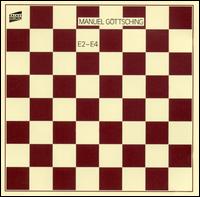
Manuel Göttsching's album E2-E4 was later described as a 'proto-techno masterpiece' and is frequently cited in searches for the origins of techno music.
Image source: E2-E4
1981
% complete
'Sharevari' by A Number of Names is frequently pointed to by commentators searching for a mythical 'first techno record', alongside early Cybotron compositions and Manuel Göttsching's E2-E4.
Image source: List of places with numeric names
Jan 1, 1983 - Dec 31, 1983
% complete
Around 1983, Sheffield band Cabaret Voltaire began including funk and electronic dance music elements into their sound, and in later years came to be described as techno. The same year, Laid Back released 'White Horse' with a similar funky electronica sound.
Image source: Cabaret Voltaire (band)
1985
% complete
In 1985, Billboard reviewed the Canadian band Skinny Puppy's album and described the genre as 'techno dance', another early usage of the term in music journalism.
Image source: Skinny Puppy
1977
% complete
DJ Charles 'The Electrifying Mojo' Johnson hosted the Midnight Funk Association, an eclectic five-hour late-night radio program on Detroit stations including WCHB, WGPR, and WJLB-FM from 1977 through the mid-1980s, providing key musical inspiration for future Detroit techno pioneers.
Jan 1, 1980 - Dec 31, 1980
% complete
Atkins recalled that around 1980 he had a tape of nothing but Kraftwerk, Telex, Devo, Giorgio Moroder and Gary Numan, playing it while driving around in his car. He found Kraftwerk's sound 'clean and precise' relative to the 'weird UFO sounds' of his own psychedelic music.
Image source: Juan Atkins
Jan 1, 1980 - Dec 31, 1981
% complete
In 1980 or 1981, Atkins and May met with DJ Mojo and proposed that they provide mixes for his Midnight Funk Association show, which they ended up doing the following year, cementing their place in Detroit's music scene.
1981
% complete
After Atkins taught Derrick May how to mix records, 'Magic Juan' Atkins and Derrick 'Mayday' May, along with three other DJs including Eddie 'Flashin' Fowlkes, launched themselves as a party crew called Deep Space Soundworks.
1982
% complete
Atkins viewed Cybotron's 'Cosmic Cars' as unique Germanic synthesized funk, but after hearing Afrika Bambaataa's 'Planet Rock' later that year, he considered it a superior example of the music he envisioned. Cybotron's earliest compositions from 1981 are often cited among possible first techno records.
Jan 1, 1983 - Dec 31, 1984
% complete
The Cybotron trio released a number of rock and electro-inspired tunes, the most successful of which were 'Clear' (1983) and its moodier follow-up 'Techno City' (1984).
1985
% complete
Eventually, Juan Atkins started producing his own music under the pseudonym Model 500, and in 1985 he established Metroplex, a foundational record label for Detroit techno.
1987
% complete
Derrick May's 1987 hit 'Strings of Life', released under the alias Rhythim Is Rhythim, is considered a classic in both the house and techno genres. Together with 'Nude Photo' (1987), it raised techno's profile in Europe during the Second Summer of Love house boom.
Image source: Strings of Life
May 1988
% complete
Compiled by Neil Rushton and Derrick May for Virgin's 10 Records imprint, this mid-1988 UK release introduced the word 'techno' to UK audiences and associated the term with EDM produced in Detroit.
Image source: Techno! The New Dance Sound of Detroit
Jun 1988 - Nov 24, 1989
% complete
Developments in the Detroit scene led to the opening of the Music Institute nightclub at 1315 Broadway in downtown Detroit. It closed on 24 November 1989, with Derrick May playing 'Strings of Life' accompanied by a recording of clock tower bells.
Image source: Electronic dance music
Sep 1988
% complete
Although the Techno! compilation did not recoup commercially, Inner City's production 'Big Fun' (1988), a track almost not included on the compilation, became a crossover hit in fall 1988.
1982
% complete
While working at Frankfurt's City Music record store, DJ Talla 2XLC began using the term techno to categorize artists such as Depeche Mode, Front 242, Heaven 17, Kraftwerk and New Order, as shorthand for technologically created dance music.
Image source: Techno
1983
% complete
Radio host François Mürner from Swiss National Radio DRS 3 used the term techno in his daily two-hour show Sounds! as early as 1983 to categorize artists such as Depeche Mode, Front 242, Heaven 17, Kraftwerk and New Order.
Image source: Techno
1984
% complete
Talla further popularized the term techno in Germany when he founded Technoclub at Frankfurt's No Name Club in 1984; the club later moved to the Dorian Gray club in 1987.
1985
% complete
From 1985, a club following for house music grew steadily in the UK, with interest sustained by scenes in London, Manchester, Nottingham, and later Sheffield and Leeds.
Image source: House music
Jan 1, 1986 - Dec 31, 1987
% complete
By 1987 a German party scene based around the Chicago sound was well established, laying groundwork for the country's later dominance in techno culture.
1987
% complete
According to DJ Mark Moore, it was 'Strings of Life' which eased London club-goers into acceptance of house music, demonstrating how Detroit techno supported the wider spread of dance music in Britain.
1987
% complete
Glasgow's Sub Club opened in 1987 and, along with London's Trade (opened in 1990), helped bring techno into the United Kingdom.
1988 - 1990
% complete
The Ufo opened in West Berlin as an illegal venue for acid house parties, existing until 1990. Around the same time, Munich's Negerhalle (1983–1989) and ETA-Halle established themselves as the first acid house clubs in dilapidated industrial halls, marking the beginning of Germany's 'hall culture'.
Image source: UFO Club
Nov 9, 1989 - Oct 1990
% complete
Following the fall of the Berlin Wall on 9 November 1989 and German reunification in October 1990, free underground techno parties mushroomed in East Berlin.
Image source: Berlin Wall
1990
% complete
The Babalu Club, the first afterhours techno club in Germany, opened in Munich and became a place for the formation of the southern German techno scene, bringing together protagonists such as DJ Hell, Monika Kruse, Tom Novy and Woody.
1990
% complete
London's Trade club opened its doors in 1990 and, together with Glasgow's Sub Club (1987), was a venue that helped bring techno into the United Kingdom.
Mar 1990 - Jun 1990
% complete
By Spring 1990, Tanith, along with Wolle XDP of the X-tasy Dance Project, were organizing the first large-scale rave events in Germany, distinguishing acid house as fun and electronic rather than aggressive.
1991
% complete
In the reunified Berlin, several locations opened near the wall's foundations from 1991 onwards, including Tresor (est. 1991), Planet (1991–1993), Bunker (1992–1996) and E-Werk (1993–1997). Tresor became the standard bearer for techno and hosted many leading Detroit producers, some of whom relocated to Berlin.
Image source: Tresor (club)
Jun 1992
% complete
In June 1992 the magazine Frontpage split into two separate publications: New Life Soundmagazine for techno according to the Frankfurt definition, and Frontpage (the next generation) for the Berlin definition, reflecting the view that 'House/Technohouse and EBM/Electro are two completely different worlds'.
1993
% complete
The German techno label Tresor Records released Tresor II: Berlin & Detroit – A Techno Alliance, a testament to the influence of the Detroit sound upon the German techno scene and a celebration of a 'mutual admiration pact' between the two cities.
1993 - 1994
% complete
In 1993–94 rave became a mainstream music phenomenon in Germany, seeing a return to melody, New Age elements, insistently kitsch harmonies and timbres.
Image source: Rave
1984
% complete
Roland released the TR-909 drum machine with a retail price of £999. It became one of the defining instruments of techno; ironically, barely a year after launch it was being sold off cheaply for around £375 to make way for the TR-707 and TR-727.
May 1996
% complete
Sound on Sound reported that popularity of the 808 had started to decline, with the rarer TR-909 taking its place as the dance floor drum machine to use, selling for between £900 and £1100 — a dramatic rise from prices under £200 in 1988.
Image source: Roland TR-909
May 1997 - Sep 2005
% complete
Swedish company Propellerhead released the ReBirth RB-338, called 'the ultimate techno software package' and 'a considerable software success story of 1997'. Despite its success it was officially taken out of production in September 2005.
Image source: ReBirth RB-338
1989
% complete
Manchester-based techno act 808 State helped fuel the genre's development with tracks such as 'Pacific State' and 'Cobra Bora' in 1989.
Image source: 808 State
Jan 1, 1991 - Dec 31, 1993
% complete
Labels including Black Dog Productions (1989), Carl Craig's Planet E, Kirk Degiorgio's Applied Rhythmic Technology, Rephlex Records and General Production Recordings (all 1991) emerged, and in 1993 new labels like New Electronica, Mille Plateaux, 100% Pure and Ferox Records appeared, alongside terms such as armchair techno, ambient techno and electronica.
Image source: Intelligent dance music
1991
% complete
UK journalist Matthew Collin wrote that Europe may have the scene and energy, but it is America which supplies the ideological direction: Belgian techno gives riffs, German the noise, British the breakbeats, and Detroit supplies the sheer cerebral depth.
1991
% complete
Detroit producer Mike Banks was heavily influenced by jazz, as demonstrated on the influential Underground Resistance release Nation 2 Nation (1991), paving the way for jazz-inflected techno.
Image source: Underground Resistance
May 1992
% complete
With less than 24 hours notice and little publicity, more than 35,000 people gathered at the Castlemorton Common Festival for five days of partying — the high point of the British free party period.
Image source: Castlemorton Common Festival
1993
% complete
By 1993 Detroit acts such as Model 500 and UR made explicit jazz references with 'Jazz Is The Teacher' (1993) and 'Hi-Tech Jazz' (1993), the latter part of Galaxy 2 Galaxy, a self-described jazz project based on Kraftwerk's 'man machine' doctrine. Dave Angel's 'Seas of Tranquility' EP (1994) followed this lead in the UK.
1994
% complete
The Castlemorton event was largely responsible for the introduction in 1994 of the Criminal Justice and Public Order Act, effectively leaving the British free party scene for dead.
Image source: Criminal Justice and Public Order Act 1994
Nov 2000
% complete
With a marketing campaign targeting under-35s, Ford used 'Detroit Techno' as a print ad slogan and chose Model 500's 'No UFO's' to underpin its November 2000 MTV television advertisement for the Ford Focus, saying young people were embracing techno.
Image source: Smith & Wesson Model 500
2006
% complete
Rapper Missy Elliott featured material from Cybotron's 'Clear' on her 2006 release 'Lose Control', exposing the popular music audience to the Detroit techno sound and earning Juan Atkins a Grammy Award nomination for his writing credit.
Image source: Lose Control (Missy Elliott song)
2007
% complete
In 2007, Berlin's Berghain was cited as possibly the current world capital of techno, much as E-Werk or Tresor were in their respective heydays.
Image source: Berghain
Or browse the full history timeline directory, with more than 2,000 topics.
This History of Techno timeline was generated with the help of AI, using information found on the internet.
We work hard to keep these timelines accurate, but mistakes do get through. If you spot one, email us at [email protected] and we'll fix it for future visitors.
Generate yours with AI or build it from scratch, for free.
Export your timeline, add your own events, edit or remove AI-generated events, and much more
No credit card required.
Cancel anytime.
Cancel anytime.
You can create an unlimited number of timelines with up to 10 events on each one, customize how they look, export them to PDF, PNG, PowerPoint, CSV, and Excel, and share them with a link. Paid plans raise the event limit and add features like spreadsheet imports and collaborators.
Yes. You can cancel your subscription from your account page at any time, and you will not be charged again. Your subscription stays active for the rest of the period you already paid for.
Yes. We will email you a reminder before the annual renewal, and we will also email you a receipt.
Yes. You can email us within 15 days of any payment, and we will issue you a full refund.
Check out our pricing docs or send us an email anytime: [email protected].