-
Use Cases
-
Resources
-
Pricing
1800 - 1900
% complete
According to music writer Bill Lamb, popular music refers to music that developed after industrialization in the 1800s and most closely reflected the tastes and interests of the urban middle class.
Image source: Popular music
1800 - 1900
% complete
Industrialization created expanding urban audiences and markets, helping music aligned with urban middle-class tastes become a central form of popular culture.
1926
% complete
The term “pop song” was first used in 1926 to describe a piece of music having popular appeal.
Image source: Pop music
1926
% complete
The 1926 use of “pop song” established a concise label for music intended to attract a broad audience.
1926 - 1950
% complete
Following the appearance of the phrase “pop song,” pop increasingly served as a general category for commercially successful music with wide appeal.
Oct 2023
% complete
In October 2023, Billboard compiled a list of the 500 best pop songs, providing a prominent retrospective ranking of the genre’s repertoire.
Image source: Billboard
1950 - 1970
% complete
Between 1950 and 1970, critics and musicians debated whether popular music should be valued primarily as accessible entertainment or as an art form.
1950 - 1970
% complete
The debate of pop versus art remained a major discussion throughout the period from 1950 to 1970, reflecting changing ideas about musical quality and cultural status.
1950 - 1970
% complete
The pop-versus-art debate coincided with increasingly fluid boundaries between commercial popular music and more culturally prestigious artistic practices.
1967 - 1970
% complete
As pop and rock were increasingly opposed, the division shaped how listeners, critics, and historians categorized contemporary music.
1967
% complete
The growing contrast between pop and rock turned the terms into distinct genre labels rather than interchangeable descriptions of popular music.
1967
% complete
From about 1967, “pop music” was increasingly used in opposition to “rock music,” giving both terms broader generic meanings.
1950 - 2000
% complete
Across the latter half of the 20th century, pop music increasingly incorporated ideas and practices associated with art, contributing to a broad cultural blending.
1950 - 2000
% complete
The latter half of the 20th century saw a large-scale American cultural trend in which distinctions between art music and pop music increasingly weakened.
1970 - 2000
% complete
By the late 20th century, several pop performers had become global superstars, demonstrating the international reach of the genre.
1982 - 2000
% complete
Prince joined the group of late-20th-century pop artists whose influence and popularity made them global superstars.
Image source: Prince
1982 - 2000
% complete
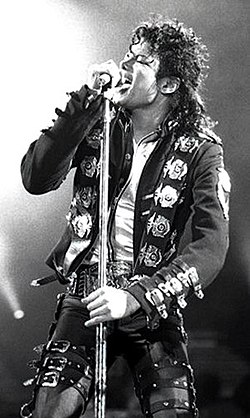
Michael Jackson was one of the late 20th century’s notable global pop superstars, representing the worldwide cultural impact of pop music.
Image source: Michael Jackson
1983 - 2000
% complete
Madonna became one of the most prominent global pop superstars of the late 20th century.
Image source: Madonna
1984 - 2000
% complete
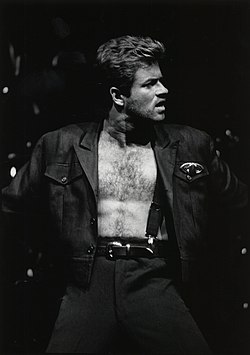
George Michael was identified among the notable late-20th-century pop artists who became global superstars.
Image source: George Michael
1985 - 2000
% complete
Whitney Houston was among the notable pop artists of the late 20th century who achieved global superstar status.
Image source: Whitney Houston
2007
% complete
Britney Spears’s influential 2007 album Blackout mixed electronic dance music, avant-funk, R&B, dance music, and hip-hop under producer Danja’s influence.
Image source: Blackout (Britney Spears album)
2007
% complete
Blackout epitomized a stylistic change by combining mainstream pop with R&B, hip-hop, and dance-oriented production.
2007
% complete
The album was described as epitomizing a highly influential shift toward the electronically driven, hybrid sound that later dominated pop.
2010
% complete
By 2010, pop music strongly influenced by dance music had become dominant on the charts.
2010
% complete
The chart success of dance-influenced pop marked a major shift in mainstream sound and commercial production.
2014
% complete
By 2014, electronic dance music had permeated pop music worldwide, extending dance-oriented production beyond particular national scenes.
Image source: Electronic dance music
2016
% complete
The Scientific Reports study created a large historical comparison by examining more than 464,000 popular-music recordings made between 1955 and 2010.
2016
% complete
The 2016 analysis also found reduced timbral variety in contemporary recordings compared with recordings associated with 1960s pop.
2016
% complete
The same study reported less diverse instrumentation and recording techniques in contemporary pop than in 1960s pop.
2016
% complete
The 2016 Scientific Reports analysis found greater average volume in contemporary popular music compared with 1960s pop.
2016
% complete
A Scientific Reports study examining more than 464,000 recordings from 1955 to 2010 found that contemporary pop used a smaller variety of pitch progressions than 1960s pop.
2018
% complete
In 2018, researchers at the University of California, Irvine, concluded that pop music had become sadder since the 1980s.
2019
% complete
A 2019 New York University study asked 643 participants to rank how familiar pop songs were to them and found songs from the 1960s most memorable.
2019
% complete
The New York University study found that 1960s songs were significantly more memorable to participants than songs released from 2000 to 2015.
Or browse the full history timeline directory, with more than 2,000 topics.
This History of Pop Music timeline was generated with the help of AI, using information found on the internet.
We work hard to keep these timelines accurate, but mistakes do get through. If you spot one, email us at [email protected] and we'll fix it for future visitors.
Generate yours with AI or build it from scratch, for free.

Export your timeline, add your own events, edit or remove AI-generated events, and much more
No credit card required.
Cancel anytime.
Cancel anytime.
You can create an unlimited number of timelines with up to 10 events on each one, customize how they look, export them to PDF, PNG, PowerPoint, CSV, and Excel, and share them with a link. Paid plans raise the event limit and add features like spreadsheet imports and collaborators.
Yes. You can cancel your subscription from your account page at any time, and you will not be charged again. Your subscription stays active for the rest of the period you already paid for.
Yes. We will email you a reminder before the annual renewal, and we will also email you a receipt.
Yes. You can email us within 15 days of any payment, and we will issue you a full refund.
Check out our pricing docs or send us an email anytime: [email protected].