-
Use Cases
-
Resources
-
Pricing
Celtic music encompasses the traditional folk music of Ireland, Scotland, Wales, Brittany, Cornwall, the Isle of Man, and Galicia, characterized by instruments like the fiddle, bagpipes, harp, tin whistle, and bodhrán. Its history stretches from ancient Celtic societies through medieval bardic traditions, centuries of oral transmission, a 19th–20th century decline due to emigration and cultural suppression, and a powerful revival beginning in the mid-20th century that continues to shape world folk music today. More Less
500 BC
% complete
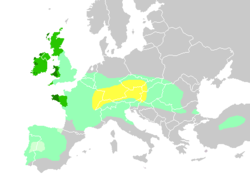
Iron Age Celtic tribes across Europe cultivated music and oral poetry as central elements of their culture. Bards held honored positions in society, reciting genealogies, heroic tales, and praise poetry, often accompanied by stringed instruments like early lyres.
Image source: Celts
55 BC
% complete
Roman authors such as Julius Caesar and Diodorus Siculus recorded observations of Gaulish bards and druids who composed verses and sang of heroes' deeds. These accounts provide some of the earliest written evidence of the professional musician-poets at the heart of Celtic culture.
Image source: Bard
432
% complete
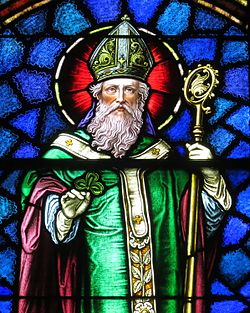
The arrival of Christianity in Ireland introduced Gregorian chant and Latin hymnody alongside native traditions. Irish monasteries became centers of learning where sacred chant blended with indigenous melodic styles, influencing the development of religious music across the Celtic lands.
Image source: Saint Patrick
800
% complete
During Ireland's Golden Age, monasteries produced masterworks like the Book of Kells. This period also preserved early Gaelic poetry meant for musical recitation, giving modern scholars glimpses into the structure of ancient Celtic song.
Image source: Book of Kells
800 - 1050
% complete
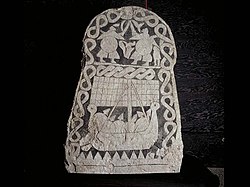
Viking raids and settlements in Ireland, Scotland, and the Isle of Man brought Scandinavian musical ideas and instrument forms. Cultural exchange during this period enriched local traditions and contributed to the evolution of stringed instruments in the Celtic world.
Image source: Viking Age
1000
% complete
By the eleventh century, the wire-strung harp (cláirseach) had become the prestige instrument of Gaelic nobility in Ireland and the Scottish Highlands. Harpers enjoyed high social status, performing elaborate compositions for chieftains and kings, and the harp later became a national symbol of Ireland.
Image source: Celtic harp
1169
% complete
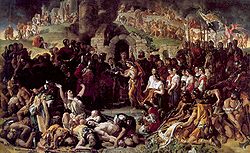
The Norman conquest of Ireland brought troubadour-style songs, new dances, and continental instrumentation into contact with Gaelic tradition. Over time, many Norman families adopted Irish language and customs, creating a rich cultural synthesis reflected in the music.
Image source: Anglo-Norman invasion of Ireland
1185
% complete
In his Topographia Hibernica, the chronicler Gerald of Wales described Irish harpists as surpassing all other nations in their skill, noting their rapid and intricate playing. His account is among the most famous contemporary testimonies to medieval Irish musical excellence.
Image source: Gerald of Wales
1400
% complete
The Great Highland bagpipe became central to clan life in the Scottish Highlands, used for battle signals, ceremonies, and the performance of piobaireachd, an elaborate classical form of pipe music. Hereditary piping dynasties, such as the MacCrimmons of Skye, developed sophisticated teaching systems.
Image source: Great Highland bagpipe
1670
% complete
Turlough O'Carolan, blinded by smallpox as a teenager, became the most celebrated of the Irish harper-composers. Traveling the country composing planxties and songs for patrons, he fused Gaelic melody with baroque influences, leaving a repertoire still played worldwide today.
Image source: Turlough O'Carolan
1695
% complete
Anti-Catholic penal laws in Ireland dismantled the Gaelic aristocracy that had supported harpers and poets. The loss of patronage began the long decline of the classical Irish harp tradition and its hereditary schools of musicians.
Image source: Penal laws (Ireland)
1787 - 1803
% complete
Robert Burns contributed hundreds of songs to James Johnson's six-volume Scots Musical Museum, one of the first major efforts to collect and publish traditional Scottish music. The project preserved countless melodies and Burns's own lyrics that remain beloved today.
Image source: Scots Musical Museum
Jul 1792
% complete
Organized by Edward Bunting and other patriots, the Belfast Harp Festival assembled ten aging harpers, including Denis Hempson and Arthur O'Neill. Bunting transcribed their music, producing collections that saved much of the ancient wire-strung harp repertoire from extinction.
Image source: Belfast Harp Festival
1750 - 1860
% complete
Forced evictions during the Highland Clearances displaced thousands of Gaels to Canada, Australia, and beyond. Cape Breton Island in Nova Scotia became an especially important refuge, preserving Scottish fiddle and step-dance traditions with remarkable fidelity.
Image source: Highland Clearances
1845 - 1852
% complete
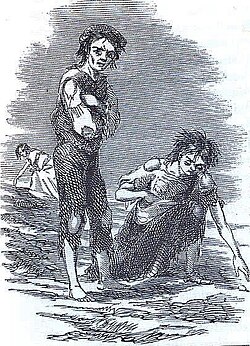
The Great Famine killed over a million people and forced millions more to emigrate, primarily to North America. Emigrants carried their ballads, dance tunes, and instruments abroad, seeding vibrant Irish musical communities in Boston, New York, and beyond.
Image source: Great Famine (Ireland)
1903 - 1913
% complete
Chicago police chief Francis O'Neill, an Irish-born flute player, published O'Neill's Music of Ireland (1903) and other massive collections of over 3,000 tunes gathered from immigrant musicians. His books remain foundational sources for Irish traditional musicians worldwide.
Image source: Francis O'Neill
1921 - 1945
% complete
Sligo fiddler Michael Coleman emigrated to New York and made dozens of influential recordings. His virtuosic, ornamented style, disseminated widely through 78 rpm discs, profoundly shaped how generations of fiddlers around the world played reels and jigs.
Image source: Lisa Coleman (musician)
1891
% complete
Concerned that traditional music was dying out, collectors in Dublin formed organizations to record and publish Irish airs and songs. These early revivalist efforts laid groundwork for the institutional preservation of traditional music.
Image source: Irish traditional music
1893
% complete
Founded by Douglas Hyde, Eoin MacNeill, and others, the Gaelic League championed Irish language and culture. Its ceilidhe (social gatherings) popularized group dancing and unaccompanied sean-nós singing, embedding traditional music within nationalist cultural identity.
Image source: Conradh na Gaeilge
1896
% complete
The Feis Ceoil, an annual competitive festival of Irish music and arts, was established in Dublin by Dr. Annie Patterson and others amid the Gaelic Revival. It encouraged the study of traditional singing, instrumental playing, and composition.
1900 - 1920
% complete
Early phonograph recordings captured Irish, Scottish, and Welsh performers for the first time. Labels such as Columbia issued 78s of uilleann pipers and fiddlers for immigrant markets, preserving performances by artists like piper Patsy Touhey and creating a commercial market for ethnic recordings.
Image source: Phonograph record
1951
% complete
Comhaltas Ceoltóirí Éireann (CCÉ) was established in Dublin and Mullingar to promote Irish traditional music, dance, and language. It grew into a global organization running branches, classes, fleadh cheoil festivals, and competitions across continents.
1956
% complete
Lonnie Donegan's skiffle hits inspired a generation of young Britons and Irish to pick up guitars, banjos, and homemade instruments. The accessible movement fed directly into the folk club scene and the broader second folk revival of the late 1950s and 1960s.
Image source: Skiffle
1961
% complete
The Clancy Brothers' rousing performances of songs like 'The Wild Rover' and 'Brennan on the Moor' electrified American audiences, including an acclaimed appearance on The Ed Sullivan Show. Their success opened mainstream markets for Irish folk music and inspired countless groups.
Image source: The Clancy Brothers
1963
% complete
Piper Paddy Moloney founded The Chieftains, whose refined arrangements showcased the depth of Irish traditional music. Their collaborations with artists ranging from Van Morrison to the Rolling Stones carried Celtic sounds to global audiences over five decades.
Image source: The Chieftains
1972
% complete
Planxty, featuring Christy Moore, Andy Irvine, Donal Lunny, and Liam O'Flynn, revolutionized Irish music with driving bouzouki-and-bodhrán arrangements of traditional material. Their debut album influenced virtually every Irish band that followed.
Image source: Planxty
1974 - 1979
% complete
Formed from Planxty alumni and others, The Bothy Band delivered high-octane instrumental sets and haunting songs sung by Tríona Ní Dhomhnaill. Though short-lived, they set a standard for intensity and innovation that defined the modern trad supergroup.
Apr 30, 1994
% complete
A seven-minute interval act at Dublin's Eurovision, Riverdance stunned viewers with Bill Whelan's score and Michael Flatley's dancing. Expanded into a full stage show, it became a global phenomenon seen by millions and sparked worldwide enthusiasm for Irish dance and music.
2005
% complete
Celtic Woman, assembled for a PBS television special in Dublin, paired soaring vocals with lush arrangements of traditional and contemporary songs. Their albums topped Billboard world music charts repeatedly, bringing Celtic-inspired music to vast international audiences.
2010
% complete
In the streaming era, a new generation of singers and players spread sean-nós singing, uilleann piping, and regional styles via YouTube and online archives. Projects like ITMA (Irish Traditional Music Archive) digitized historical recordings, making centuries of Celtic music freely accessible worldwide.
2017
% complete
Dublin group Lankum earned critical acclaim for dark, drone-laden reinterpretations of traditional ballads, exemplifying a wave of artists pushing Celtic music into avant-garde territory while remaining rooted in the tradition. Their success confirmed traditional music's continuing vitality and evolution.
Image source: Lankum
2019
% complete
By the late 2010s, festivals celebrating Celtic music flourished worldwide, including Milwaukee Irish Fest, Festival Interceltique de Lorient, and Glasgow's Celtic Connections. These gatherings sustain a living transatlantic tradition linking Ireland, Scotland, Wales, Brittany, Galicia, and diaspora communities.
Image source: Milwaukee Irish Fest
Or browse the full history timeline directory, with more than 2,000 topics.
This History of Celtic Music timeline was generated with the help of AI, using information found on the internet.
We work hard to keep these timelines accurate, but mistakes do get through. If you spot one, email us at [email protected] and we'll fix it for future visitors.
Generate yours with AI or build it from scratch, for free.
Export your timeline, add your own events, edit or remove AI-generated events, and much more
No credit card required.
Cancel anytime.
Cancel anytime.
You can create an unlimited number of timelines with up to 10 events on each one, customize how they look, export them to PDF, PNG, PowerPoint, CSV, and Excel, and share them with a link. Paid plans raise the event limit and add features like spreadsheet imports and collaborators.
Yes. You can cancel your subscription from your account page at any time, and you will not be charged again. Your subscription stays active for the rest of the period you already paid for.
Yes. We will email you a reminder before the annual renewal, and we will also email you a receipt.
Yes. You can email us within 15 days of any payment, and we will issue you a full refund.
Check out our pricing docs or send us an email anytime: [email protected].