-
Use Cases
-
Resources
-
Pricing
Choral music is vocal music performed by a choir of singers, typically in multiple voice parts. Its history spans over a thousand years, beginning with sacred monophonic chants of the medieval church, evolving through the polyphonic masterpieces of the Renaissance, the grand oratorios of the Baroque era, and into the diverse sacred and secular choral works of the Classical, Romantic, and modern periods. More Less
1160 - 1250
% complete
Composers such as Léonin and Pérotin at the Notre Dame cathedral school pioneered early polyphony, creating organa for two, three, and four voices. This marked a decisive shift from monophonic chant to multi-part choral textures that would define Western sacred music.
1365
% complete
Machaut's Messe de Nostre Dame is one of the earliest complete polyphonic mass settings by a single known composer, showcasing sophisticated four-part writing and establishing the mass as a central genre of choral composition.
Image source: Messe de Nostre Dame
1410 - 1453
% complete
Dunstaple's luminous triadic harmonies, known as la contenance angloise, deeply influenced continental composers including Dufay and Binchois, helping to launch the stylistic transition from medieval to Renaissance music.
Image source: John Dunstaple
1436
% complete
Dufay's isorhythmic motet was composed for the consecration of Florence Cathedral's dome by Brunelleschi, exemplifying the blend of late medieval structure with emerging Renaissance harmonic language.
Image source: Nuper rosarum flores
1480 - 1521
% complete
Josquin dominated the musical landscape around 1500, perfecting imitative counterpoint and expressive text setting in masses and motets. Martin Luther praised him as master of the notes, and his style shaped generations of choral composers.
Image source: Josquin des Prez
1550 - 1610
% complete
Composers including Andrea and Giovanni Gabrieli exploited the multiple choir lofts of St Mark's Basilica in Venice, writing grand antiphonal works for spatially separated choirs, brass, and organ, pioneering spectacular cori spezzati effects.
Image source: Venetian polychoral style
1560 - 1594
% complete
As court composer to Duke Albrecht V of Bavaria, Lassus produced over 2,000 works spanning masses, motets, madrigals, and chansons, blending Franco-Flemish craft with Italian and German idioms and earning fame across Europe.
Image source: Orlando di Lasso
1562
% complete
Giovanni Pierluigi da Palestrina's Mass, written for Pope Marcellus II, became legendary for its clarity and smoothness. Legend claims it saved polyphonic church music from abolition by the Council of Trent, and it remains a model of the Roman school.
Image source: Missa Papae Marcelli
1575
% complete
Thomas Tallis and William Byrd received a monopoly on music printing from Queen Elizabeth I and jointly published this collection of Latin motets, a milestone in English sacred choral music during a time of religious upheaval.
1610
% complete
Claudio Monteverdi's Vespro della Beata Vergine combined chant-based structures with operatic solo writing, virtuosic choruses, and instruments, bridging Renaissance tradition and the emerging Baroque idiom.
Image source: Vespro della Beata Vergine
1619 - 1672
% complete
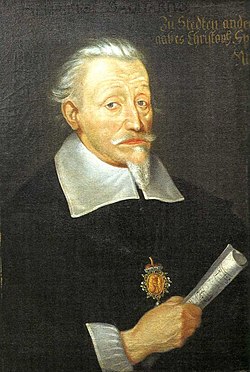
After studying with Gabrieli in Venice, Schütz brought concerted sacred music to Germany. His Psalmen Davids, Geistliche Chormusik, and Passions laid foundations for the great Lutheran choral tradition later perfected by Bach.
Image source: Heinrich Schütz
1640 - 1674
% complete
Giacomo Carissimi developed the Latin oratorio with works like Jephte, using dramatic narration, vivid choruses, and recitative. His innovations shaped the oratorio genre later mastered by Handel.
Apr 15, 1727
% complete
Johann Sebastian Bach premiered his monumental Passion setting with double chorus, double orchestra, and boys' choirs at St Thomas Church. Rediscovered by Mendelssohn a century later, it stands among the greatest achievements of choral art.
Image source: St Matthew Passion
Apr 13, 1742
% complete
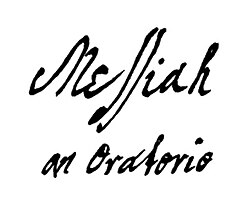
George Frideric Handel's oratorio Messiah premiered at Dublin's Music Hall for charity. Its choruses, including the Hallelujah chorus, have made it one of the most performed choral works in history, especially beloved in annual Christmas performances.
Image source: Messiah (Handel)
1749
% complete
Bach assembled his final large-scale work, a complete Mass in B minor drawing on decades of material. Though not performed in full during his lifetime, it is now revered as a pinnacle of sacred choral composition.
Image source: Mass in B minor
1798
% complete
Inspired by Handel oratorios he heard in London, Joseph Haydn composed The Creation, an exuberant oratorio depicting the biblical creation story, which became one of the most popular choral works of its era across Europe.
Image source: The Creation (Haydn)
Apr 7, 1824
% complete
Beethoven's Missa solemnis, composed for Archduke Rudolph's enthronement ceremony, expanded the mass form to unprecedented scale and difficulty, uniting symphonic drama with profound spiritual expression alongside his Ninth Symphony premiere.
Image source: Missa solemnis (Beethoven)
Mar 11, 1829
% complete
Felix Mendelssohn's historic revival of Bach's St Matthew Passion launched the modern Bach renaissance, transforming public appreciation of Baroque choral masterworks and cementing Bach's place in the canon.
Image source: St Matthew Passion
Dec 5, 1837
% complete
Hector Berlioz's Requiem called for massive forces including four offstage brass bands and sixteen timpani, exemplifying Romanticism's taste for colossal sonic spectacle and emotional intensity in choral writing.
Image source: Requiem (Berlioz)
1868
% complete
Johannes Brahms's Ein deutsches Requiem set German Bible texts rather than the traditional Latin Mass, offering comfort to the living. Its success established Brahms internationally and broadened the scope of large-scale choral works.
Image source: A German Requiem (Brahms)
May 22, 1874
% complete
Premiered on the first anniversary of Manzoni's death, Verdi's Requiem brought operatic intensity to liturgical music, with its thunderous Dies irae becoming one of the most recognizable moments in the choral repertory.
Image source: Requiem (Verdi)
Jan 16, 1888
% complete
Gabriel Fauré's Requiem departed from dramatic judgment-day depictions toward serene consolation, omitting the Dies irae and ending in tranquil hope. It remains one of the most frequently performed requiem settings worldwide.
Image source: Requiem (Fauré)
Oct 12, 1910
% complete
Ralph Vaughan Williams set Walt Whitman's poetry in his First Symphony for orchestra and full chorus, inaugurating the English symphonic-choral tradition and launching his influential career in British music.
Image source: A Sea Symphony
1930
% complete
Igor Stravinsky's Symphony of Psalms for chorus and orchestra without violins introduced austere, devotional modernism to choral writing, combining Russian Orthodox influences with neoclassical rigor for Serge Koussevitzky's anniversary commission.
Image source: Symphony of Psalms
Jun 8, 1937
% complete
Carl Orff's scenic cantata based on medieval Goliard poems premiered in Frankfurt, its elemental rhythms and famous O Fortuna chorus achieving worldwide popularity and making it a gateway work for new choral audiences.
Image source: Carmina Burana (Orff)
1950 - 1975
% complete
The postwar early music revival saw ensembles like the Deller Consort and Taverner Choir revive Renaissance polyphony on period principles, transforming performance practice and expanding recorded access to centuries of choral literature.
May 30, 1962
% complete
Premiered for the reconsecration of the bombed Coventry Cathedral, Britten's War Requiem interweaves the Latin Requiem Mass with Wilfred Owen's anti-war poetry for three soloists, two choirs, and orchestras, becoming an enduring pacifist statement.
Image source: War Requiem
1976 - 1985
% complete
Estonian composer Arvo Pärt developed his tintinnabuli style in works like Spiegel im Spiegel, Passio, and Stabat Mater, whose sparse sacred minimalism revitalized interest in contemporary choral and spiritual music globally.
Image source: Arvo Pärt
May 2010
% complete
Composer Eric Whitacre assembled singers from dozens of countries via YouTube into the first Virtual Choir performing Lux Aurumque, pioneering global digital collaboration and opening new frontiers for choral participation beyond geographic limits.
Image source: Eric Whitacre
Or browse the full history timeline directory, with more than 2,000 topics.
This History of Choral Music timeline was generated with the help of AI, using information found on the internet.
We work hard to keep these timelines accurate, but mistakes do get through. If you spot one, email us at [email protected] and we'll fix it for future visitors.
Generate yours with AI or build it from scratch, for free.
Export your timeline, add your own events, edit or remove AI-generated events, and much more
No credit card required.
Cancel anytime.
Cancel anytime.
You can create an unlimited number of timelines with up to 10 events on each one, customize how they look, export them to PDF, PNG, PowerPoint, CSV, and Excel, and share them with a link. Paid plans raise the event limit and add features like spreadsheet imports and collaborators.
Yes. You can cancel your subscription from your account page at any time, and you will not be charged again. Your subscription stays active for the rest of the period you already paid for.
Yes. We will email you a reminder before the annual renewal, and we will also email you a receipt.
Yes. You can email us within 15 days of any payment, and we will issue you a full refund.
Check out our pricing docs or send us an email anytime: [email protected].