-
Use Cases
-
Resources
-
Pricing
Jazz is a uniquely American art form that emerged in the late 19th and early 20th centuries in New Orleans, blending African rhythms, blues, ragtime, and European harmonic traditions. Over the decades it evolved through distinct eras—including Dixieland, swing, bebop, cool jazz, hard bop, free jazz, and fusion—shaped by legendary figures such as Louis Armstrong, Duke Ellington, Charlie Parker, Miles Davis, and John Coltrane. Jazz has profoundly influenced global music, culture, and improvisational artistry. More Less
1897
% complete
New Orleans legalized prostitution in the Storyville district, creating demand for live music in its brothels and saloons. Many early jazz musicians, including Jelly Roll Morton and King Oliver, honed their craft playing in Storyville venues.
Image source: Storyville, New Orleans
1899
% complete
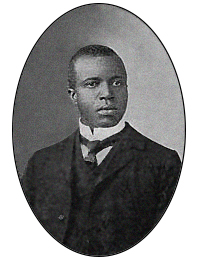
Scott Joplin's 'Maple Leaf Rag' became a massive hit, popularizing ragtime's syncopated piano style. Ragtime served as a direct precursor to jazz, introducing syncopation and improvisational spirit into American popular music.
Image source: Ragtime
1915
% complete
Pianist and composer Jelly Roll Morton published 'The Jelly Roll Blues,' one of the first published jazz compositions. Morton claimed to have invented jazz himself and blended ragtime, blues, and improvisation into sophisticated arrangements.
Image source: Jelly Roll Morton
1916 - 1970
% complete
Millions of African Americans moved from the rural South to northern cities like Chicago and New York, carrying jazz with them. This migration transformed Chicago into a major jazz hub and spread the music nationwide.
Image source: Great Migration (African American)
Feb 26, 1917
% complete
The white New Orleans group Original Dixieland Jass Band recorded 'Livery Stable Blues' for Victor Records, widely considered the first jazz record ever made. The recording sparked a national craze for jazz music across the United States.
Image source: Original Dixieland Jass Band
1922
% complete
Young cornetist Louis Armstrong moved from New Orleans to Chicago to join his mentor King Oliver's band. His virtuosic playing there quickly made him famous and set new standards for jazz soloists.
Image source: King Oliver
1924
% complete
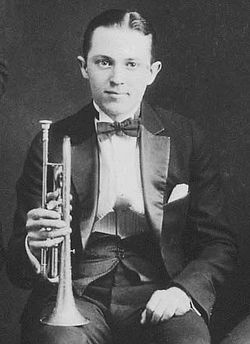
Cornetist Bix Beiderbecke rose to fame with the Wolverines and Paul Whiteman's orchestra, becoming one of the most influential jazz soloists of the 1920s. His lyrical style influenced generations of musicians before his early death in 1931.
Image source: Bix Beiderbecke
Nov 12, 1925 - 1928
% complete
Armstrong's recordings with the Hot Five and Hot Seven groups, including 'West End Blues,' revolutionized jazz by elevating the improvised solo to an art form. These sessions established Armstrong as the first great jazz soloist.
Image source: Louis Armstrong Hot Five and Hot Seven Sessions
Dec 4, 1927
% complete
Duke Ellington's orchestra began performing at Harlem's Cotton Club, where radio broadcasts brought his music into homes nationwide. The residency launched Ellington to national fame and produced classics like 'Mood Indigo.'
Image source: Cotton Club
1935
% complete
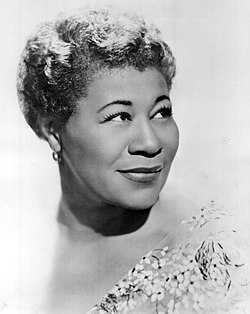
Teenage Ella Fitzgerald won an amateur contest at the Apollo Theater and joined drummer Chick Webb's band. Her hit 'A-Tisket, A-Tasket' made her a star and she later became known as the 'First Lady of Song.'
Image source: Ella Fitzgerald
Aug 21, 1935
% complete
Benny Goodman's electrifying performance at Los Angeles' Palomar Ballroom is often cited as the start of the Swing Era. Goodman became known as the 'King of Swing,' making jazz America's dominant popular music.
Image source: Benny Goodman
1936
% complete
Count Basie brought Kansas City swing to national audiences with his powerful big band, featuring Lester Young and Jo Jones. The band's riff-driven style and blues foundation defined the sound of the Swing Era.
Image source: Count Basie Orchestra
Apr 20, 1939
% complete
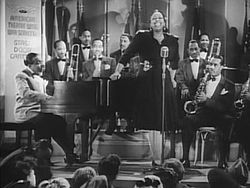
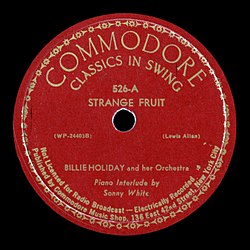
Billie Holiday recorded 'Strange Fruit,' a haunting protest song about lynching in the American South. The recording was a landmark moment demonstrating jazz's power as social commentary.
Image source: Strange Fruit
Oct 11, 1939
% complete
Tenor saxophonist Coleman Hawkins recorded his legendary two-chorus improvisation on 'Body and Soul,' one of the most celebrated solos in jazz history. The record demonstrated the artistic heights of jazz improvisation.
Image source: Body and Soul (1930 song)
1940
% complete
After-hours jam sessions at Harlem's Minton's Playhouse, featuring Charlie Christian, Thelonious Monk, and Kenny Clarke, developed the fast tempos and complex harmonies that would become bebop.
Image source: Minton's Playhouse
1944
% complete
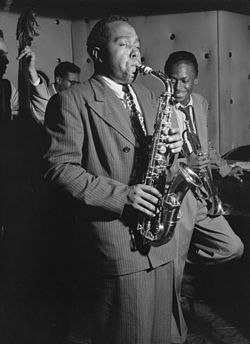
Charlie Parker and Dizzy Gillespie led the bebop revolution, transforming jazz from dance music into a demanding art form built on rapid tempos, advanced harmony, and virtuosic improvisation.
Image source: Bebop
Jul 2, 1944
% complete
Producer Norman Granz launched Jazz at the Philharmonic, a series of all-star concert tours that presented integrated audiences and racially mixed bands, advancing both jazz performance and civil rights.
Image source: Jazz at the Philharmonic
Sep 29, 1947
% complete
Dizzy Gillespie collaborated with Cuban conga player Chano Pozo, blending bebop with Cuban rhythms in hits like 'Manteca.' This fusion created Afro-Cuban jazz, one of jazz's most enduring subgenres.
Jan 21, 1949 - 1950
% complete
Miles Davis recorded sessions with a nonet featuring Gerry Mulligan and Gil Evans that introduced cool jazz. The relaxed, understated style offered a contrast to bebop's intensity and shaped West Coast jazz.
Image source: Birth of the Cool
1959
% complete
Ornette Coleman's album 'The Shape of Jazz to Come' and his landmark 'Free Jazz' recording abandoned conventional chord structures and meters, launching the avant-garde free jazz movement.
Image source: Free jazz
Mar 2, 1959 - Apr 22, 1959
% complete
Miles Davis recorded 'Kind of Blue' with John Coltrane, Bill Evans, and Cannonball Adderley, pioneering modal jazz. Widely regarded as the greatest jazz album ever, it remains the best-selling jazz record of all time.
Image source: Kind of Blue
Dec 14, 1959
% complete
The Dave Brubeck Quartet released 'Time Out,' featuring unusual time signatures and the hit single 'Take Five.' It became the first jazz album to sell over a million copies.
Image source: Time Out (album)
Feb 28, 1964
% complete
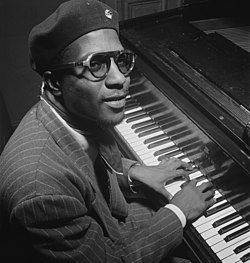
Thelonious Monk became one of the few jazz musicians featured on the cover of Time magazine, signaling mainstream recognition of the once-radical pianist and composer whose angular melodies had reshaped modern jazz.
Image source: Thelonious Monk
Dec 9, 1964
% complete
John Coltrane recorded 'A Love Supreme,' a deeply spiritual four-part suite that became one of jazz's most revered works. The album fused modal improvisation with religious devotion and influenced countless musicians.
Image source: A Love Supreme
Feb 18, 1969
% complete
Miles Davis embraced electric instruments and studio experimentation on 'In a Silent Way,' followed by the rock-influenced 'Bitches Brew.' These albums launched jazz fusion, blending jazz with rock and funk.
Image source: In a Silent Way
Oct 13, 1973
% complete
Herbie Hancock's 'Head Hunters' merged jazz with funk and synthesizers, becoming the first jazz album certified platinum. Its groove-driven sound brought fusion to massive audiences.
Mar 1, 1977
% complete
Weather Report's 'Heavy Weather,' featuring Joe Zawinul's composition 'Birdland,' became fusion's biggest commercial success. The band, co-led by Zawinul and Wayne Shorter, defined the genre's sophisticated sound.
Image source: Heavy Weather (album)
1982
% complete
Wynton Marsalis emerged as the leader of a generation of young musicians dedicated to acoustic jazz traditions. He later became artistic director of Jazz at Lincoln Center and won both jazz and classical Grammy Awards in 1984.
Image source: Wynton Marsalis
Oct 18, 2004
% complete
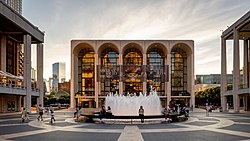
Jazz at Lincoln Center opened Frederick P. Rose Hall in New York City, the first major performance facility designed specifically for jazz. The venue cemented jazz's status as America's classical art form.
Image source: Lincoln Center
Or browse the full history timeline directory, with more than 2,000 topics.
This History of Jazz timeline was generated with the help of AI, using information found on the internet.
We work hard to keep these timelines accurate, but mistakes do get through. If you spot one, email us at [email protected] and we'll fix it for future visitors.
Generate yours with AI or build it from scratch, for free.
Export your timeline, add your own events, edit or remove AI-generated events, and much more
No credit card required.
Cancel anytime.
Cancel anytime.
You can create an unlimited number of timelines with up to 10 events on each one, customize how they look, export them to PDF, PNG, PowerPoint, CSV, and Excel, and share them with a link. Paid plans raise the event limit and add features like spreadsheet imports and collaborators.
Yes. You can cancel your subscription from your account page at any time, and you will not be charged again. Your subscription stays active for the rest of the period you already paid for.
Yes. We will email you a reminder before the annual renewal, and we will also email you a receipt.
Yes. You can email us within 15 days of any payment, and we will issue you a full refund.
Check out our pricing docs or send us an email anytime: [email protected].