
-
Use Cases
-
Resources
-
Pricing
Soul music is a popular music genre that emerged in the United States in the late 1950s and early 1960s, blending African American gospel music, rhythm and blues, and jazz. Characterized by emotive vocals, call-and-response patterns, and rich instrumentation, soul became a powerful cultural force during the Civil Rights era. Pioneered by artists like Ray Charles and Sam Cooke and popularized by labels such as Motown and Stax Records, the genre evolved into substyles including Southern soul, Memphis soul, Philadelphia soul, and funk, profoundly influencing modern pop, R&B, and hip-hop. More Less
1947
% complete
Ahmet Ertegun, who had anticipated being a diplomat until his father died in 1944, founded Atlantic Records in 1947 with his friend Herb Abramson. The label would go on to become one of the most important homes for rhythm and blues and soul music.
Image source: Atlantic Records
1953 - 1966
% complete
Vee Jay Records, which lasted until 1966, produced recordings by Jerry Butler, Betty Everett, Dee Clark, and Gene Chandler, contributing significantly to early soul music.
Image source: Vee-Jay Records
1954
% complete
Ray Charles is often cited as popularizing the soul music genre with his series of hits, starting with 1954's "I Got a Woman", which blended gospel fervor with secular rhythm and blues.
Image source: Ray Charles
1957
% complete
Sam Cooke's recording of "You Send Me" in 1957 launched a successful pop music career for the former gospel singer, helping bring gospel-influenced singing to mainstream audiences.
Image source: Sam Cooke
1957
% complete
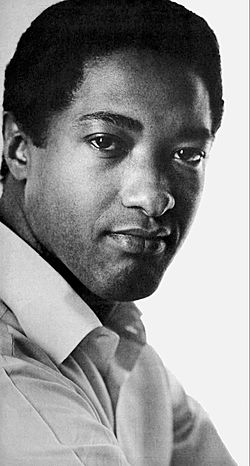
Jackie Wilson, a contemporary of both Sam Cooke and James Brown, achieved crossover success, especially with his 1957 hit "Reet Petite".
Image source: Jackie Wilson
1960
% complete
The duo's debut single "A Fool in Love" crossed over to the pop charts in 1960, marking their breakthrough success.
Image source: Ike & Tina Turner
1961
% complete
According to AllMusic, "Soul music was the result of the urbanization and commercialization of rhythm and blues in the '60s." The phrase "soul music" itself, referring to gospel-style music with secular lyrics, was first attested in 1961.
Image source: Soul music
1960
% complete
Aretha Franklin, originally a gospel singer who began to make secular recordings in 1960, would later become the most important female soul singer to emerge, with her career later revitalized by her recordings for Atlantic.
Image source: Aretha Franklin
1961
% complete
Guralnick wrote that soul started, in a sense, with the 1961 success of Solomon Burke's "Just Out of Reach", marking an early milestone for the genre.
Image source: Solomon Burke
1961
% complete
Ben E. King achieved success in 1961 with "Stand by Me", a song directly based on a gospel hymn, exemplifying the genre's gospel roots.
Image source: Ben E. King
1962 - 1964
% complete
Between 1962 and 1964, Otis Redding recorded a series of soul ballads characterized by unabashedly sentimental lyrics, usually begging forgiveness or asking a girlfriend to come home.
Image source: Otis Redding
1962
% complete
Sam Cooke's 1962 recording of "Bring It On Home to Me" has been described as "perhaps the first record to define the soul experience".
Image source: Bring It On Home to Me
1962
% complete
Ike & Tina Turner earned a Grammy nomination for their song "It's Gonna Work Out Fine" in 1962.
Image source: It's Gonna Work Out Fine
1966
% complete
Aretha Franklin's career was revitalized by her recordings for Atlantic Records after she began making secular recordings in 1960.
1967
% complete
Franklin's 1967 recording of "Do Right Woman, Do Right Man", written by Chips Moman and Dan Penn, was among her significant and commercially successful recordings.
Image source: Do Right Woman, Do Right Man
1967
% complete
In 1967, Aretha Franklin recorded "Respect", written and originally recorded by Otis Redding. Her version became one of the most significant and commercially successful recordings in soul history.
Image source: Respect (song)
1967
% complete
Among her significant and commercially successful 1967 recordings was "I Never Loved a Man (The Way I Love You)", which helped establish Aretha Franklin's reign as the Queen of Soul.
Image source: I Never Loved a Man the Way I Love You
Jun 1967
% complete
Otis Redding was a huge success at the Monterey International Pop Festival in 1967, winning over a largely new, crossover audience.
Image source: Monterey International Pop Festival
1968
% complete
By 1968, while at its peak of popularity, soul began to fragment into different subgenres, and the soul music genre had begun to splinter.
1969
% complete
Isaac Hayes's 1969 recording of "Walk On By" is considered a "classic" of prog-soul, according to City Pages journalist Jay Boller.
Image source: Isaac Hayes
1971
% complete
The syndicated music/dance variety television series Soul Train, hosted by Chicago native Don Cornelius, debuted in 1971.
1980
% complete
Beginning in the 1980s, other predominantly African-American music genres such as hip-hop began overshadowing soul on the show.
Mar 25, 2006
% complete
The TV series continued to air until 2006, ending a remarkable run of more than three decades celebrating African-American music and dance.
Image source: Soul Train
1994
% complete
Neo soul, which adopted hip-hop influences, developed around 1994, blending classic soul aesthetics with contemporary sounds.
1994
% complete
The United States saw the development of neo-soul around 1994, as artists fused soul traditions with hip-hop influences.
Image source: Neo soul
2006
% complete
In the late 2000s, the style was revisited by contemporary soul singers such as Amy Winehouse, who brought retro-soul sensibilities to global audiences.
Image source: Amy Winehouse
2008
% complete
In the late 2000s, the classic soul style was revisited by Raphael Saadiq, specifically on his 2008 album The Way I See It.
Image source: Raphael Saadiq
2008
% complete
Solange Knowles revisited the classic soul sound with her 2008 album Sol-Angel and the Hadley St. Dreams, part of the late-2000s soul revival.
Image source: Solange Knowles
Or browse the full history timeline directory, with more than 2,000 topics.
This History of Soul Music timeline was generated with the help of AI, using information found on the internet.
We work hard to keep these timelines accurate, but mistakes do get through. If you spot one, email us at [email protected] and we'll fix it for future visitors.
Generate yours with AI or build it from scratch, for free.
Export your timeline, add your own events, edit or remove AI-generated events, and much more
No credit card required.
Cancel anytime.
Cancel anytime.
You can create an unlimited number of timelines with up to 10 events on each one, customize how they look, export them to PDF, PNG, PowerPoint, CSV, and Excel, and share them with a link. Paid plans raise the event limit and add features like spreadsheet imports and collaborators.
Yes. You can cancel your subscription from your account page at any time, and you will not be charged again. Your subscription stays active for the rest of the period you already paid for.
Yes. We will email you a reminder before the annual renewal, and we will also email you a receipt.
Yes. You can email us within 15 days of any payment, and we will issue you a full refund.
Check out our pricing docs or send us an email anytime: [email protected].