
-
Use Cases
-
Resources
-
Pricing
Soul food is a cuisine that originated in the African American communities of the Southern United States, blending West African cooking traditions with ingredients available during slavery and the Jim Crow era. Dishes like fried chicken, collard greens, cornbread, and black-eyed peas reflect resilience, resourcefulness, and cultural identity, and soul food remains a powerful symbol of African American heritage and community. More Less
1500
% complete
The guineafowl, a bird indigenous to Africa, was imported to the Americas by way of the slave trade. The bird was brought by the Spanish to the Caribbean, and introduced to the South of what is now the United States in the early 16th century, becoming part of Southern foodways.
Image source: Soul food
1600
% complete
Foods from West-Central Africa brought to the United States by way of the trans-Atlantic slave trade were used by enslaved cooks and combined with North American ingredients using West African, Native American, and European cooking methods. In the 17th century these meals were necessary for survival, and they later influenced the foodways of southern Americans generally.
1730
% complete
Sesame is an African crop that was brought to South Carolina in 1730 during the slave trade, adding an African ingredient to the evolving cuisine of the American South.
Image source: Sesame
1748
% complete
In 1748, Peter Kalm, a Swedish-Finnish botanist, noted that enslaved Africans in Philadelphia cultivated guinea peppers whose pods were pounded and mixed with salt preserved in a bottle to make sauces poured over fish and meats, preserving African flavor traditions.
Image source: Pehr Kalm
1926
% complete
Newbell Puckett, a southern sociologist who documented African American folk beliefs in his 1926 study Folk Beliefs of the Southern Negro, noted cultural and historical continuity between African American culture and West African societies where red had been an important ritual and royal color for hundreds of years.
Image source: Rabbit's foot
2006 - 2007
% complete
Historian Ray Von Robertson conducted oral interviews with sixteen Black Seminoles from 2006 and 2007 and found that Seminole cultural influences were incorporated into their daily lives in practices such as foodways and herbal medicine.
Image source: Black Seminoles
1700 - 1900
% complete
In the eighteenth and nineteenth centuries, slaveholders provided enslaved people with only the barest necessities of food, forcing them to make resourceful use of limited ingredients and shaping the creative cooking traditions that would become soul food.
1856
% complete
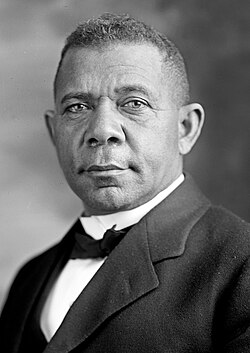
Washington was born enslaved in Franklin County, Virginia in 1856 and wrote autobiographies titled The Story of My Life and Work and Up from Slavery, which described the diet he grew up with as an enslaved child.
Image source: Booker T. Washington
Nov 7, 1861
% complete
Black people in the barrier islands of South Carolina became free early during the American Civil War after the Battle of Port Royal on November 7, 1861, when many plantation owners and white residents fled the area after the arrival of the Union Navy and Army.
Image source: Port-Royal (Acadia)
Jan 1, 1863
% complete
The freedom of Black people in the barrier islands of South Carolina was not official in government writing until the passage of the Emancipation Proclamation on New Year's Day in 1863.
Image source: Emancipation Proclamation
Jan 1, 1863
% complete
On January 1, 1863, Gullah people in the Sea Islands of South Carolina celebrated their freedom on New Year's Day at Camp Saxton in Beaufort with food and barbecues, following the passage of the Emancipation Proclamation.
Image source: Gullah
1791
% complete
Thomas Downing was born enslaved in 1791 on Chincoteague Island, on the Eastern Shore of Virginia. He would go on to become one of America's most celebrated Black restaurateurs.
Image source: Thomas Downing (restaurateur)
1926
% complete
Sylvia Woods was born in Hemingway, South Carolina in 1926. She later moved to Harlem and became famous as the owner of one of New York City's most iconic soul food restaurants.
Image source: Sylvia Woods
1936
% complete
In 1936, an African American postal worker from Harlem named Victor Hugo Green created The Green Book for Black people to travel safely in the Southern United States, where Jim Crow laws were widespread. It listed restaurants and lodgings safe for Black travelers.
Image source: The Negro Motorist Green Book
1936
% complete
Atlanta's oldest black-owned restaurant, the Evelyn Jones Cafe, was founded in 1936 by Evelyn Jones and her sister, becoming an enduring institution of Southern soul food dining.
1954
% complete
In 1954, Sylvia Woods changed jobs and started working at Johnson's Luncheonette located in central Harlem, beginning her path toward restaurant ownership.
Image source: Sylvia's Restaurant of Harlem
1954
% complete
Swett's opened in 1954 and was listed in The Green Book, providing safe dining for Black travelers during the Jim Crow era.
Image source: John Swett
1955
% complete
Club from Nowhere was a black-owned soul food restaurant that opened in 1955 in Montgomery, Alabama, operated by civil rights activist Georgia Gilmore. It helped fund the Montgomery Bus Boycott.
Image source: Georgia Gilmore
1962
% complete
Seven years after starting at Johnson's Luncheonette, Sylvia Woods and her husband purchased it and reopened it as a soul food restaurant in 1962, calling it Sylvia's Restaurant. It became known as the 'Queen of Soulfood.'
Mar 1968
% complete
Before King was assassinated on April 4, 1968, at the Lorraine Motel in Memphis, Tennessee, he ate at the Four Way restaurant and had fried catfish and lemon icebox pie.
Image source: Four Seasons Restaurant
1866
% complete
The earliest cookbook by a Black author was self-published in 1866 by Malinda Russell as a pamphlet titled A Domestic Cookbook: Containing a Careful Selection of Useful Receipts for the Kitchen.
Image source: Malinda Russell
1879
% complete
One recipe for barbecued squirrels that might have been similar to the way slaves cooked them was given in an 1879 cookbook, instructing cooks to put them in the oven and let them cook until done.
1881
% complete
Formerly enslaved cook Abby Fisher published Fisher Knows About Old Southern Cooking in 1881, one of the earliest and most important cookbooks documenting Southern cooking traditions.
1900
% complete
A cookbook published in 1900 in the city of Charleston, South Carolina had recipes used by formerly enslaved Gullah people, preserving their distinctive culinary heritage.
1911
% complete
Good Things to Eat was published in 1911; the author, Rufus Estes, was a former slave who worked for the Pullman railway car service and became a renowned chef.
Image source: Rufus Estes
1922
% complete
Gullah Geechee chef Emily Meggett was born on Edisto Island, South Carolina in 1922. She learned how to farm and cook from her family and became the matriarch of Edisto Island Gullah cuisine.
1970
% complete
Another early and influential soul food cookbook is Vertamae Grosvenor's Vibration Cooking, or the Travel Notes of a Geechee Girl, originally published in 1970, focused on South Carolina Lowcountry/Geechee/Gullah cooking.
Image source: Vertamae Smart-Grosvenor
1972
% complete
Historian John Blassingame's book published in 1972, The Slave Community: Plantation Life in the Antebellum South, was researched from a collection of slave narratives and shed light on the food culture of enslaved people.
Image source: John W. Blassingame
1972 - 2003
% complete
Edna Lewis, a celebrated traditional Southern chef and author, released a series of books between 1972 and 2003, including A Taste of Country Cooking in which she weaves stories of her childhood in Freetown, Virginia into her recipes for 'real Southern food'.
Image source: Edna Lewis
2011
% complete
In 2011, culinary historian Jessica B. Harris published High on the Hog: How African American Cuisine Transformed America, tracing African American food history from Africa through slavery to the present day. Her book later became a docuseries on Netflix in 2021.
Image source: Jessica B. Harris
2018
% complete
In 2018 African American author and culinary historian Michael Twitty published The Cooking Gene: A Journey Through African American Culinary History in the Old South about the history, development, and evolution of soul food in Black communities in the Southern United States.
Image source: Michael W. Twitty
2021
% complete
Chris Carter is an African American pastor and professor of history who published a book about the Black Church and soul food in 2021 titled, The Spirit of Soul Food: Race, Faith, and Food Justice.
2022
% complete
Emily Meggett published a book about Gullah cuisine in 2022 titled, Gullah Geechee Home Cooking: Recipes from the Matriarch of Edisto Island, sharing recipes learned from her family over generations.
Image source: Emily Meggett
1965
% complete
One of the earliest written uses of the term 'soul food' is found in The Autobiography of Malcolm X, which was published in 1965, helping popularize the name for this African American culinary tradition.
Image source: The Autobiography of Malcolm X
2021
% complete
Juneteenth celebrations commemorate June 19, 1865, when Union General Gordon Granger arrived in Galveston and announced the end of slavery. These celebrations became a national holiday under the Biden Administration in 2021, often featuring traditional soul foods like barbecue and red drinks.
Image source: Juneteenth
2021
% complete
Jessica B. Harris's book became a docuseries in 2021 on Netflix called High on the Hog: How African American Cuisine Transformed America. Chef Lakisha Harris starred in the series and traveled to Benin, West Africa, where she saw women making a leafy sauce called feuille, prepared similarly to how African Americans cook collard greens.
2024
% complete
In 2024, Lakisha Harris became the first Black woman in the United States to give a presentation on soul food at the American Culinary Federation (ACF) National Convention, titled Culinary Freedom of the Soul.
Image source: Soul food
Or browse the full history timeline directory, with more than 2,000 topics.
This History of Soul Food timeline was generated with the help of AI, using information found on the internet.
We work hard to keep these timelines accurate, but mistakes do get through. If you spot one, email us at [email protected] and we'll fix it for future visitors.
Generate yours with AI or build it from scratch, for free.
Export your timeline, add your own events, edit or remove AI-generated events, and much more
No credit card required.
Cancel anytime.
Cancel anytime.
You can create an unlimited number of timelines with up to 10 events on each one, customize how they look, export them to PDF, PNG, PowerPoint, CSV, and Excel, and share them with a link. Paid plans raise the event limit and add features like spreadsheet imports and collaborators.
Yes. You can cancel your subscription from your account page at any time, and you will not be charged again. Your subscription stays active for the rest of the period you already paid for.
Yes. We will email you a reminder before the annual renewal, and we will also email you a receipt.
Yes. You can email us within 15 days of any payment, and we will issue you a full refund.
Check out our pricing docs or send us an email anytime: [email protected].