
-
Use Cases
-
Resources
-
Pricing
The Pure Food and Drug Act was a landmark piece of federal legislation passed in 1906 that prohibited the sale of adulterated or misbranded foods and drugs in interstate commerce. Sparked by muckraking journalism such as Upton Sinclair's 'The Jungle,' it laid the foundation for modern consumer protection and led to the establishment of what became the Food and Drug Administration (FDA). More Less
1879 - 1906
It took 27 years to adopt the 1906 statute, a period during which reformers worked to make the public aware of many problems with foods and drugs in the United States, building support for federal legislation.
Image source: Pure Food and Drug Act

1882
An article in Scientific American titled "New Laws for Analyzing Food and Drugs" described emerging efforts to regulate food and drugs, highlighting the historical context of consumer protection concerns decades before federal action.
1902
Harvey Washington Wiley, chief chemist at the Department of Agriculture, captured the country's attention with his hygienic table studies, which began with a modest Congressional appropriation in 1902 and helped galvanize public demand for food safety laws.
Image source: Harvey Washington Wiley

1903
Caffeine had replaced cocaine as the active ingredient in Coca-Cola in 1903, a change that became central to later legal disputes over the beverage's safety under the new food and drug regulations.
Image source: Coca-Cola

Feb 26, 1906
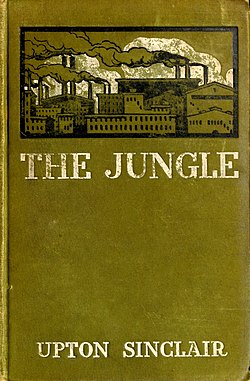
The publication of Upton Sinclair's novel The Jungle exposed unsanitary conditions in the meatpacking industry. Sinclair later quipped, "I aimed at the public's heart and by accident I hit it in the stomach," as an outraged public demanded government action, resulting in the Pure Food and Drug Act and the Federal Meat Inspection Act of 1906.
Image source: The Jungle
1906
As the first federal law regulating foods and drugs, the 1906 Act's reach was limited to foods and drugs moving in interstate commerce, leaving intrastate products outside its authority.
Image source: United States Senate Committee on Commerce, Science, and Transportation

1906
The 1906 statute regulated food and drugs moving in interstate commerce and forbade the manufacture, sale, or transportation of poisonous patent medicines, addressing widespread dangers posed by unregulated remedies.
Image source: Patent medicine

Jun 30, 1906
The Pure Food and Drug Act of 1906 was signed by President Theodore Roosevelt on June 30, 1906, on the same day as the Federal Meat Inspection Act. It was the first of a series of significant consumer protection laws enacted by the United States Congress and a key piece of Progressive Era legislation.
Jun 30, 1906
On the same day that President Theodore Roosevelt signed the Pure Food and Drug Act, he also signed the Federal Meat Inspection Act, responding to public outrage over conditions in the meatpacking industry revealed by investigative journalism.
1906 - 1927
Following passage of the 1906 Act, enforcement fell to the Bureau of Chemistry in the Department of Agriculture. This bureau paved the way for the eventual creation of the Food and Drug Administration (FDA), whose founding date is generally considered to be tied to the act, though the agency existed before the law was passed and was not named FDA until later.
Image source: Food and Drug Administration

This Pure Food and Drug Act timeline was generated with the help of AI, using information found on the internet.
We work hard to keep these timelines accurate, but mistakes do get through. If you spot one, email us at [email protected] and we'll fix it for future visitors.
Generate yours with AI or build it from scratch, for free.

