-
Use Cases
-
Resources
-
Pricing
Funk is a genre of music that emerged in the mid-1960s in the United States, blending soul, jazz, and rhythm and blues into a rhythmic, danceable style characterized by syncopated basslines, prominent drum grooves, and strong accents on the first beat. Pioneered by artists like James Brown, Sly and the Family Stone, and Parliament-Funkadelic, funk became a dominant force in 1970s popular music and profoundly influenced disco, hip-hop, and contemporary pop. More Less
1900
% complete
Around 1900, the word funky took on a sense of "earthy" that was taken up in early jazz slang for something "deeply or strongly felt", laying linguistic groundwork for the later music genre.
1907
% complete
At least as early as 1907, jazz songs carried titles such as Funky, reflecting how musicians used the term to encourage one another to "get down" by saying, "Now, put some stank on it!" during jam sessions.
1964 - 1966
% complete
Funk is a music genre that originated in African-American communities in the mid-1960s, when musicians created a rhythmic, danceable new form of music through a mixture of various genres popular among African-Americans in the mid-20th century.
Image source: Funk
1949
% complete
Dave Bartholomew incorporated Afro-Cuban instruments as well as the clave pattern and related two-celled figures into his song "Carnival Day" in 1949, helping bring complex rhythmic patterns into New Orleans rhythm and blues that would influence funk.
1949
% complete
In 1949, Professor Longhair (Henry Roeland Byrd) recorded "Mardi Gras In New Orleans", incorporating Afro-Cuban instruments, the clave pattern, and related two-celled figures that helped shape the rhythmic foundation of funk.
1956
% complete
Songs such as James Brown's "Please, Please, Please" (1956), along with "Bewildered" and "I Don't Mind" (both 1961), represented his earlier soul style before he pioneered the stripped-down funk sound of the mid-1960s.
1957
% complete
Early examples of rhythmic techniques later central to funk were heard on the Johnny Otis song "Willie and the Hand Jive" in 1957, which featured future James Brown band guitar player Jimmy Nolen.
1957 - 1958
% complete
Following Little Richard's temporary exit from secular music to become an evangelist in 1957, some of his band members joined James Brown and the Famous Flames, beginning a long string of hits for them in 1958.
Image source: James Brown
1964
% complete
"Out of Sight", James Brown's 1964 hit single, launched the shift in his signature music style built around a one-three beat, which continued with his 1965 hits "Papa's Got a Brand New Bag" and "I Got You (I Feel Good)".
Image source: Out of Sight (song)
1965
% complete
After 1965, Alfred "Pee Wee" Ellis served as James Brown's bandleader and arranger, helping shape the tight horn arrangements and rhythmic innovations that defined Brown's seminal funk sound.
1965
% complete
In 1965, James Brown released "Papa's Got a Brand New Bag" and "I Got You (I Feel Good)", hits built on his innovative emphasis on the downbeat rather than the upbeat, cementing the core rhythmic approach of funk.
Image source: Papa's Got a Brand New Bag
1967
% complete
James Brown's "Cold Sweat" (1967), along with later releases such as "Mother Popcorn" (1969) and "Get Up (I Feel Like Being A) Sex Machine" (1970), pushed funk further to the forefront while discarding even the twelve-bar blues featured in his earlier music, making Brown and his band the seminal funk act.
1967
% complete
Dyke and the Blazers, based in Phoenix, Arizona, released "Funky Broadway" in 1967 — perhaps the first record of the soul music era to have the word "funky" in the title.
1967 - 1971
% complete
On the West Coast, Charles Wright & the Watts 103rd Street Rhythm Band began releasing funk tracks with its first album in 1967, culminating in the classic single "Express Yourself" in 1971.
Image source: Charles Wright & the Watts 103rd Street Rhythm Band
1968
% complete
Tower of Power (TOP) formed in 1968 in Oakland, California. The West Coast horn-driven band would become one of funk's most enduring acts, known for its powerful horn section and tight grooves.
Image source: Tower of Power
1969
% complete
On James Brown's "Give It Up or Turnit a Loose" (1969), guitarist Jimmy Nolen played a part with a bare bones tonal structure, exemplifying the stripped-down, rhythm-first approach of funk guitar.
Image source: Give It Up or Turnit a Loose
1969
% complete
In 1969, organist Jimmy McGriff released Electric Funk, featuring his distinctive organ playing over a blazing horn section, contributing a jazz-funk dimension to the genre.
Image source: Jimmy McGriff
1969
% complete
The Isley Brothers' funky 1969 #1 R&B hit "It's Your Thing" signaled a breakthrough in African-American music, bridging the jazzy sounds of Brown, the psychedelic rock of Jimi Hendrix, and the upbeat soul of Sly & the Family Stone and Mother's Finest.
Image source: It's Your Thing
1969
% complete
The Meters defined funk in New Orleans starting with their top ten R&B hits "Sophisticated Cissy" and "Cissy Strut" in 1969, establishing a distinctive Gulf Coast funk tradition.
Image source: The Meters
1970
% complete
In 1970, Sly & the Family Stone's "Thank You (Falettinme Be Mice Elf Agin)" reached #1 on the charts, as did their song "Family Affair" in 1971, bringing funk to mainstream audiences.
Image source: Thank You (Falettinme Be Mice Elf Agin)
1970
% complete
With releases such as "Get Up (I Feel Like Being A) Sex Machine" (1970), James Brown and his band pushed funk further to the forefront, fully abandoning twelve-bar blues structures and establishing him as the genre's seminal figure.
Image source: Get Up (I Feel Like Being a) Sex Machine
1970
% complete
Tower of Power's debut album East Bay Grease, released in 1970, is considered a milestone in funk, showcasing the Oakland band's powerful horn section and gritty soul-funk sound.
Image source: East Bay Grease
1974
% complete
According to Rickey Vincent, Labelle's "Lady Marmalade" "blew the lid off of the standards of sexual innuendo and skyrocketed the group's star status," though the band's glittery image slipped into the disco undertow before they broke up in search of solo status.
Image source: Patti LaBelle
1975
% complete
The Isley Brothers' song "Fight the Power" (1975) carried a political message, reflecting funk's growing role as a vehicle for social commentary during the post-civil rights era.
Image source: Fight the Power (Part 1 & 2)
1975
% complete
Parliament's "Chocolate City" (1975) metaphorically referred to Washington, D.C., and other US cities with mainly Black populations, drawing attention to the potential power of Black voters and suggesting a Black President be considered in the future.
1976
% complete
In 1976, Rose Royce scored a number-one hit with "Car Wash", a purely dance-funk record that exemplified funk's crossover into mainstream popular music.
Image source: Car Wash (song)
1978
% complete
Funkadelic's "One Nation Under A Groove" (1978) addressed the challenges that Blacks overcame during the 1960s civil rights movement and exhorted Blacks in the 1970s to capitalize on the new "social and political opportunities" available at the time.
Image source: One Nation Under a Groove
1981
% complete
Rick James' 1981 album Street Songs, with the singles "Give It to Me Baby" and "Super Freak", made James a star and paved the way for the future direction of explicitness in funk.
Image source: Street Songs
1982 - 1983
% complete
Influenced by Kraftwerk and Yellow Magic Orchestra, American hip-hop DJ Afrika Bambaataa developed electro-funk, a minimalist machine-driven style of funk, with his single "Planet Rock" in 1982; the single "Renegades of Funk" followed in 1983.
Image source: Planet Rock (song)
1990
% complete
By 1990, several Cuban bands had incorporated elements of funk and hip-hop into their arrangements, expanding upon the instrumentation of the traditional conjunto with an American drum set, saxophones, and a two-keyboard format.
1996 - 1998
% complete
Phish began playing funkier jams in their sets around 1996, and their 1998 album The Story of the Ghost was heavily influenced by funk, bringing the genre into the jam band scene.
Image source: The Story of the Ghost
1996
% complete
A very strong funk album from Digital Underground was their 1996 release Future Rhythm, demonstrating the group's fusion of funk with hip-hop well into the decade.
Image source: Digital Underground
2005
% complete
Although specializing in music for rare funk DJs, the retro-soul revival saw some crossover into the mainstream music industry, such as Sharon Jones' 2005 appearance on Late Night with Conan O'Brien.
Image source: Sharon Jones & the Dap-Kings
2010
% complete
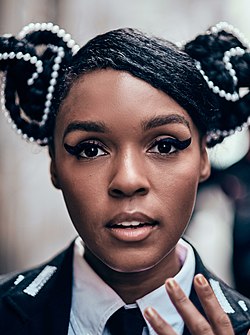
In the 21st century, artists like Janelle Monáe have opened the doors for more scholarship and analysis on the female impact on the funk music genre, continuing the legacy begun by pioneering groups like Labelle and the Pointer Sisters.
Image source: Janelle Monáe
Or browse the full history timeline directory, with more than 2,000 topics.
This History of Funk timeline was generated with the help of AI, using information found on the internet.
We work hard to keep these timelines accurate, but mistakes do get through. If you spot one, email us at [email protected] and we'll fix it for future visitors.
Generate yours with AI or build it from scratch, for free.
Export your timeline, add your own events, edit or remove AI-generated events, and much more
No credit card required.
Cancel anytime.
Cancel anytime.
You can create an unlimited number of timelines with up to 10 events on each one, customize how they look, export them to PDF, PNG, PowerPoint, CSV, and Excel, and share them with a link. Paid plans raise the event limit and add features like spreadsheet imports and collaborators.
Yes. You can cancel your subscription from your account page at any time, and you will not be charged again. Your subscription stays active for the rest of the period you already paid for.
Yes. We will email you a reminder before the annual renewal, and we will also email you a receipt.
Yes. You can email us within 15 days of any payment, and we will issue you a full refund.
Check out our pricing docs or send us an email anytime: [email protected].