-
Use Cases
-
Resources
-
Pricing
Kabul, the capital and largest city of Afghanistan, has a rich history spanning over 3,500 years. Strategically located along the Kabul River on the ancient Silk Road, it has served as a crossroads of cultures between Central Asia, the Indian subcontinent, and Persia. The city was mentioned in the Avesta and later ruled by various empires including the Kushans, Hindu Shahis, Ghaznavids, Timurids, Mughals, and Durrani Empire. In 1776, Timur Shah Durrani made Kabul the capital of Afghanistan. Throughout the 20th century, Kabul modernized rapidly but suffered greatly during decades of war, Soviet occupation, civil conflict, and Taliban rule. More Less
550 BC
% complete
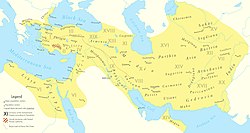
Under Cyrus the Great and his successors, the Achaemenid Empire absorbed the Kabul valley as part of its satrapy of Arachosia, integrating the region into one of the largest empires of the ancient world.
Image source: Achaemenid Empire
330 BC
% complete
After defeating Darius III, Alexander the Great took control of the Kabul valley around 330 BC during his campaign through Bactria and the Hindu Kush. Hellenistic influence spread through the region following his conquest.
Image source: Alexander the Great
450 AD
% complete
In the mid-5th century, the Hephthalites (White Huns) swept into the region, destroying Buddhist sites and weakening the urban centers around Kabul, contributing to the decline of Kushan-era civilization.
Image source: Hephthalites
665 AD - 870 AD
% complete
The Turkic Shahi dynasty established its capital at Kabul around 665 AD, ruling for two centuries over eastern Afghanistan and parts of northern India before being displaced by the Hindu Shahis who moved their center to Kabul's surroundings.
870 AD
% complete
The Saffarid ruler Ya'qub ibn al-Layth captured Kabul in 870 AD, ending the rule of the Kabul Shahi dynasty there and bringing the city under Islamic governance, beginning the gradual Islamization of the region.
Image source: Ya'qub ibn al-Layth al-Saffar
1000 AD - 1026 AD
% complete
Under Ghaznavid control, Kabul became an important outpost of the empire based at nearby Ghazni. Mahmud launched numerous raids into India from this base, spreading Ghaznavid power across the subcontinent.
Image source: Mahmud of Ghazni
1221 AD
% complete
During the Mongol pursuit of Jalal ad-Din Mingburnu, Genghis Khan's forces ravaged the settlements around Kabul, causing widespread destruction that left the city diminished for generations.
Image source: Mongol invasion of the Khwarazmian Empire
1380 AD
% complete
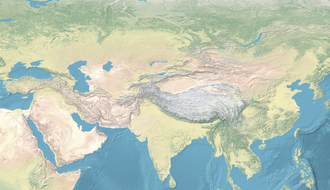
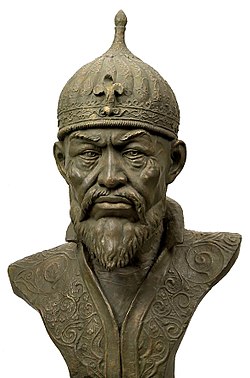
Timur (Tamerlane) brought Kabul under Timurid control in the late 14th century. The city later prospered under his descendants, becoming a cultural center of Persianate art and architecture.
Image source: Timur
1504 AD
% complete
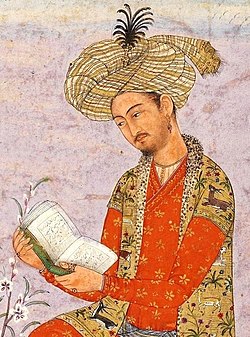
Babur, founder of the Mughal Empire, seized Kabul in 1504 and made it his capital for over two decades. He loved the city deeply, writing fondly of its gardens in his memoirs, the Baburnama, before using it as a springboard to conquer India in 1526.
Image source: Babur
1526 AD - 1738 AD
% complete
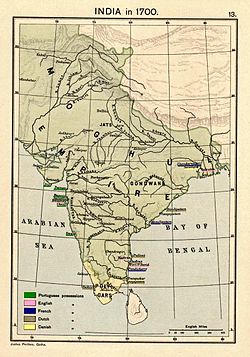
Following Babur's conquest of India, Kabul remained a vital Mughal province guarding the routes to India. It thrived as a commercial and military center connecting Hindustan with Central Asia for over two centuries.
Image source: Mughal Empire
Jun 1738
% complete
Persian ruler Nadir Shah besieged and captured Kabul in 1738, ending Mughal control of the city. He then marched on Delhi, stripping the Mughal treasury and briefly uniting Afghanistan and Persia under his rule.
Image source: Nader Shah
1747 AD
% complete
After Nadir Shah's assassination, Ahmad Shah Durrani was chosen as king by tribal leaders at Kandahar in 1747, founding the Durrani Empire. Kabul came under Afghan rule and grew in importance within the new state.
Image source: Ahmad Shah Durrani
1776 AD
% complete
Timur Shah Durrani transferred the Afghan capital from Kandahar to Kabul in 1776, cementing Kabul's status as the political heart of Afghanistan, a role it has retained ever since.
Image source: Timur Shah Durrani
1839 AD - 1842 AD
% complete
British forces invaded Afghanistan and occupied Kabul in 1839, installing Shah Shuja as ruler. The occupation provoked fierce resistance, culminating in the catastrophic British retreat from Kabul in January 1842, when an entire army column was annihilated in the mountain passes.
Image source: First Anglo-Afghan War
1843 AD
% complete
After the British withdrawal, Dost Mohammad Khan returned to power in Kabul and spent the following decades consolidating Afghan territory, reestablishing Barakzai rule over a reunified kingdom.
Image source: Dost Mohammad Khan
Nov 1879 - Aug 1880
% complete
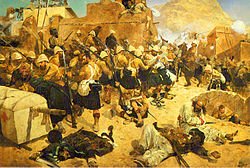
British troops occupied Kabul after the Treaty of Gandamak. Following an uprising in which British envoy Louis Cavagnari was killed, General Frederick Roberts stormed the city in October 1879. Britain withdrew in 1880 after Abdur Rahman Khan accepted limited foreign control of Afghan policy.
Image source: Second Anglo-Afghan War
1880 AD - 1901 AD
% complete
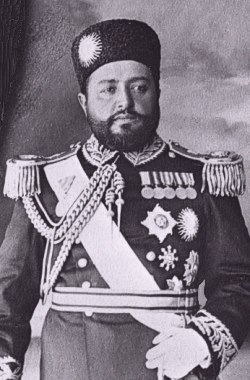
Known as the 'Iron Amir,' Abdur Rahman Khan ruled from Kabul for two decades, centralizing state authority, creating a standing army, and establishing the boundaries of modern Afghanistan while suppressing internal rebellions.
Image source: Abdur Rahman Khan
1901 AD - 1919 AD
% complete
Habibullah Khan opened modern schools including Habibia College, introduced electricity and the first automobile to Kabul, and pursued cautious modernization while maintaining Afghan neutrality in World War I.
Image source: Habibullah Khan
1919 AD - 1929 AD
% complete
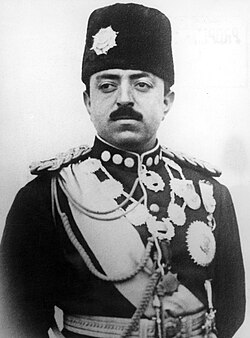
Amanullah pushed rapid reforms from Kabul: constitutional government, girls' education, coeducational schools, and Western dress codes. Conservative backlash led to his overthrow by Habibullah Kalakani in 1929.
Image source: Amanullah Khan
May 1919 - Aug 1919
% complete
King Amanullah Khan launched a short war against Britain, which ended with the Treaty of Rawalpindi recognizing Afghanistan's complete independence. Kabul celebrated as the nation gained full sovereignty over its foreign affairs.
Image source: Third Anglo-Afghan War
1929 AD - 1933 AD
% complete
Mohammad Nadir Shah defeated Kalakani and took Kabul in 1929, restoring stability but slowing reform. His assassination in 1933 brought his son Mohammad Zahir Shah to the throne.
Image source: Mohammad Nadir Shah
1933 AD - 1973 AD
% complete
During Zahir Shah's forty-year reign, Kabul blossomed into a modern, cosmopolitan city known as the 'Paris of Central Asia,' with universities, cinemas, cafes, and growing freedoms, especially in the 1960s decade of democracy.
Image source: Mohammad Zahir Shah
Jul 17, 1973
% complete
While Zahir Shah was abroad, Mohammed Daoud Khan staged a bloodless coup in Kabul, abolishing the monarchy and declaring Afghanistan a republic, ending more than two centuries of dynastic rule.
Image source: 1973 Afghan coup d'état
Apr 28, 1978
% complete
The People's Democratic Party of Afghanistan overthrew Daoud Khan in a coup, establishing a communist regime in Kabul. Sweeping social reforms and Soviet ties sparked widespread resistance across the countryside.
Image source: Saur Revolution
Dec 24, 1979 - Feb 15, 1989
% complete
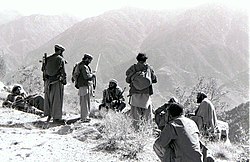
Soviet troops invaded Afghanistan to prop up the communist government in Kabul. A decade of brutal war followed, devastating the city's outskirts and countryside while mujahideen fighters, backed by the US and others, resisted the occupation.
Image source: Soviet–Afghan War
1992 AD - 1996 AD
% complete
After the communist government fell, rival mujahideen factions fought vicious street battles for Kabul. Tens of thousands of civilians died and large parts of the city were destroyed, making this one of Kabul's most destructive periods.
Image source: Afghan Civil War (1992–1996)
Sep 27, 1996
% complete
The Taliban seized Kabul in September 1996, imposing strict Islamic law, banning women from work and education, and enforcing harsh punishments. They ruled until ousted by the US-led coalition in 2001.
Image source: Taliban
Oct 7, 2001 - Dec 2001
% complete
Following the September 11 attacks, US and Northern Alliance forces drove the Taliban from Kabul by November 2001. An international-backed reconstruction effort began, and Hamid Karzai became leader of the new Afghan government.
Image source: War in Afghanistan (2001–2021)
Jan 2002 - 2004 AD
% complete
With international support, Afghanistan adopted a new constitution and held elections, formally establishing the Islamic Republic with its seat of government in Kabul. Reconstruction brought new buildings, roads, and institutions to the battered city.
Image source: Islamic Republic of Afghanistan
2006 AD - 2014 AD
% complete
The resurgent Taliban waged a growing insurgency, launching high-profile attacks in Kabul itself, including bombings of embassies, hotels, and government targets, while NATO forces struggled to stabilize the country.
Image source: Taliban insurgency
Sep 2014
% complete
Ashraf Ghani won a disputed presidential election brokered by a US-mediated unity government with Abdullah Abdullah. His inauguration in Kabul marked Afghanistan's first democratic transfer of power.
Image source: 2014 Afghan presidential election
Feb 29, 2020
% complete
The United States signed an agreement with the Taliban in Doha setting a timeline for troop withdrawal in exchange for Taliban security commitments. The deal excluded the Kabul government and set the stage for the Taliban's return.
Image source: United States–Taliban deal
Aug 15, 2021
% complete
As US forces withdrew, the Taliban advanced rapidly and entered Kabul without resistance. President Ashraf Ghani fled, chaotic scenes unfolded at Hamid Karzai International Airport, and the Taliban declared the reestablishment of the Islamic Emirate of Afghanistan.
Image source: Fall of Kabul (2021)
Or browse the full history timeline directory, with more than 2,000 topics.
This History of Kabul timeline was generated with the help of AI, using information found on the internet.
We work hard to keep these timelines accurate, but mistakes do get through. If you spot one, email us at [email protected] and we'll fix it for future visitors.
Generate yours with AI or build it from scratch, for free.
Export your timeline, add your own events, edit or remove AI-generated events, and much more
No credit card required.
Cancel anytime.
Cancel anytime.
You can create an unlimited number of timelines with up to 10 events on each one, customize how they look, export them to PDF, PNG, PowerPoint, CSV, and Excel, and share them with a link. Paid plans raise the event limit and add features like spreadsheet imports and collaborators.
Yes. You can cancel your subscription from your account page at any time, and you will not be charged again. Your subscription stays active for the rest of the period you already paid for.
Yes. We will email you a reminder before the annual renewal, and we will also email you a receipt.
Yes. You can email us within 15 days of any payment, and we will issue you a full refund.
Check out our pricing docs or send us an email anytime: [email protected].