-
Resources
-
Pricing
The history of lace traces the evolution of intricate openwork textiles from Renaissance Europe to today’s fashion, art, and craft traditions. More Less
Build a timeline like this one in minutes, for free. Start Yours →
1457
In 1457, Giovanna Malipiero Dandolo supported a law protecting lacemakers. Her intervention demonstrates that lace production and the interests of its makers had already acquired public importance in Venice.
1476
A 1476 law seriously affected the lace trade by disallowing silver and embroidery on fabric, as well as needle-made Punto in Aria using linen or precious-metal threads. The restriction illustrates how regulation and sumptuary concerns shaped lace production.
1533
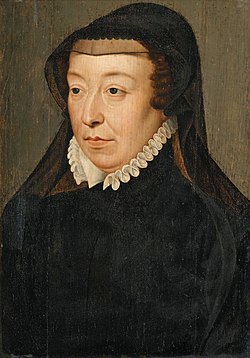
When Catherine de Medici married King Henry II in 1533, she brought Venetian lacemakers to France. Their arrival helped transfer Italian lacemaking expertise to the French court and textile industry.
Image source: Catherine de' Medici
1554
A 1554 reference describes Sir Thomas Wyatt wearing a ruff trimmed with bone lace. The term may relate to the fact that some lace bobbins of the period were made from bone.
1595
In 1595, Morosina Morosini, the wife of a doge, founded a lace workshop for 130 women. The workshop reflects both elite Venetian patronage and the organized employment of women in lace manufacture.
1600 - 1699
The court of King Louis XIV was known for extravagance during the 17th century. Lace became an important component of this display, appearing in fashionable garments and court dress.
Image source: Louis XIV
1627
Frans Hals painted a portrait of Nicolaes Hasselaer about 1627. The portrait is an example of the prominence of lace in 17th-century clothing and painted representations of status.
1650 - 1699
Later in the 17th century, lace was very popular. Its widespread use reflected its importance in fashionable clothing and the continuing influence of European courts.
1669 - 1670
An anonymous female artisan is shown making bobbin lace in The Lacemaker by the Dutch artist Johannes Vermeer. Completed around 1669–1670, the painting records lacework as a focused domestic craft.
1669
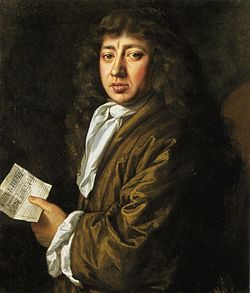
On May 10, 1669, Samuel Pepys noted that he intended to remove the gold lace from his coat sleeves because it was fitting that he should do so. He may have been trying to avoid charges of ostentatious living.
Image source: Samuel Pepys
1685
Following the revocation of the Edict of Nantes in 1685, many Huguenot lacemakers left France for Hamburg and Berlin. Their migration helped carry French skills and traditions into other European production centers.
Image source: Lace
1485
A Flemish claim points to lace visible on the alb of a worshiping priest in a painting made about 1485 by Hans Memling. The image is among the early visual references used in discussions of lace's origins.
1493
An Italian claim for the early history of lace is supported by a 1493 will belonging to the Milanese Sforza family. The document is cited as evidence that fine lace was already present in elite Italian households.
1493
A 1493 inventory of Beatrice d'Este, Duchess of Milan, lists fine laces. It is an important piece of documentation for the presence and value of lace in Italy during the 15th century.
1500
The origin of lace remains unclear, but the earliest known examples date from 16th-century Italy. These early textiles established Italy as one of the principal centers associated with the emergence of European lace.
1500 - 1599
Lace came into widespread use during the 16th century in the northwestern part of the European continent. Its adoption connected Italian techniques with developing regional traditions in the Low Countries, France, England, and German-speaking lands.
1500 - 1550
The prevailing opinion is that Bona Sforza, the Italian-born queen of Poland, helped introduce Italian lacemaking to Poland during the first half of the 16th century. Her influence linked Polish court culture with Italian textile traditions.
1527
The earliest known lace pattern book was printed in Cologne in 1527. Pattern books helped preserve designs and spread practical knowledge among lacemakers.
1561
In 1561, a lace-making workshop was started in Annaberg. The foundation of the workshop contributed to the growth of lace production in the German region.
1575 - 1599
The late 16th century marked a period of rapid development in lace. Designs, techniques, and production expanded as lace became increasingly important in clothing and elite display.
1575
By the death of the workshop's founder in 1575, more than 30,000 lacemakers were reportedly active in the surrounding area of Germany. The figure indicates the scale that regional lace production could attain.
1599
Belgian lacemakers were encouraged to settle in Honiton, Devon, at the end of the 16th century. Their presence contributed to the development of Honiton as an English lace-making center.
1634
Because of sumptuary laws, including one enacted in Massachusetts in 1634, American citizens were not allowed to own or make lace textiles. Such restrictions limited lace's production and consumption in colonial America.
Image source: Sumptuary law
1780
The decline of the lace industry in England began about 1780, paralleling developments elsewhere. Changing industrial and economic conditions weakened older centers of lace production.
1789
George Washington reportedly purchased Ipswich lace while traveling through the region in 1789. The account connects the local product with prominent early American consumers.
1790
By 1790, women in Ipswich, many of them from the British Midlands, were making 42,000 yards of silk bobbin lace for trimmings. The output demonstrates the scale of the regional American lace trade.
1800 - 1899
During the 19th century, lacemaking increasingly moved into rural communities. It became part of folk costumes, especially mobcaps and dresses, as well as a source of decorative objects for homes.
1800 - 1899
Lace was still in demand throughout the 19th century. Despite industrial changes and the decline of some traditional centers, it continued to serve fashion, ceremonial, and decorative purposes.
1800 - 1899
During the 19th century, missionaries spread knowledge of lacemaking to Native American tribes in North America. The craft was thereby introduced into new communities and cultural settings.
1818
The first lacemaking factory opened in Medway, Massachusetts, in 1818. Its establishment marked a move toward factory-based production in the United States.
1824
Ipswich had its own lacemaking factory by 1824. The development reinforced the town's position as an American center of lace production.
1840
Britain's Queen Victoria was married in lace in 1840. Her choice strongly influenced wedding dress styles, helping establish lace as a lasting feature of bridal fashion.
1890
In 1890, Sibyl Carter, an Episcopalian missionary, began teaching lacemaking to Ojibwa women in Minnesota. Her work formed part of the broader missionary transmission of lace-making skills.
1900 - 1999
By the turn of the 20th century, Home Needlework and other magazines included lace patterns of many types. Print media helped circulate instructions and designs to a broad audience of home needleworkers.
1982
The 1982 novel Lace used the fabric as inspiration for its title. The novel has also been studied as part of historical analysis of the use and meanings of the word.
2022
Textilmuseum St. Gallen in Switzerland presented an exhibit that traveled to the Bard Graduate Center in 2022 for a major New York installation titled Threads of Power. The exhibition demonstrated the continuing cultural and scholarly interest in lace and related textile traditions.
Build a timeline like this one in minutes, for free. Start Yours →
Or browse the full history timeline directory, with more than 2,500 topics.
This History of Lace timeline was generated with the help of AI, using information found on the internet.
We work hard to keep these timelines accurate, but mistakes do get through. If you spot one, email us at [email protected] and we'll fix it for future visitors.
Generate yours with AI or build it from scratch, for free.
Export your timeline, add your own events, edit or remove AI-generated events, and much more
No credit card required.
15-day money-back guarantee.
You can create an unlimited number of timelines with up to 10 events on each one, customize how they look, export them to PDF, PNG, PowerPoint, CSV, and Excel, and share them with a link. Timelines made with Timeline Maker AI keep every event the generator created, and you can add up to 5 events of your own. Paid plans remove the event limit, add spreadsheet imports and hide Preceden's branding, and the higher-priced plan also adds collaborators, a custom logo and a custom domain.
Yes. You can cancel your subscription from your account page at any time, and you will not be charged again. Your subscription stays active for the rest of the period you already paid for.
Yes. We email you a reminder 15 days before your annual renewal, and we email you a receipt after every payment.
Yes. You can email us within 15 days of any payment, and we will issue you a full refund.
Check out our pricing docs or send us an email anytime: [email protected].