
-
Resources
-
Pricing
The history of loudspeakers traces the development of devices that convert electrical signals into audible sound, from early electromagnetic designs to today’s advanced digital, wireless, and smart audio systems. More Less
Build a timeline like this one in minutes, for free. Start Yours →
1900
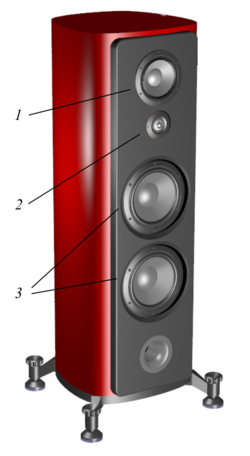
Loudspeakers were invented in the early 20th century, establishing the technology that would later be used for public address, entertainment, religious broadcasting, and many other applications.
Image source: Loudspeaker
1930
During the 1930s, loudspeakers were introduced in mosques. They enabled the muezzin's adhan, or call to prayer, to reach larger surrounding areas and were sometimes also used for the khutbah.
1930
Mosque loudspeakers began amplifying the adhan, allowing the muezzin's call to prayer to be heard beyond the mosque itself.
Image source: Adhan
1930
In addition to the adhan, mosque loudspeakers were sometimes used to amplify the khutbah, the sermon associated with Islamic worship.
Image source: Khutbah
1936
After the 1936 installation at Singapore's Sultan Mosque, the amplified summons to prayer was reported to carry more than a mile.
Image source: Sultan Mosque
1936
The first known installation of a microphone–loudspeaker set occurred at the Sultan Mosque in Singapore.
1936
The Sultan Mosque installation demonstrated the extended reach of mosque amplification, with reports stating that the summons to prayer could carry more than a mile.
1999
In 1999, political leaders in India debated a proposed blanket ban on loudspeakers atop mosques.
1999
During India's 1999 debate, some political leaders alleged that loudspeakers had been used to create communal tension.
Nov 10, 1999
Some Indian political leaders alleged that loudspeakers had been used to incite a riot in Nandurbar, Maharashtra, on November 10, 1999.
2007
On the island of Mauritius, where Muslims make up just over 18 percent of the population, excessive amplification became a significant public issue.
Image source: Mauritius
Mar 2007
A March 2007 court ruling addressed the use of loudspeakers and amplification outside the Hidayat-E-Islam mosque in Quatre-Bornes, Mauritius.
Image source: Noise pollution
Mar 2007
The Mauritius ruling found the external mosque amplification to be a breach of the Noise Prevention Regulations of 1939 and 1955.
Mar 2007
Judge Paul Lam Shang Leen ruled that using loudspeakers and amplification outside the Hidayat-E-Islam mosque in a residential area of Quatre-Bornes for the Azaan was unlawful.
Image source: 1999 L'Amicale riots
Mar 2007
Following a court ruling in March 2007, the excessive use of amplification in Mauritius was described as a threat to national security.
Aug 2018
The woman who complained about the mosque loudspeakers was eventually given an 18-month prison sentence for blasphemy.
Image source: Blasphemy law
Aug 2018
In August 2018, a woman who complained about the volume of her local mosque's speakers became the focus of a severe religious and legal controversy.
Aug 2018
Following news of the complaint against the loudspeakers, mobs burned 14 Buddhist temples, intensifying the controversy surrounding the case.
Image source: 2018 anti-Muslim riots in Sri Lanka
2000
Modern mosque loudspeakers can generate noise pollution, making the volume and external reach of religious broadcasts a recurring public and regulatory issue.
May 2021
In late May 2021, Saudi Arabia's Ministry of Islamic Affairs issued a directive restricting mosque loudspeaker volume to one third of the maximum.
Image source: Ministry of Islamic Affairs, Dawah and Guidance
May 2021
Saudi Arabia's one-third-volume directive addressed concerns that modern mosque loudspeakers could contribute to noise pollution.
Mar 2022
In March 2022, the Ministry issued even stricter guidelines concerning mosque loudspeaker use.
Mar 2022
The March 2022 guidelines restricted mosque loudspeaker sound levels to 100 decibels.
Image source: Decibel
Mar 2022
The March 2022 guidelines specified a sound-level limit but made no mention of the distance from the source at which sound output should be measured.
Mar 2022
The March 2022 rules limited any sermon before the call to prayer to 10 minutes, reducing the previous limit of 15 minutes.
Mar 2022
The stricter March 2022 guidance reduced the permitted duration of pre-call sermons from the earlier 15-minute limit to 10 minutes.
Jul 2024
In July 2024, a royal command in Malaysia directed that the adhan be the only service broadcast through external loudspeakers.
Jul 2024
The Malaysian command restricted Quran recitations, prayers, and religious lectures to the mosque premises' internal loudspeakers.
2004
The Al-Islah Mosque's request to broadcast the adhan attracted national attention in the United States.
Image source: Al-Islah Mosque
2004
In 2004, the Al-Islah Mosque in Hamtramck, Michigan, requested permission to broadcast its call to prayer.
May 5, 2020
On May 5, 2020, Waltham Forest council in London gave eight mosques permission to publicly broadcast the call to prayer during Ramadan.
Image source: London Borough of Waltham Forest
May 5, 2020
The Waltham Forest decision covered eight mosques and allowed their public adhan broadcasts during Ramadan.
May 14, 2020
Newham Council's decision applied to nineteen mosques in the borough.
Image source: London Borough of Newham
May 14, 2020
On May 14, 2020, Newham Council granted permission for mosques within the London borough to publicly broadcast the call to prayer during Ramadan.
May 31, 2020
On May 31, 2020, Maidenhead Mosque received permission from Maidenhead council to publicly broadcast its call to prayer on a one-off occasion.
Image source: Loudspeakers in mosques
Build a timeline like this one in minutes, for free. Start Yours →
Or browse the full history timeline directory, with more than 2,500 topics.
This History of Loudspeakers timeline was generated with the help of AI, using information found on the internet.
We work hard to keep these timelines accurate, but mistakes do get through. If you spot one, email us at [email protected] and we'll fix it for future visitors.
Generate yours with AI or build it from scratch, for free.
Export your timeline, add your own events, edit or remove AI-generated events, and much more
No credit card required.
15-day money-back guarantee.
You can create an unlimited number of timelines with up to 10 events on each one, customize how they look, export them to PDF, PNG, PowerPoint, CSV, and Excel, and share them with a link. Timelines made with Timeline Maker AI keep every event the generator created, and you can add up to 5 events of your own. Paid plans remove the event limit, add spreadsheet imports and hide Preceden's branding, and the higher-priced plan also adds collaborators, a custom logo and a custom domain.
Yes. You can cancel your subscription from your account page at any time, and you will not be charged again. Your subscription stays active for the rest of the period you already paid for.
Yes. We email you a reminder 15 days before your annual renewal, and we email you a receipt after every payment.
Yes. You can email us within 15 days of any payment, and we will issue you a full refund.
Check out our pricing docs or send us an email anytime: [email protected].