
-
Resources
-
Pricing
This timeline traces projector development from early optical demonstrations and magic lanterns to film, LCD, DLP, laser, and digital projection systems. More Less
Build a timeline like this one in minutes, for free. Start Yours →
840 CE
Shadow puppetry developed into refined forms across Asia, with records relating to Wayang in Indonesia dating to 840 CE and long traditions in Malaysia, Thailand, Cambodia, China, India, and Nepal.
Image source: Shadow play
1000 - 1025
The Arab physicist Ibn al-Haytham described experiments in which light passed through a small opening into a darkened room. He recognized that a smaller hole produced a sharper projected image.
Image source: Ibn al-Haytham
1275
The earliest known description of projection using concave mirrors has been traced to Jean de Meun’s section of Roman de la Rose, written around 1275.
Image source: Roman de la Rose
1584
Jean Prevost described an early variation of a revolving lantern in La Premiere partie des subtiles et plaisantes inventions, published in 1584.
1608
Around 1608, Mathurin Régnier mentioned a similar device in Satire XI, describing it as something a pâtissier used to amuse children.
Image source: Mathurin Régnier
1632 - 1704
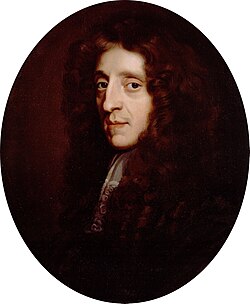
John Locke compared the formation of ideas in the human mind to images inside a lantern turned by candle heat, showing that revolving image devices had entered philosophical and popular awareness.
Image source: John Locke
1420
Around 1420, Giovanni Fontana included a drawing of a person holding a lantern that projects an image of a demon in Bellicorum Instrumentorum Liber.
Image source: Giovanni Fontana (engineer)
1430
The Hockney–Falco thesis argues that artists may have used concave mirrors or refractive lenses to project images onto canvases or boards as drawing and painting aids as early as about 1430.
Image source: Hockney–Falco thesis
1437
Leon Battista Alberti is thought to have possibly projected painted pictures from a small closed box with a hole. The device may instead have been a show box containing transparent images illuminated from behind.
Image source: Leon Battista Alberti
1515
A small sketch from around 1515 has been interpreted as evidence that Leonardo da Vinci conceived or possessed a projecting lantern using a condensing lens, candle, and chimney.
Image source: Leonardo da Vinci
1531 - 1533
In Three Books of Occult Philosophy, Heinrich Cornelius Agrippa claimed that artificially painted images or written letters could be projected onto the Moon using moonbeams and their supposed aerial resemblances.
Image source: Heinrich Cornelius Agrippa
1589
Giambattista della Porta wrote about the ancient art of projecting mirror writing in the 1589 edition of Magia Naturalis.
Image source: Giambattista della Porta
1608
In a 1608 letter, Cornelis Drebbel described marvelous transformations and apparitions produced through his new optical invention.
1612
Benedetto Castelli wrote to Galileo Galilei about projecting images of the Sun through a telescope to study sunspots discovered after the telescope’s invention.
Image source: Benedetto Castelli
1612 - 1630
From 1612 through at least 1630, Christoph Scheiner continued studying sunspots and constructed increasingly sophisticated systems for projecting solar images through telescopes.
Image source: Christoph Scheiner
1635
It has been suggested that Rembrandt’s 1635 painting Belshazzar’s Feast depicts a steganographic mirror projecting Hebrew writing onto a dusty surface, though the interpretation remains uncertain.
Image source: Belshazzar's Feast (Rembrandt)
1645
The first edition of Athanasius Kircher’s Ars Magna Lucis et Umbrae described the steganographic mirror, a primitive projection system using sunlight, a concave mirror, and a focusing lens for long-distance communication.
Image source: Athanasius Kircher
1654
André Tacquet used Kircher’s projection technique to show the journey from China to Belgium made by the Italian Jesuit missionary Martino Martini.
Image source: André Tacquet
1659
By 1659, Christiaan Huygens had developed a magic lantern that used a concave mirror, lamp, painted glass image, and focusing lenses to project pictures onto a wall or screen.
Image source: Magic lantern
1671
In the 1671 edition of Ars Magna Lucis et Umbrae, Kircher credited Danish mathematician Thomas Rasmussen Walgensten with the magic lantern, which Kircher regarded as a development of his own projection system.
1700 - 1899
The magic lantern became a popular medium for entertainment and education during the eighteenth and nineteenth centuries, projecting painted glass slides for audiences.
1736
A few years before his death in 1736, Daniel Gabriel Fahrenheit reportedly constructed a solar microscope combining a compound microscope with camera obscura projection.
Image source: Daniel Gabriel Fahrenheit
1756
Leonhard Euler demonstrated an opaque projector around 1756. This type of device, later commonly called an episcope, projected light reflected from opaque objects.
1774
English instrument maker Benjamin Martin introduced the Opake Solar Microscope in 1774 for enlarged projection of opaque objects.
Image source: Projector
1780
French scientist Jacques Charles is thought to have invented a similar megascope around 1780 and used it in lectures.
Jun 1802
Humphry Davy published An Account of a Method of Copying Paintings upon Glass, and of Making Profiles by the Agency of Light upon Nitrate of Silver in June 1802. The work reported early deliberate photographic experiments involving light-sensitive materials.
Image source: Darwin–Wedgwood family
1850 - 1899
In the mid-to-late nineteenth century, solar opaque projectors were used mainly by portrait photographers and artists to enlarge photographic negatives, using sunlight to expose low-sensitivity materials.
Image source: Enlarger
1872
Around 1872, Henry Morton used an opaque projector for demonstrations before huge audiences, including audiences at Philadelphia’s 3,500-seat Opera House.
Image source: Opaque projector
1900 - 1939
During the early and middle parts of the twentieth century, inexpensive opaque projectors were produced and marketed as toys for children.
1940
The United States military became the first organization to use opaque projectors in quantity for training in 1940.
1990 - 1997
Commercial digital cameras appeared by 1990, and Microsoft PowerPoint gained image-file support in 1997. These developments accelerated the transition from 35 mm slides to digital images and digital projectors in education and training.
Image source: Video projector
2004
Production of all Kodak Carousel slide projectors ceased in 2004, marking the decline of a major format in slide-based presentation technology.
Image source: Carousel slide projector
2009
Manufacture and processing of Kodachrome film ended in 2009, completing a major stage in the shift away from photographic slide projection toward digital presentation.
Image source: Kodachrome
Build a timeline like this one in minutes, for free. Start Yours →
Or browse the full history timeline directory, with more than 2,500 topics.
This History of Projectors timeline was generated with the help of AI, using information found on the internet.
We work hard to keep these timelines accurate, but mistakes do get through. If you spot one, email us at [email protected] and we'll fix it for future visitors.
Generate yours with AI or build it from scratch, for free.
Export your timeline, add your own events, edit or remove AI-generated events, and much more
No credit card required.
15-day money-back guarantee.
You can create an unlimited number of timelines with up to 10 events on each one, customize how they look, export them to PDF, PNG, PowerPoint, CSV, and Excel, and share them with a link. Timelines made with Timeline Maker AI keep every event the generator created, and you can add up to 5 events of your own. Paid plans remove the event limit, add spreadsheet imports and hide Preceden's branding, and the higher-priced plan also adds collaborators, a custom logo and a custom domain.
Yes. You can cancel your subscription from your account page at any time, and you will not be charged again. Your subscription stays active for the rest of the period you already paid for.
Yes. We email you a reminder 15 days before your annual renewal, and we email you a receipt after every payment.
Yes. You can email us within 15 days of any payment, and we will issue you a full refund.
Check out our pricing docs or send us an email anytime: [email protected].