-
Use Cases
-
Resources
-
Pricing
Luxembourg's history spans over a millennium, beginning with Count Siegfried's acquisition of Lucilinburhuc castle in 963. The county grew into a duchy of major European significance under the House of Luxembourg in the 14th century. Despite being occupied or annexed by neighboring powers for centuries, Luxembourg gradually gained independence, becoming fully sovereign in 1867 after the Treaty of London guaranteed its neutrality. In the 20th century, it transformed from an agricultural and steel-based economy into a leading global financial center and one of the six founding members of the European Union. More Less
300 - 406
From the 4th century, Gallia Belgica was infiltrated by the Germanic Franks, and the region was abandoned by Rome in AD 406.
Image source: Gallia Belgica

1300 - 1443
Over five centuries, the powerful House of Luxembourg emerged, producing emperors and kings, but its extinction put an end to the country's independence.
Image source: House of Luxembourg

50
Under Roman rule, the Treveri maintained cordial relations with Rome. Two revolts in the 1st century AD did not permanently damage their relationship with the empire.
Image source: Treveri

1400
From the 14th century onwards, the inhabitants of Luxembourg were represented by the Estates.
Image source: Estate tax in the United States

1460
The electors of Brandenburg, later kings of Prussia, advanced their claim to the Luxembourg patrimony as heirs-general to William of Thuringia and his wife Anna of Bohemia, the disputed dukes of Luxembourg in the 1460s. The first Hohenzollern claimant descending from both Anna and her sister Elisabeth was John George, Elector of Brandenburg (1525–98).
Image source: Duchy of Luxembourg

1477
After a brief period of Burgundian rule following the end of independence, the country passed to the Habsburgs in 1477.
Image source: Habsburg Netherlands

1598
In 1598, Philip II of Spain bequeathed Luxembourg and the other Low Countries to his daughter, the Infanta Isabella Clara Eugenia, and her husband Albert VII, Archduke of Austria.
Image source: Isabella Clara Eugenia

1600
In the early 17th century, the Duchy was a Spanish possession administered from Brussels by an appointee of the Spanish King, alongside the other territories that formed the Spanish Netherlands. From 1609 onward, Brandenburg had a territorial base nearby, the Duchy of Cleves, starting-point of the future Prussian Rhineland.
Image source: Spanish Netherlands

1621
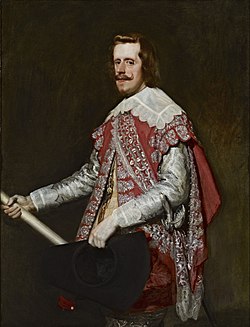
After Albert's childless death in 1621, Luxembourg passed to his great-nephew and heir Philip IV of Spain.
Image source: Philip IV of Spain
1658
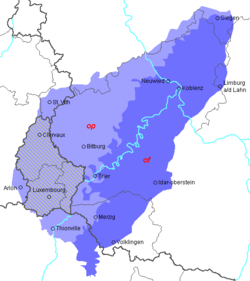
The first partitioning of Luxembourg took place in 1658, reducing the duchy's territory — the first of three partitions over the centuries.
Image source: Partitions of Luxembourg

This History of Luxembourg timeline was generated with the help of AI, using information found on the internet.
We work hard to keep these timelines accurate, but mistakes do get through. If you spot one, email us at [email protected] and we'll fix it for future visitors.
Generate yours with AI or build it from scratch, for free.