-
Use Cases
-
Resources
-
Pricing
The history of Malawi traces the region's development from early Bantu-speaking settlements and the Maravi Empire, through British colonial rule as Nyasaland, to its independence in 1964 under Hastings Kamuzu Banda, decades of one-party rule, and its transition to a multiparty democracy in the 1990s. More Less
1500 BCE
% complete
At another archaeological site, dated to around 1500 BCE, human remains were found that possessed features resembling the San people, suggesting the presence of San-related populations in ancient Malawi.
100 CE - 400
% complete
Bantu-speaking peoples entered the region during the first four centuries of the Common Era, bringing with them knowledge of ironworking and slash-and-burn agriculture, transforming settlement patterns in the area.
Image source: Bantu expansion
1200 - 1500
% complete
Between the 13th and 15th centuries, later waves of Bantu settlement displaced or assimilated both the earlier Bantu populations and pre-Bantu inhabitants of the region.
1991
% complete
In 1991, a hominid jawbone discovered near Uraha village in northern Malawi was dated to between 2.3 and 2.5 million years old, providing some of the earliest evidence of hominid presence in the region.
1480
% complete
In the late 15th century, a dynasty known as the Maravi Empire was founded by the Amaravi people. The kingdom straddled the current borders of Malawi, Mozambique, and Zambia.
Image source: Maravi
1500 - 1600
% complete
Sometime during the 16th century, during the era of the Maravi Empire, Europeans first came into contact with the people of what is now Malawi.
1616
% complete
In 1616, the Portuguese trader Gaspar Bocarro journeyed through what is now Malawi, producing the first European written account of the country and its people.
1700
% complete
The Maravi Empire began to decline during the early 18th century as fighting among sub-chiefs and the burgeoning slave trade weakened the authority of the empire's rulers.
1835 - 1848
% complete
In the 19th century, the Angoni or Ngoni people and their chief Zwangendaba arrived from the Natal region of modern-day South Africa, fleeing the Mfecane upheavals.
1840
% complete
When Jumbe arrived in Nkhotakota in 1840, he found a number of Yao and Bisa already well established there.
Sep 16, 1859
% complete
The Portuguese were reportedly the first Europeans to enter Malawi, but in 1859, acting off a tip received from a Portuguese source, David Livingstone reached Lake Malawi, drawing British attention to the region.
Image source: David Livingstone
1861
% complete
Livingstone's next journey, made with Bishop Charles Mackenzie of the Universities' Mission to Central Africa, saw hostility erupt between the Muslim Yao and the non-Muslim Mang'anja, whom the bishop preferred to preach to; the Yao who practised Islam and slavery were naturally hostile to the Christian missionaries.
Image source: Charles Mackenzie (bishop)
1870 - 1964
% complete
The writings of coastal sheikhs employed by the Yao were in Kiswahili, which became a lingua franca of Malawi from 1870 until the 1960s.
Image source: Swahili
1870
% complete
As a benefit of their conversion to Islam, the Yao employed Swahili and Arab sheikhs from the coast who promoted literacy and founded mosques; Chief Mponda in Mangochi had founded almost twelve madrassas before the Christian missionaries arrived in 1875.
1875 - 1876
% complete
A group of missionaries arrived in 1875-6 from the Free Church of Scotland and established a base at Cape Maclear at the southern end of Lake Malawi.
1878
% complete
In 1878, a number of traders, mostly from Glasgow, formed the African Lakes Company to supply goods and services to the missionaries working in the region.
Image source: African Lakes Corporation
1883
% complete
In 1883, a consul of the British government was accredited to the "Kings and Chiefs of Central Africa", marking growing formal British interest in the region.
Image source: Nyasaland
1889
% complete
Others soon followed: traders, hunters, planters came, and even missionaries from different denominations. From 1889, the Catholic White Fathers attempted to convert the Yao to Christianity.
Image source: White Fathers
1891
% complete
In 1891, the British formally established the British Central Africa Protectorate, extending colonial administration over the territory that is now Malawi.
Image source: British Central Africa Protectorate
1894
% complete
In 1894, the mission extended to the Tumbuka, who were also being attacked by the powerful Ngoni; Robert Laws opened a mission station near Rumphi that year.
1907
% complete
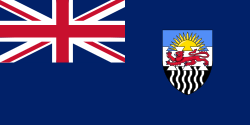
In 1907, the name of the protectorate was changed to Nyasaland, or the Nyasaland Protectorate. 'Nyasa' is the Chiyao word for 'lake'.
Jan 1915
% complete
In January 1915, John Chilembwe, a Baptist pastor in south-eastern Nyasaland, led an unsuccessful revolt against British colonial rule known as the Chilembwe uprising, an early landmark of African resistance.
Image source: Chilembwe uprising
1944
% complete
In 1944, the Nyasaland African Congress (NAC), inspired by the African National Congress' Peace Charter of 1914, emerged as an early nationalist political organization.
1953
% complete
In the 1950s, in 1953, Nyasaland was joined with Northern and Southern Rhodesia to form the Federation of Rhodesia and Nyasaland, a union opposed by many Nyasaland nationalists.
Image source: Federation of Rhodesia and Nyasaland
Jul 1958
% complete
In July 1958, Dr Hastings Kamuzu Banda returned to Nyasaland after a long absence spent in the United States, the United Kingdom and Ghana, energizing the independence movement.
Image source: Hastings Banda
1959 - 1960
% complete
In 1959, Banda was sent to Gwelo Prison for his political activities, but was released in 1960 to participate in a constitutional conference in London.
Aug 1961
% complete
In August 1961, the MCP won an overwhelming victory in an election for a new Legislative Council, cementing Banda's leadership on the road to independence.
Nov 1962
% complete
At a second constitutional conference in London in November 1962, the British Government agreed to give Nyasaland self-governing status the following year.
Feb 1, 1963 - May 1963
% complete
Hastings Banda became Prime Minister on 1 February 1963, although the British still controlled the country's financial, security, and judicial systems. A new constitution took effect in May 1963, providing for virtually complete internal self-government.
Dec 31, 1963
% complete
The Federation of Rhodesia and Nyasaland was dissolved on 31 December 1963, clearing the way for full independence for Nyasaland as Malawi.
Jul 6, 1964
% complete
The country achieved full independence, as Malawi, on 6 July 1964, becoming a fully independent member of the Commonwealth (formerly the British Commonwealth).
Aug 26, 1964 - Sep 1964
% complete
Shortly after independence, in August and September 1964, Banda faced dissent from most of his cabinet ministers in the Cabinet Crisis of 1964, which began with a confrontation between Banda and all his ministers present on 26 August 1964.
Image source: 1964 Malawi cabinet crisis
Feb 1965
% complete
One ex-minister, Henry Chipembere, led a small, unsuccessful armed uprising in February 1965 following his dismissal during the Cabinet Crisis.
Image source: Henry Masauko Blasius Chipembere
1966
% complete
In 1966, two years after independence, Malawi adopted a republican constitution and became a one-party state with Hastings Banda as its first president.
1967
% complete
Another ex-minister, Yatuta Chisiza, organised an even smaller incursion from Mozambique in 1967, in which he was killed.
1970 - 1971
% complete
In 1970, Hastings Banda was declared President for life of the Malawi Congress Party, and in 1971 he consolidated his power further when he was named President for life of Malawi itself.
1993
% complete
Banda was deposed in 1993 after nearly thirty years in power; some former cabinet ministers who had survived exile were then able to return to Malawi and resume public life.
Jun 14, 1993
% complete
On 14 June 1993, the people of Malawi voted overwhelmingly in favour of multi-party democracy, ending decades of one-party rule.
Image source: 1993 Malawian democracy referendum
May 17, 1994
% complete
Free and fair national elections were held on 17 May 1994 under a provisional constitution, which took full effect the following year, ushering in democratic governance.
Image source: 1994 Malawian general election
1995
% complete
Malawi's newly written constitution (1995) eliminated special powers previously reserved for the Malawi Congress Party, institutionalizing the new multi-party order.
Image source: Constitution of Malawi
1995
% complete
The President was referred to as Dr Muluzi, having received an honorary degree at Lincoln University in Missouri in 1995.
Image source: Bakili Muluzi
Jun 1996
% complete
That coalition disbanded in June 1996, but some of its members remained in the government.
Jun 15, 1999
% complete
On 15 June 1999, Malawi held its second democratic elections since the return of multi-party politics.
Image source: 1999 Malawian general election
2001
% complete
In 2001, the UDF held 96 seats in the National Assembly, while AFORD held 30, and the MCP 61.
Image source: National Assembly (Malawi)
May 2004
% complete
Malawi saw its very first transition between democratically elected presidents in May 2004, when the UDF's presidential candidate Bingu wa Mutharika defeated MCP candidate John Tembo and Gwanda Chakuamba, who was backed by a grouping of opposition parties.
Image source: 2004 Malawian general election
May 2004
% complete
The UDF did not win a majority of seats in Parliament, as it had done in the 1994 and 1999 elections, complicating Mutharika's legislative agenda.
Feb 5, 2005
% complete
Bingu wa Mutharika left the UDF party on 5 February 2005, citing differences with the party, particularly over his anti-corruption campaign.
Image source: Bingu wa Mutharika
2009
% complete
Mutharika won a second term outright in the 2009 election as the head of his newly founded party, the Democratic Progressive Party.
Image source: Democratic Progressive Party (Malawi)
Apr 2012
% complete
In April 2012, President Mutharika died of a heart attack, and the presidential title was taken over by Vice-President Joyce Banda, not related to former president Hastings Banda.
Image source: Joyce Banda
2014
% complete
In the 2014 Malawian general election, incumbent Joyce Banda lost, coming third, and was replaced by Peter Mutharika, the brother of ex-President Bingu wa Mutharika.
Image source: 2014 Malawian general election
2019
% complete
In the 2019 Malawian general election, President Peter Mutharika secured a narrow election victory and was declared re-elected.
Feb 2020
% complete
In February 2020, the Malawi Constitutional Court overturned the result of the 2019 election because of irregularities and widespread fraud, a landmark ruling in African electoral history.
Image source: 2020 Malawian presidential election
May 2020
% complete
In May 2020, the Supreme Court upheld the Constitutional Court's decision and announced that a new election would be held on 2 July.
Jul 2, 2020
% complete
Opposition leader Lazarus Chakwera won the 2020 Malawian presidential election rerun and was sworn in as the new President of Malawi.
Image source: Lazarus Chakwera
Aug 2021
% complete
In August 2021, the Constitutional Court examined an appeal lodged by the Democratic Progressive Party of Peter Mutharika calling for the cancellation of the 2020 presidential election because four of its representatives had been banned from sitting on the Electoral Commission.
Nov 2021
% complete
The challenge to Malawi's 2020 presidential elections was dismissed by the country's Constitutional Court in November 2021, confirming Chakwera's victory.
2025
% complete
Peter Mutharika returned as the president of Malawi by winning the 2025 Malawian general election, marking another democratic transition of power in the country.
Image source: 2025 Malawian general election
Or browse the full history timeline directory, with more than 2,000 topics.
This History of Malawi timeline was generated with the help of AI, using information found on the internet.
We work hard to keep these timelines accurate, but mistakes do get through. If you spot one, email us at [email protected] and we'll fix it for future visitors.
Generate yours with AI or build it from scratch, for free.
Export your timeline, add your own events, edit or remove AI-generated events, and much more
No credit card required.
Cancel anytime.
Cancel anytime.
You can create an unlimited number of timelines with up to 10 events on each one, customize how they look, export them to PDF, PNG, PowerPoint, CSV, and Excel, and share them with a link. Paid plans raise the event limit and add features like spreadsheet imports and collaborators.
Yes. You can cancel your subscription from your account page at any time, and you will not be charged again. Your subscription stays active for the rest of the period you already paid for.
Yes. We will email you a reminder before the annual renewal, and we will also email you a receipt.
Yes. You can email us within 15 days of any payment, and we will issue you a full refund.
Check out our pricing docs or send us an email anytime: [email protected].