-
Use Cases
-
Resources
-
Pricing
1500 BCE - 500 BCE
Amphoras used in Mediterranean trade displayed many shapes and markings, providing information that helped structure commercial transactions.
400 BCE
The systematic use of stamped labels dates from around the fourth century BCE, representing an early form of product identification and branding.
960 - 1127
Eckhart and Bengtsson argued that Song-dynasty society developed a consumerist culture in which substantial consumption became attainable for many ordinary consumers rather than only the elite.
Image source: Song dynasty
1100
Research by Blintiff suggests that the twelfth century saw an upsurge in market towns and the emergence of merchant circuits, as traders gathered surpluses from smaller markets and resold them in larger centralized towns.
Image source: Market town
1200 - 1500
Braudel and Reynold made a systematic study of European market towns and their commercial networks between the thirteenth and fifteenth centuries.
1380
Johann Fugger traveled from Augsburg to Graben to gather information about the international textile industry, an early example of commercial market intelligence.
1400
When retail shops began appearing from the fifteenth century, retailers developed ways to separate poorer customers from wealthier clientele.
Image source: Retail
1500 - 1599
According to etymologists, the term marketing first appeared in dictionaries during the sixteenth century, referring to the process of buying and selling at a market.
Image source: Marketing
1550
From the late sixteenth century, retailers increasingly invited favored customers into back rooms where goods were permanently displayed.
1660
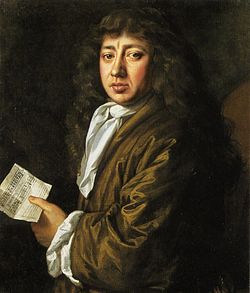
Samuel Pepys recorded being invited to a retailer’s home to view a wooden jack, illustrating the private display practices used to attract favored customers.
Image source: Samuel Pepys
1600 - 1799
Scholars have identified specific marketing practices in England and Europe during the seventeenth and eighteenth centuries.
Image source: History of marketing
1600
Braudel reported that in 1600 goods generally traveled relatively short distances: grain about 5–10 miles, cattle 40–70 miles, and wool and woolen cloth 20–40 miles.
Image source: Fernand Braudel
1700 - 1799
Josiah Wedgwood introduced direct mail, traveling salesmen, and catalogs during the eighteenth century.
Image source: Josiah Wedgwood
1700 - 1799
Research by McKendrick, Brewer, and Plumb found extensive evidence of English entrepreneurs using product differentiation, sales promotion, loss leaders, planned obsolescence, fashion magazines, national advertising, fancy showrooms, and elite taste-setting.
1700 - 1799
Eighteenth-century advertising demonstrated considerable sophistication in both execution and its ability to reach mass audiences.
Image source: Advertising
1700 - 1720
In the early eighteenth century, London merchant Daniel Defoe published information about the trade and economic resources of England and Scotland.
Image source: Daniel Defoe
1707
Daniel Defoe published Trade of Britain Stated in 1707, one of several popular trade-focused works aimed at merchants and business houses.
1713
Daniel Defoe published Trade of Scotland with France in 1713 as part of his influential body of commercial and economic writing.
1720
Daniel Defoe published The Trade to India Critically and Calmly Considered in 1720, continuing his popular examination of international commerce.
1728 - 1795
Josiah Wedgwood and Matthew Boulton were identified as pioneers of modern mass-marketing methods.
1850 - 1899
Improved transportation systems from the mid-nineteenth century unified markets and enabled companies to distribute standardized, branded goods nationally.
Image source: Industrial Revolution
1890 - 1899
The term marketing came into popular use in the late nineteenth century to describe commercial activities assisting the buying and selling of products or services.
1897
The contemporary dictionary definition of marketing as moving goods from producer to consumer, with emphasis on sales and advertising, first appeared in 1897.
1876
Films produced by Auguste and Louis Lumière at the request of Lever Brothers in France featured Sunlight soap and are regarded as the first recorded instance of paid product placement.
Image source: Product placement
2003 - 2006
Social media emerged as a major marketing environment between 2003 and 2006, with MySpace and LinkedIn appearing in 2003, Facebook in 2004, and Twitter in 2006.
Image source: Social media
2003
MySpace and LinkedIn emerged in 2003 as part of the development of social media platforms that later became important channels for marketing communication.
2004
Facebook emerged in 2004 during the formative period of social media, contributing to the later expansion of digital and social-media marketing.
Image source: Facebook
2006
Twitter emerged in 2006, completing the sequence of major social-media launches identified in this account of marketing history.
Image source: Twitter
1900 - 1909
Marketing as an academic discipline was first taught in universities during the very early twentieth century, generally identified with the first decade of the century.
1902
The University of Michigan offered a marketing course in 1902, widely regarded as one of the first university marketing courses.
Image source: University of Michigan
1902
The University of Illinois also began offering coursework in marketing in 1902.
Image source: University of Illinois Urbana-Champaign
1902 - 1910
George B. Waldron used tax registers, city directories, and census data to show advertisers the proportions of educated and illiterate consumers and the earning capacities of occupations, in an early example of demographic segmentation.
Image source: Market segmentation
1904 - 1905
The University of Pennsylvania commenced teaching marketing during the 1904–1905 academic year.
Image source: Wharton School
1912
The publication of Arch W. Shaw’s Some Problems in Market Distribution is regarded as the origin of the functional school, which documented the functions of marketing.
1916
C. C. Parlin’s 1916 article helped establish the commodity school, which focused on objects of exchange and the classification of commodities.
1916
L. D. H. Weld’s The Marketing of Farm Products became a key work in the institutional school tradition of marketing thought.
1923
An article by Melvin T. Copeland proposed the convenience, shopping, and specialty goods classification, which remains influential in marketing.
1936
The new Journal of Marketing gave academics a forum for exchanging ideas and research methods and helped establish marketing’s distinct identity as a maturing discipline.
1956
Wendell R. Smith published Product Differentiation and Market Segmentation as Alternative Marketing Strategies in 1956, documenting practices he described as a natural force.
1957
Wroe Alderson’s Marketing Behavior and Executive Action marked a shift from macro approaches based on functions, institutions, and commodities toward a micromarketing management paradigm.
1960 - 1969
The marketing-management school became dominant in the 1960s after the publication of McCarthy’s Basic Marketing, replacing the functional school as the leading approach.
1960
E. Jerome McCarthy published Basic Marketing: A Managerial Approach, a key work in the marketing-management tradition.
1960
Robert J. Keith’s article The Marketing Revolution described Pillsbury’s shift from a production focus in the 1860s to a consumer focus in the 1950s and became a pioneering history of marketing practice.
1972
Philip Kotler is credited with first proposing the societal marketing orientation in an article published in the Harvard Business Review in 1972.
1976
Robert Bartels’s The History of Marketing Thought marked a turning point in understanding how marketing theory evolved into a separate discipline.
1988
Ronald Fullerton developed a more subtle and nuanced periodisation of the so-called marketing eras in 1988.
Or browse the full history timeline directory, with more than 2,500 topics.
This History of Marketing timeline was generated with the help of AI, using information found on the internet.
We work hard to keep these timelines accurate, but mistakes do get through. If you spot one, email us at [email protected] and we'll fix it for future visitors.
Generate yours with AI or build it from scratch, for free.

Export your timeline, add your own events, edit or remove AI-generated events, and much more
No credit card required.
Cancel anytime.
Cancel anytime.
You can create an unlimited number of timelines with up to 10 events on each one, customize how they look, export them to PDF, PNG, PowerPoint, CSV, and Excel, and share them with a link. Paid plans raise the event limit and add features like spreadsheet imports and collaborators.
Yes. You can cancel your subscription from your account page at any time, and you will not be charged again. Your subscription stays active for the rest of the period you already paid for.
Yes. We will email you a reminder before the annual renewal, and we will also email you a receipt.
Yes. You can email us within 15 days of any payment, and we will issue you a full refund.
Check out our pricing docs or send us an email anytime: [email protected].