-
Use Cases
-
Resources
-
Pricing
Microsoft is one of the world's most influential technology companies. Founded in 1975 by childhood friends Bill Gates and Paul Allen, it began by developing software for early personal computers and rose to dominance with MS-DOS and Windows operating systems. Over the decades, Microsoft expanded into office productivity software (Microsoft Office), gaming (Xbox), cloud computing (Azure), and artificial intelligence, becoming one of the most valuable companies in the world. More Less
Apr 4, 1975
% complete
Childhood friends Bill Gates and Paul Allen founded Microsoft in Albuquerque, New Mexico, to develop and sell BASIC interpreters for the Altair 8800. The company's name combined 'microcomputer' and 'software,' reflecting its mission to put a computer on every desk.
Image source: Microsoft
Jan 1, 1979
% complete
Microsoft relocated from Albuquerque to Bellevue, Washington, placing itself near a growing technology community in the Pacific Northwest and closer to key customers and talent.
Nov 6, 1980
% complete
Microsoft signed a landmark agreement with IBM to supply an operating system for IBM's new personal computer. Microsoft purchased 86-DOS, adapted it as PC DOS/MS-DOS, and crucially retained the right to license it to other manufacturers, fueling explosive growth.
Image source: MS-DOS
Aug 12, 1981
% complete
The IBM PC launched running Microsoft's operating system, establishing MS-DOS as the de facto standard for personal computing and transforming Microsoft from a small programming language vendor into an industry powerhouse.
Image source: IBM Personal Computer
Feb 26, 1986
% complete
Microsoft moved its corporate headquarters to a new campus in Redmond, Washington, which grew over the decades into a sprawling complex of dozens of buildings housing tens of thousands of employees.
Image source: Microsoft campus
Mar 13, 1986
% complete
Microsoft held its initial public offering at $21 per share, raising $61 million. The IPO created thousands of employee millionaires over time and made Bill Gates one of the world's wealthiest people.
Image source: History of Microsoft

Jan 13, 2000
% complete
Bill Gates stepped down as CEO, handing leadership to longtime executive Steve Ballmer while remaining chairman and chief software architect. Ballmer led Microsoft through the rise of the internet era, Xbox, and cloud beginnings.
Image source: Steve Ballmer
Nov 20, 1985
% complete
Microsoft released Windows 1.0, a graphical operating environment layered on top of MS-DOS that introduced mouse-driven windows, icons, and menus, laying the groundwork for its dominant graphical interface strategy.
May 22, 1990
% complete
Windows 3.0 sold millions of copies thanks to improved graphics, virtual memory support, and program manager interface, cementing Windows as the dominant PC platform and making Microsoft the world's largest software company.
Image source: Windows 3.0
Aug 24, 1995
% complete
Windows 95 launched amid massive marketing fanfare, including the Rolling Stones' 'Start Me Up.' It introduced the Start menu and taskbar, sold seven million copies in five weeks, and defined the modern desktop computing experience.
May 18, 1998
% complete
The U.S. Department of Justice and twenty states sued Microsoft for monopolistic practices, alleging it illegally maintained its Windows monopoly through tactics like tying Internet Explorer to the operating system.
Image source: United States v. Microsoft Corp.
Apr 3, 2000
% complete
Judge Thomas Penfield Jackson ruled that Microsoft was an illegal monopoly that had violated the Sherman Antitrust Act. A proposed breakup was later overturned, and a settlement in 2001 imposed behavioral remedies on the company.
Oct 25, 2001
% complete
Windows XP unified Microsoft's consumer and business operating systems on a stable NT-based kernel. It became one of the most popular and longest-lived versions of Windows ever, remaining supported until 2014.
Jan 30, 2007
% complete
After years of development delays, Windows Vista launched with a redesigned Aero interface and enhanced security, but suffered from poor reception due to performance issues, hardware requirements, and compatibility problems.
Oct 22, 2009
% complete
Windows 7 refined Vista's foundations into a fast, reliable operating system that was widely praised. It became one of the most successful Windows releases, dominating the market for nearly a decade.
Jul 29, 2015
% complete
Windows 10 launched with a free upgrade offer, reintroducing the Start menu and introducing Cortana and continuous updates. It became the most widely used version of Windows, with over a billion active devices.
Aug 1, 1988
% complete
Microsoft introduced the first version of Microsoft Office for Macintosh, bundling Word, Excel, and PowerPoint into a single productivity suite that would become the company's most profitable product line.
Image source: Microsoft Office
Aug 24, 1995
% complete
Microsoft entered the browser wars by launching Internet Explorer, beginning a fierce competition with Netscape Navigator that would lead to the bundling of IE with Windows and major antitrust scrutiny.
Image source: Internet Explorer
Nov 15, 2001
% complete
Microsoft entered the video game console market with the Xbox, competing against Sony and Nintendo. It introduced Xbox Live online gaming service in 2002 and established Microsoft as a major player in interactive entertainment.
Image source: Xbox (console)
Nov 22, 2005
% complete
The Xbox 360 became a huge success, selling over 84 million units and pioneering achievements, digital distribution via Xbox Live Arcade, and high-definition console gaming.
Image source: Xbox 360
Jun 3, 2009
% complete
Microsoft rebranded its Live Search as Bing, launching a major effort to compete with Google in web search. Bing later powered Yahoo search and became foundational to Microsoft's AI ambitions decades later.
Image source: Microsoft Bing
Nov 4, 2010
% complete
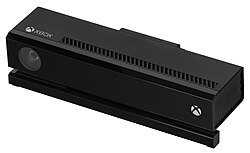
Kinect, a controller-free motion sensing peripheral, set a Guinness World Record as the fastest-selling consumer electronics device, selling eight million units in its first sixty days.
Image source: Kinect
May 10, 2011
% complete
Microsoft announced its largest acquisition to date, buying internet communications service Skype for $8.5 billion, integrating video calling into Windows, Xbox, and later Teams.
Image source: Skype Technologies
Sep 15, 2014
% complete
Microsoft acquired Mojang, creator of Minecraft, for $2.5 billion. Minecraft went on to become the best-selling video game of all time and a cornerstone of Microsoft's gaming strategy.
Image source: Mojang Studios
Dec 8, 2016
% complete
Microsoft completed its acquisition of professional networking site LinkedIn for $26.2 billion, its largest deal ever at the time, integrating LinkedIn data into Office, Dynamics, and other services.
Image source: LinkedIn
Feb 1, 2010
% complete
Launched originally as Windows Azure, Microsoft's cloud platform grew under Nadella into the company's primary growth engine, becoming the second-largest cloud provider behind Amazon Web Services and driving record revenues.
Image source: Microsoft Azure
Feb 4, 2014
% complete
Satya Nadella succeeded Steve Ballmer as CEO, pivoting Microsoft toward cloud computing, embracing open source and cross-platform software, and fostering a growth mindset culture that revitalized the company.
Image source: Satya Nadella
Mar 27, 2014
% complete
Under Nadella, Microsoft released full Office apps for Apple's iPad, marking a strategic shift toward serving customers on any platform rather than tying products exclusively to Windows devices.
Oct 26, 2018
% complete
Microsoft acquired code hosting platform GitHub for $7.5 billion in stock, signaling its deep embrace of open source development and later adding AI-powered coding tools like Copilot.
Image source: GitHub
Jun 24, 2021
% complete
Microsoft's stock market value surpassed $2 trillion for the first time, joining Apple in the exclusive club, driven by sustained cloud growth, enterprise software dominance, and investor confidence in its AI roadmap.
Or browse the full history timeline directory, with more than 2,000 topics.
This History of Microsoft timeline was generated with the help of AI, using information found on the internet.
We work hard to keep these timelines accurate, but mistakes do get through. If you spot one, email us at [email protected] and we'll fix it for future visitors.
Generate yours with AI or build it from scratch, for free.
Export your timeline, add your own events, edit or remove AI-generated events, and much more
No credit card required.
Cancel anytime.
Cancel anytime.
You can create an unlimited number of timelines with up to 10 events on each one, customize how they look, export them to PDF, PNG, PowerPoint, CSV, and Excel, and share them with a link. Paid plans raise the event limit and add features like spreadsheet imports and collaborators.
Yes. You can cancel your subscription from your account page at any time, and you will not be charged again. Your subscription stays active for the rest of the period you already paid for.
Yes. We will email you a reminder before the annual renewal, and we will also email you a receipt.
Yes. You can email us within 15 days of any payment, and we will issue you a full refund.
Check out our pricing docs or send us an email anytime: [email protected].